
How To
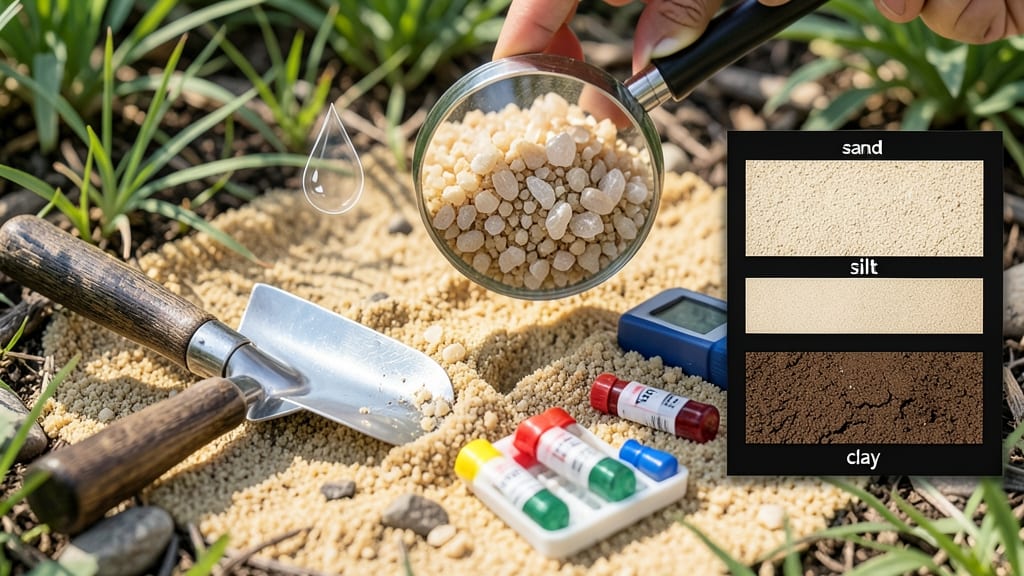
Sand soil pictures reveal its distinctive coarse grains, pale hues, and rapid drainage—key traits that set it apart from loam or clay. These visual cues include light beige or tan coloring, easily visible sand particles, and minimal organic material, making identification straightforward for gardeners and landscapers.
These visual characteristics aren't just about color—they reflect how sand soil behaves in your garden. 🌱 The large grain size creates air pockets that drain water quickly, which is why plants like succulents and cacti thrive in it.
But this same trait makes it challenging for nutrient retention, which is why many gardeners mix in compost or peat moss to improve fertility. I've found that comparing side-by-side pictures of pure sand soil versus amended soil clearly shows how organic matter transforms its structure and color over time.
For practical identification, focus on three key visual elements: the grain size (visible to the naked eye), the lack of clumping when wet, and the overall light coloration. These traits help you quickly rule out clay (which sticks together) or loam (which has a darker, more uniform appearance).
Pro tip: Take a handful of moist soil and squeeze it—if it crumbles instantly, you're dealing with sand.
💡 In This Article
- How to Identify Sand Soil by Texture and Composition
- Best Sand Soil Plant Selection and Amendments Guide
How to identify sand soil by texture and composition
Sand soil's defining feature is its particle size—individual grains range from 0.05 to 2 millimeters in diameter, which you can easily see with the naked eye. Under magnification, these grains appear angular and glassy, unlike the rounded particles of silt or the flat plates of clay.
This coarse structure creates large air pockets that allow water to drain within minutes rather than hours, which is why sand feels gritty between your fingers and doesn't hold together when wet. 🔥
The pale color—typically light beige, tan, or even nearly white—comes from the mineral composition, primarily quartz (silica). This lack of dark organic material sets it apart from loam (which has more decomposed plant matter) or clay (which often appears darker due to iron oxides).
When you compare side-by-side pictures, you'll notice sand soil looks almost powdery in texture, while loam has a crumbly, cake-like consistency and clay forms dense, sticky clumps.
Field-testing reveals even more about sand's behavior. Take a handful of moist sand and squeeze it—it'll crumble instantly when released, with no ribbon-like structure forming.
This "no cohesion" test is a dead giveaway for sand, as clay would stretch into a long ribbon and loam would hold a loose ball shape.
The rapid drainage also means water runs through sand like a sieve, which is why it's often found in coastal areas or riverbeds where erosion constantly refreshes the surface.
Microscopic analysis shows how these particles repel water due to their hydrophobic surfaces, which explains why sand feels dry even when saturated. This water-repelling quality also affects plant roots—while some species like pine trees adapt by growing deep, others struggle without amendments.
The visual contrast between dry, light-colored sand and darker, wetter loam or clay becomes especially apparent after rainfall, where sand stays visibly drier for longer periods.
For gardeners, understanding these traits helps explain why sand soil needs different care. Its low nutrient-holding capacity means plants grow quickly but may lack vigor without regular fertilization.
The visual difference between pure sand and amended sand (which appears darker and more clumped) demonstrates how adding organic matter changes both the soil's appearance and its ability to retain moisture and nutrients. 💫
Consider these key visual identification cues when examining soil samples:
- Grain visibility: Particles clearly visible to the naked eye (0.05-2mm)
- Color: Light beige/tan (quartz-dominant) with minimal dark specks
- Texture: Gritty when dry, crumbles instantly when wet
- Drainage: Water passes through within 5-10 minutes in a permeability test
- Clumping: No cohesion when moist—falls apart immediately