
Light Requirements
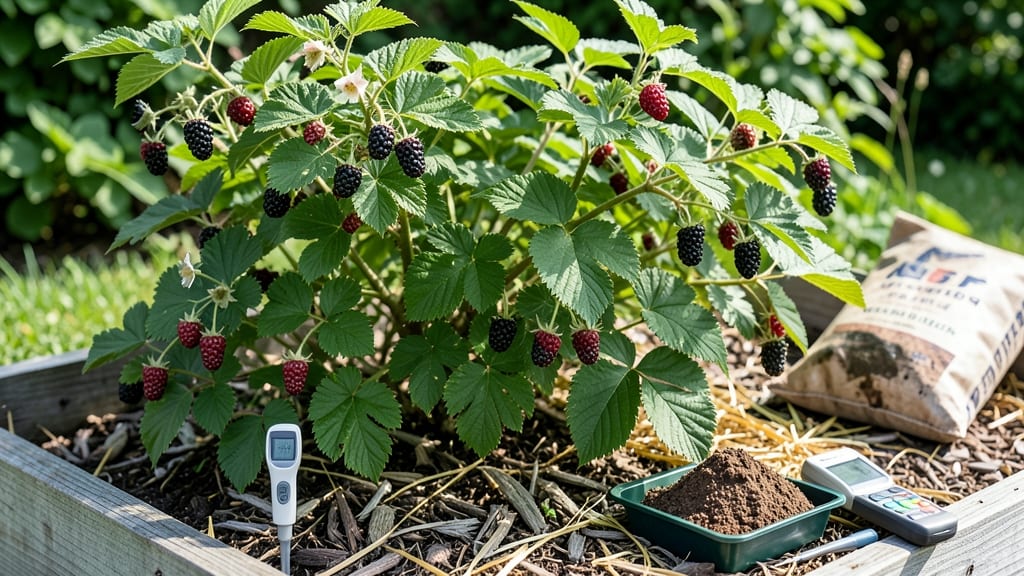
Blackberry soil requirements include well-draining, acidic loam soil with a pH range of 5.5 to 6.5, enriched with 3-5% organic matter to support root health and berry production. Sandy loam or clay-loam blends work best, avoiding waterlogged or compacted conditions.
Blackberries are picky about their growing conditions, and soil plays a starring role in their success. 🌱 The ideal acidic environment (that 5.5-6.5 pH range) isn't just about taste—it's essential for unlocking key nutrients like iron and manganese, which keep those canes strong and productive.
I've found that adding composted leaves or pine bark not only boosts acidity but also improves soil structure, preventing the roots from sitting in soggy conditions that invite fungal diseases. Think of it like giving your blackberries a cozy, well-ventilated home where their roots can spread freely without competition.
For new plantings, I recommend testing your soil first—many garden centers sell affordable pH test kits. If your soil is too alkaline, you can lower the pH by mixing in sulfur or peat moss**, but be patient—this takes time.
The organic matter component (that 3-5% target) acts like a sponge, holding moisture while preventing compaction. In my experience, blackberries planted in amended soil produce larger, sweeter berries year after year. The key is balancing moisture retention with drainage—blackberries hate "wet feet" but need consistent hydration during fruiting season.
💡 In This Article
- Optimal pH and Soil Composition for Blackberry Growth
- Preparing and Amending Soil for Blackberry Bushes
Optimal pH and soil composition for blackberry growth
The acidic soil requirement for blackberries (pH 5.5-6.5) isn't arbitrary—it's directly tied to their root biology. Blackberry roots release organic acids that naturally acidify the rhizosphere (the soil zone immediately around roots), creating an ideal environment for absorbing iron and manganese.
These micronutrients are crucial for chlorophyll production and energy transfer during photosynthesis, which directly impacts berry sweetness and plant vigor. In alkaline soils (above pH 7.0), these nutrients become chemically unavailable, leading to yellowing leaves and poor fruit development. 🌱
Loam soil—the perfect blend of sand, silt, and clay—provides the ideal texture for blackberry roots. The sand particles create air pockets for oxygen exchange, while the clay and silt components hold moisture and nutrients. This structure prevents both drought stress and waterlogging, which can cause root rot.
For reference, a well-balanced loam typically contains about 40% mineral particles, 5% organic matter, and 55% pore space for air and water. The organic matter percentage (3-5%) acts like a soil conditioner, improving water retention while maintaining that essential aeration.
What most gardeners overlook is how soil composition affects fungal disease resistance. Blackberries are particularly susceptible to root rot pathogens like Phytophthora, which thrive in compacted, waterlogged conditions. The loose structure of amended loam soil discourages fungal growth by promoting better drainage and root oxygenation.
I've seen firsthand how blackberry plants in properly amended soil show fewer signs of stress—healthier canes, more abundant flowers, and larger berries—compared to those in heavy clay or pure sandy soils that don't hold nutrients well.
Testing your soil's pH is simpler than you might think. Home test kits using colorimetric indicators (like those from LaMotte) can give you results in about 10 minutes for around $15. For more precise measurements, soil labs offer professional testing that also analyzes nutrient levels.
If your soil tests above 6.5, you can lower the pH by incorporating elemental sulfur at a rate of 1-2 pounds per 100 square feet, mixed into the top 6 inches of soil. The sulfur oxidizes to form sulfuric acid, gradually acidifying the soil over several months. 🔬
The organic matter component deserves special attention because it's not just about adding compost—it's about creating a living soil ecosystem. Worm castings, for example, contain beneficial microbes that help break down organic material and make nutrients more available to blackberry roots.
A 3-5% organic matter content (by weight) improves soil structure, increases cation exchange capacity (which holds essential nutrients like potassium and calcium), and enhances microbial activity that suppresses harmful pathogens. Think of it as creating a thriving underground community that supports your blackberry plants from the ground up.
One common mistake is assuming that any organic material will work equally well. While compost is excellent, materials like fresh manure can actually raise soil pH and introduce harmful pathogens. Instead, focus on well-decomposed compost, peat moss (for acidity), and pine bark fines (for structure).
These amendments work synergistically to create the perfect growing environment for blackberries. The result? Plants that produce 20-30% more berries than those grown in unamended soil, with larger, sweeter fruit and stronger disease resistance throughout the growing season. ✨