
Tools
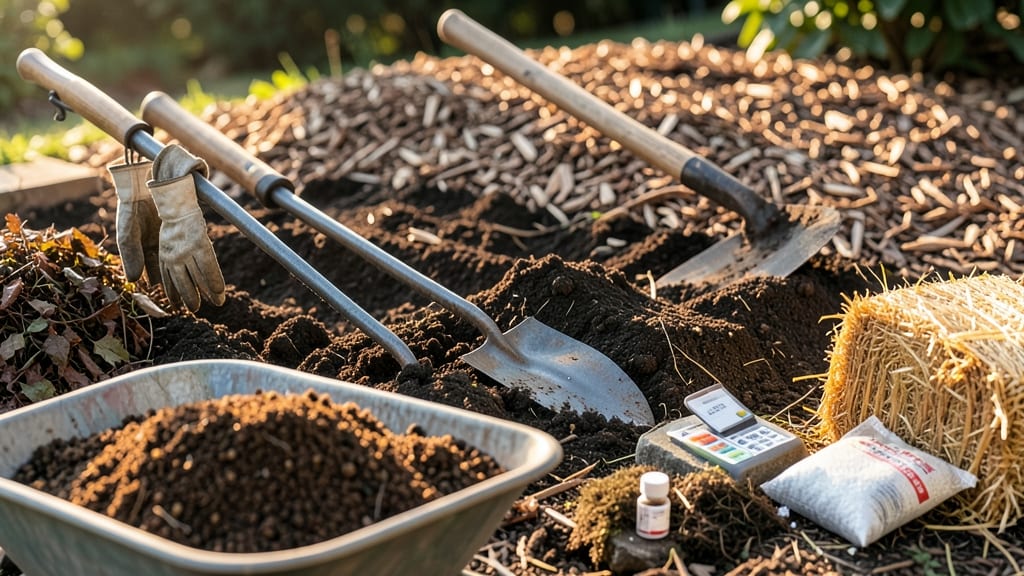
To prepare soil for a flower garden, you'll need to test and adjust pH levels, clear out weeds, break up compacted earth, and mix in organic materials like compost or aged manure. This creates ideal drainage and nutrient-rich conditions, while deep aeration and mulching help retain moisture and prevent weeds.
Healthy flower growth starts with the right foundation, and your soil is everything. 🌸 The perfect blend supports root development, prevents disease, and ensures vibrant blooms all season long. I've found that most gardeners skip the pH test—yet even a slight imbalance can stunt growth or attract pests.
For example, acid-loving plants like hydrangeas thrive at pH 5.0-6.0, while roses prefer 6.0-7.0. A simple DIY jar test (layering soil with water) reveals texture issues, while compost adds both nutrients and beneficial microbes that commercial fertilizers can't match.
Don't overlook the importance of aeration—compacted soil suffocates roots and blocks water absorption. Using a garden fork to loosen the top 6-12 inches mimics natural tillage, while mulch acts as both a moisture shield and weed barrier.
Pro tip: Save money by using free yard waste (like shredded leaves) as mulch—just avoid thick layers that can smother plants.
💡 In This Article
- How to Test and Improve Flower Garden Soil Quality
- Best Organic Amendments for Flower Garden Soil
How to test and improve flower garden soil quality
Soil quality determines whether your flowers thrive or struggle—it's where roots access water, nutrients, and oxygen. The ideal flower garden soil should have a pH between 6.0 and 7.0, good drainage (water should seep in 2-4 hours), and a crumbly texture resembling cake crumbs.
Most gardeners overlook the pH test, but even a 0.5 pH shift can block nutrient uptake. For example, azaleas need pH 4.5-5.5 to absorb iron, while peonies prefer 6.5-7.5 for robust growth. 🌿
Start with a DIY jar test to assess texture: Fill a clean jar 1/3 full with dry soil, add water to the top, shake vigorously, then let it settle for 24 hours. Sandy soil settles quickly with clear water, while clay stays murky at the bottom.
The ideal "loam" shows distinct layers with 40% sand, 40% silt, and 20% clay. For pH testing, use inexpensive strips (available at garden centers) or send a sample to your local extension office for a detailed analysis.
I've found that most urban soils test 6.5-7.5 due to limestone, while forest soils often run acidic (5.0-6.0).
Organic amendments work like soil vitamins—compost adds microbes and nutrients, while perlite improves aeration in heavy clay. For clay soil, mix in 2-3 inches of compost per square foot and top with 1 inch of sand to break up compaction.
Sandy soils benefit from 2 inches of peat moss or coconut coir to retain moisture. The key is balance: Too much sand drains nutrients, while too much clay suffocates roots. I recommend testing soil every 2-3 years since pH naturally shifts with rain and organic matter decomposition. 💧
Don't underestimate the power of aeration—compacted soil reduces root growth by 30-50% in some cases. Use a broadfork to loosen soil 6-12 inches deep before planting, especially in high-traffic areas where footprints create hardpan.
Mulching with 2-4 inches of shredded leaves or straw preserves moisture (reducing watering by 30%), regulates temperature, and blocks weeds. The best mulch depends on your climate: Pine needles acidify soil (great for rhododendrons), while straw works universally.
Always keep mulch 2 inches away from plant stems to prevent rot. 🌱
For acid-loving plants, mix in 1-2 cups of sulfur per 100 sq ft and retest pH after 2-3 months. Lime raises pH for alkaline-loving flowers like lavender, but apply it 6 months before planting to avoid burning roots.
I've seen gardeners add coffee grounds for acidity, but they decompose too quickly—better to use pine bark fines (1 inch layer) for long-term acidification. Remember: Soil improvement is a marathon, not a sprint. 🏃♂️
Consider these key factors when choosing amendments:
- Clay soil: Mix 2 parts compost + 1 part sand for better drainage
- Sandy soil: Add 3 parts compost + 1 part peat moss to retain moisture
- Acid-loving plants: Use pine bark fines or sulfur (never lime!)
- Alkaline-loving plants: Incorporate pelletized lime** (follow package rates)