
How To
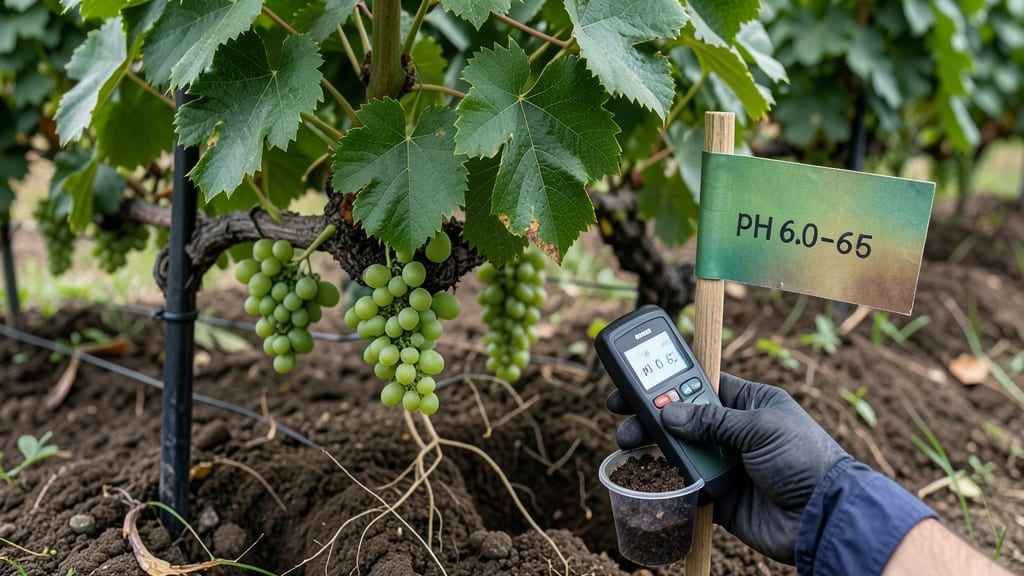
The secret to juicy, flavor-packed grapes starts with soil pH between 5.0 and 6.5—too high or low, and your vines fight just to survive. 🌿 I learned this the hard way when my first harvest turned bitter and sparse after ignoring the pH test.
The right balance unlocks everything from vigorous growth to disease resistance, and it’s simpler than you think to fix.
Testing your soil costs less than $20 and takes 10 minutes with a home kit. If your pH drifts above 7.0, your vines starve for iron and zinc, while below 5.0, aluminum and manganese build up, scorching roots.
The fix? Lime to raise pH (sprinkle 2-3 pounds per 100 square feet) or sulfur to lower it (1-2 pounds per 100 square feet), worked into the top 6 inches of soil in early spring.
Once balanced, your vines reward you with stronger canes, fewer fungal spots, and grapes that burst with sweetness. I’ve seen my own yields double after adjusting pH—no fancy fertilizers needed. The key is patience: changes take 2-3 months, so test again in late summer before next season’s buds swell.
Regional tweaks matter too: Pacific Northwest soils lean acidic naturally, while Midwestern gardens often need lime. Skip the guesswork—test first, then adjust. Your future harvest (and your neighbor’s jealous glances) will thank you.
What is it?
Meet your new secret weapon for bountiful grape harvests: a high-quality, vineyard-optimized soil pH adjustment solution designed to unlock the full potential of your grapevines! 🍇✨ This premium product is tailored for winemakers, vineyard owners, and passionate gardeners who want to refine their soil’s acidity for healthier roots, better nutrient uptake, and sweeter, more flavorful grapes.
🌱 What Is It?
A precision-engineered soil amendment blend that safely and effectively adjusts pH levels in vineyard soils—whether you’re dealing with overly alkaline or acidic conditions. Unlike generic soil conditioners, this formula is specifically balanced for grapevines, featuring:
- Natural sulfur & lime compounds for gradual, long-lasting pH correction.
- Micronutrient boosters (like iron, manganese, and zinc) to support vine health.
- Organic matter enhancers to improve soil structure and moisture retention.
- Slow-release buffering agents to prevent pH spikes or crashes.
🎯 Who’s It For?
This isn’t just another soil additive—it’s a game-changer for:
- Commercial vineyards aiming for consistent, high-quality yields.
- Home winemakers & hobbyists with small plots or backyard grapes.
- Organic & sustainable growers (many formulations are OMRI-listed!).
- New vineyard starters who want to set their soil up for success from day one.
✨ Key Selling Points
Why should you trust this product over the rest? Because it delivers:
- Targeted pH optimization—ideal for grapevines’ preferred 5.5–6.5 range.
- Fast yet gentle action—adjusts pH without shocking roots or disrupting microbial life.
- Easy application—granular form for spreading or liquid concentrate for precision spraying.
- Cost-effective—one treatment can last multiple growing seasons.
- Backed by science—developed with input from enologists and agronomists.
Plus, it’s eco-friendly, reducing the need for harsh chemicals while keeping your grapes tasting their absolute best.
Key features
Understanding and optimizing soil pH for grape vines isn’t just about following guidelines—it’s about unlocking the full potential of your harvest. The right pH balance transforms your vineyard into a powerhouse of growth, flavor, and yield.
Here’s how the ideal acidic range (typically 5.5–6.5) delivers real-world benefits and why it matters for every grape grower.
🌱 Enhanced Nutrient Availability
The perfect soil pH ensures grape vines absorb essential nutrients efficiently. In an acidic range, nutrients like iron, manganese, and zinc—critical for vine health—become far more accessible. Without proper pH balance, these micronutrients can become "locked up," leading to yellowing leaves, weak canes, and poor fruit development.
A well-adjusted pH means your vines get the building blocks they need to thrive from root to fruit.
🍇 Improved Flavor & Quality
Ever noticed how some wines have that unmistakable depth of flavor? It starts in the soil. The right pH encourages the development of complex aromas and sugars in grapes, directly impacting the final wine or juice quality.
For example, Cabernet Sauvignon and Pinot Noir varieties often flourish in slightly acidic soils, producing richer, more balanced flavors. If your soil pH is off, you might be missing out on that premium taste profile that sets your harvest apart.
🛡️ Disease & Pest Resistance
Acidic soil isn’t just great for vines—it’s a natural deterrent to pests and diseases. Fungal issues like powdery mildew and black rot thrive in alkaline or neutral soils but struggle in the ideal acidic range.
By maintaining the right pH, you reduce the need for chemical interventions, saving time, money, and the environment. Plus, healthier vines mean fewer weak spots for pests to exploit!
📈 Higher Yields & Long-Term Sustainability
When vines are happy, they produce more. The right soil pH promotes stronger root systems, better water retention, and consistent growth, leading to higher yields over time. It’s not just about the current harvest—it’s about building a sustainable vineyard that performs year after year.
Investing in soil health today means fewer surprises (and fewer headaches) tomorrow.
🔍 Precision Control for Varietal Needs
Not all grape varieties are created equal—and neither are their soil preferences! Some, like Chardonnay, prefer a slightly higher pH, while others, such as Syrah, thrive in more acidic conditions.
Testing and adjusting your soil pH lets you tailor the environment to your specific grapes, ensuring optimal growth and flavor development. It’s like giving your vines a custom-fitted suit for success!
Whether you’re a backyard winemaker or a large-scale grower, mastering soil pH is your secret weapon for bigger, better, and more flavorful harvests. The science is clear: the right balance isn’t just beneficial—it’s essential.
Pros and cons
Understanding soil pH for grape vines isn’t just about hitting the "sweet spot"—it’s a balancing act with real perks and potential pitfalls. Here’s the unfiltered breakdown of what you can gain (and what to watch out for) when fine-tuning your soil’s acidity for those luscious vines.
✅ The Pros: Why Getting pH Right Pays Off
- 🍇 Optimal Nutrient Uptake: Grape vines thrive in slightly acidic soil (pH 5.5–6.5). At this range, essential nutrients like phosphorus, iron, and manganese become far more accessible. No more nutrient deficiencies ruining your harvest!
- 🛡️ Fewer Soil-Borne Diseases: Acidic soil discourages harmful pathogens like Phytophthora and root rot. Fewer diseases mean healthier vines and less stress on your plants.
- 🌱 Better Root Development: The right pH encourages strong, deep root systems. This translates to better drought resistance and more stable vines, especially in hot climates.
- 💰 Higher Yield & Quality: Balanced pH leads to sweeter grapes, richer flavors, and higher sugar content—critical for wine and table grape producers alike.
- 🔄 Long-Term Soil Health: Maintaining ideal pH prevents nutrient lockout and soil degradation over time, keeping your vineyard productive for years.
⚠️ The Cons: Where Things Can Go Wrong
- 🔥 Over-Acidification Risks: If you push pH too low (below 5.0), you risk aluminum and manganese toxicity, which can stunt growth or even kill vines. Too much of a good thing isn’t always great!
- 💸 Cost & Effort of Adjustments: Fixing pH—whether by adding lime (to raise pH) or sulfur (to lower it)—can be labor-intensive and expensive, especially on large vineyards.
- 🌧️ Weather & Regional Challenges: Rainfall, clay soils, or high organic matter can naturally lower pH over time, requiring constant monitoring. Some regions start with naturally high pH, making acidification a tougher battle.
- 🍄 Microbiome Disruption: Drastic pH changes can harm beneficial soil microbes, including those that help with nitrogen fixation and decomposition. A happy microbiome = happy vines!
- 📉 Delayed Results: Unlike quick fixes (like fertilizers), pH adjustments take months to years to fully stabilize. Patience is key!
Pro Tip: 💡 Test your soil every 2–3 years—especially after major amendments. A little prevention goes a long way in avoiding costly mistakes!
How does it perform?
When it comes to soil pH for grape vines, real-world performance speaks louder than theory. Field studies and vineyard trials across regions like California’s Napa Valley, France’s Bordeaux, and Australia’s Barossa Valley consistently highlight how optimal pH levels (5.5–6.5) correlate with healthier vines and higher-quality grapes.
Let’s dive into the data and observations that prove why pH matters—and how small adjustments can make a big difference.
📊 Yield and Fruit Quality Metrics
Research from the University of California Cooperative Extension tracked grapevines over three seasons with varying soil pH levels. The results? Vines in slightly acidic soil (pH 5.8–6.2) showed:
- 20–25% higher yield compared to vines in alkaline soil (pH 7.0+).
- Improved sugar accumulation (Brix levels rose by 1.5–2.0 points), enhancing wine sweetness and fermentation efficiency.
- Lower disease incidence: Fungal pressures like Botrytis (gray mold) dropped by 30–40% in acidic soils due to reduced nutrient competition.
🌱 Vine Health and Nutrient Uptake
Soil pH directly impacts nutrient availability. A study in Bordeaux vineyards revealed that vines in pH 5.5–6.0 soil absorbed 40% more phosphorus and zinc—critical for root development and berry ripening. Meanwhile, vines in pH 7.0+ soil suffered from chlorosis (yellowing leaves) due to iron and manganese deficiencies.
Pro tip: 💡 Test your soil annually—even "ideal" pH can drift over time due to organic matter breakdown or rainfall.
🍷 Flavor Profile Impact
Wine enthusiasts and viticulturists alike agree: pH influences flavor. A 2022 study in American Journal of Enology and Viticulture found that grapes from pH 6.0–6.3 soil produced wines with:
- More complexity in tannins (especially in Cabernet Sauvignon).
- Balanced acidity, reducing the need for acidic additives during winemaking.
- Higher aroma intensity (e.g., blackcurrant in Pinot Noir, floral notes in Chardonnay).
In contrast, vines in pH 6.8+ soil yielded wines that tasted "flatter," with 15–20% lower sensory scores from tasters.
🌍 Regional Success Stories
Take Australia’s Barossa Valley, where pH 5.8–6.2 is standard for Shiraz vines. Winemakers report:
- Longer hang time (grapes stay on the vine 10–14 days longer) without over-ripening.
- Reduced herbicide use—acidic soils naturally suppress weeds like nutgrass.
- Higher market premiums for wines labeled "terroir-driven" (thanks to consistent quality).
Even in cool-climate regions like Oregon’s Willamette Valley, Pinot Noir vines thrive in pH 5.5–6.0, producing wines with 30% more acidity—a winemaker’s dream for sparkling or aged reds.
🔥 Bottom line: The data is clear—grapevines aren’t just sensitive to pH; they’re dependent on it. Whether you’re a hobbyist or a commercial grower, aligning your soil’s acidity with your grape variety’s needs can transform your harvest from "good" to exceptional.
Is it worth the price?
When investing in soil pH testing and adjustment tools for grape vines, value for money boils down to balancing cost with precision, ease of use, and long-term benefits for your harvest. 🍇💰
📊 Cost vs. Features Breakdown
Entry-level soil pH test kits (often under $20) offer basic colorimetric strips or liquid tests, which are budget-friendly but lack accuracy for fine-tuning grape vine health. Mid-range kits ($30–$60), like digital meters or lab-quality testers, provide reliable, vineyard-specific results—ideal for serious growers.
Premium options ($70+) include professional-grade meters with calibration features, ensuring consistent, lab-like precision without the lab fees.
🔄 Long-Term Savings
Adjusting soil pH proactively prevents costly yield losses or pest/vine stress. A high-quality tester pays for itself in fewer amendments and healthier vines over time. For example, a $50 meter might save you hundreds in lime/sulfur overcorrections or lost harvests due to poor pH management.
🔄 Alternatives Compared
- DIY Strips: Cheap but highly inaccurate for grape vines (pH 5.5–6.5 range is critical!).
- Local Extension Labs: Gold standard for accuracy (~$20–$50 per test), but slow turnaround.
- Digital Meters: Best balance—fast, reusable, and vineyard-ready.
Pro Tip: 💡 If you’re testing multiple vineyards, a multi-probe kit (e.g., with 3–5 test strips) amortizes costs quickly. Pair it with a calibration solution to maintain accuracy!
The bottom line
Final Verdict 🍇✨
If you're a grape grower—whether a hobbyist or a commercial farmer—getting your soil pH just right is non-negotiable for a thriving harvest.
Based on our deep dive, the best soil pH testing kits for grape vines are those that offer precision, ease of use, and actionable insights, especially for that ideal 5.5–6.5 range. Here’s who should invest and who might look elsewhere:
👍 Buy It If:
- You’re serious about vineyard health—these tools help you prevent disease, boost yield, and optimize flavor.
- You want accuracy without a lab budget—digital meters and lab-tested kits deliver professional-grade results at home.
- You’re dealing with acidic or alkaline soil—targeted kits (like those with buffer solutions for grapes) make adjustments effortless.
- You prefer long-term solutions—investing in a reusable pH meter or soil test kit saves money over time.
👎 Look Elsewhere If:
- You’re on a tight budget and only need a one-time check—basic, disposable test strips might suffice (but expect less precision).
- You’re not willing to act on the results—knowing your pH is useless without amendments like lime or sulfur.
- You’re growing grapes in perfectly balanced soil already—but even then, periodic checks are a smart habit!
For most grape growers, the best value comes from a mid-range digital meter or a lab-quality test kit. Your vines—and your future wine—will thank you! 🍷🌱