
How To
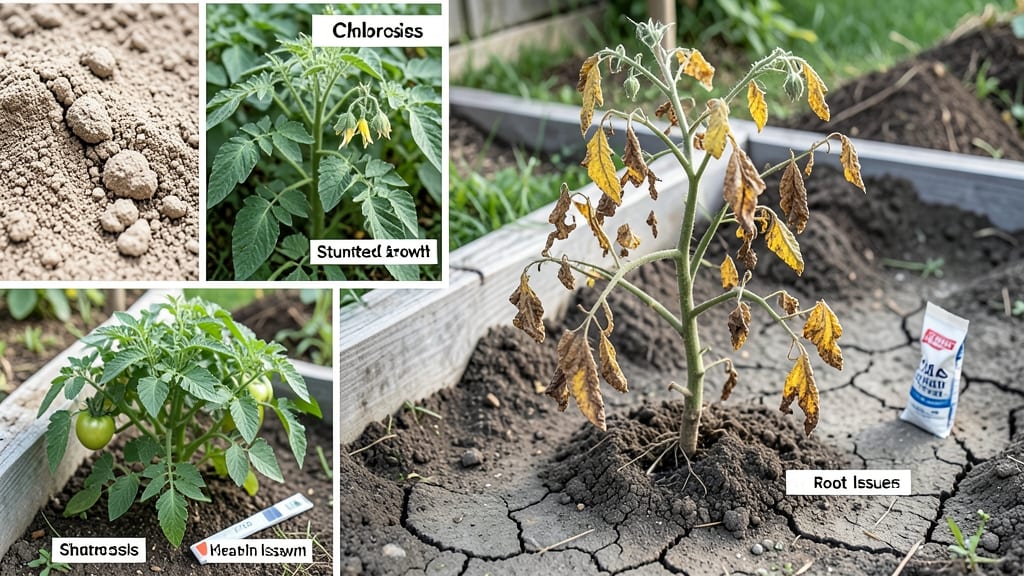
Soil infertility happens when your garden soil lacks vital nutrients, organic material, or the right acidity level, blocking plants from absorbing what they need to thrive. You'll see weak roots, yellow leaves, and poor growth even when watering and sunlight seem fine.
Soil infertility isn't just about dirt—it's about the hidden ecosystem beneath your plants.
When key nutrients like nitrogen, phosphorus, or potassium disappear, or when the soil pH swings too far from neutral (6.0-7.0), plants can't access even what's there. 🌱 Think of it like a locked safe: the nutrients exist, but the combination is wrong.
Over time, this imbalance creates a vicious cycle where plants struggle to grow, weakening the soil further. The good news? Simple tests and amendments can often restore balance, but it takes patience and understanding of what your specific soil needs.
Many gardeners overlook the role of organic matter—decomposed plant material that feeds beneficial microbes. Without it, nutrients become trapped or leach away. For example, clay soils often hold nutrients too tightly, while sandy soils release them too quickly.
The solution? A mix of compost, mulch, and targeted fertilizers to rebuild that living soil structure.
💡 In This Article
- Causes of Soil Infertility: Nutrient Deficiencies and pH Imbalances
- How to Diagnose and Fix Infertile Soil in Gardens
Causes of soil infertility: nutrient deficiencies and pH imbalances
Soil infertility begins with nutrient depletion, where essential elements like nitrogen (N), phosphorus (P), and potassium (K) become scarce. These macronutrients are the building blocks for plant growth—nitrogen fuels leaf development, phosphorus supports root systems, and potassium regulates water balance.
When plants continuously extract these nutrients without replenishment, the soil becomes exhausted. For example, nitrogen deficiency often shows as pale yellow leaves because chlorophyll production stalls, while phosphorus deficiency causes dark purple stems and leaves as plants struggle to create energy-storing molecules.
The pH scale (0-14) determines nutrient availability—most plants thrive in slightly acidic to neutral soil (pH 6.0-7.0). At extremes, nutrients become locked away: iron and manganese disappear in alkaline soil (pH >7.5), while phosphorus becomes inaccessible in highly acidic conditions (pH <5.5).
This is why soil tests measure pH alongside nutrient levels. Microbial activity also suffers in imbalanced pH, as beneficial bacteria and fungi that break down organic matter can't thrive. For instance, earthworms, which aerate soil and recycle nutrients, avoid soil with pH below 5.0 or above 8.5.
Organic matter acts as the soil's nutrient bank, holding up to 5 times its weight in water and nutrients. When compost or decomposed plant material breaks down, it releases nutrients slowly while feeding microbes that convert them into plant-available forms.
Without organic matter, nutrients wash away during rain or bind tightly to clay particles, making them unusable. A healthy garden soil typically contains 5-10% organic matter—below 3% signals infertility. This is why tilling in compost or leaf mold is a foundational fix for depleted soils.
Micronutrients like zinc, copper, and boron often get overlooked but are critical in tiny amounts. For example, boron deficiency causes distorted growth in fruits and flowers, while zinc deficiency results in stunted leaves with white streaks.
These elements become unavailable when soil pH strays from the ideal range or when competing nutrients dominate. A soil test can reveal these hidden deficiencies before plants show symptoms, allowing targeted amendments like chelated micronutrients or specific mineral supplements.
Crop history plays a surprising role in infertility. Heavy feeders like tomatoes and corn deplete nitrogen quickly, while legumes (like beans) naturally replenish it through nitrogen-fixing bacteria in their roots. Rotating crops prevents nutrient exhaustion in specific soil layers.
Even water quality matters—hard water with high calcium or sodium can disrupt nutrient ratios over time, especially in container gardens where drainage removes soluble nutrients faster than in open soil.
What most gardeners don't realize is that soil infertility often starts with physical issues too. Compacted soil blocks root growth and oxygen flow, while poor drainage creates anaerobic zones where nutrients convert to harmful forms. For example, nitrogen becomes toxic nitrates when soil stays waterlogged.
The solution? Aerating compacted areas with a garden fork and improving drainage with organic amendments like peat moss or perlite can restore both physical and chemical balance.