
Watering
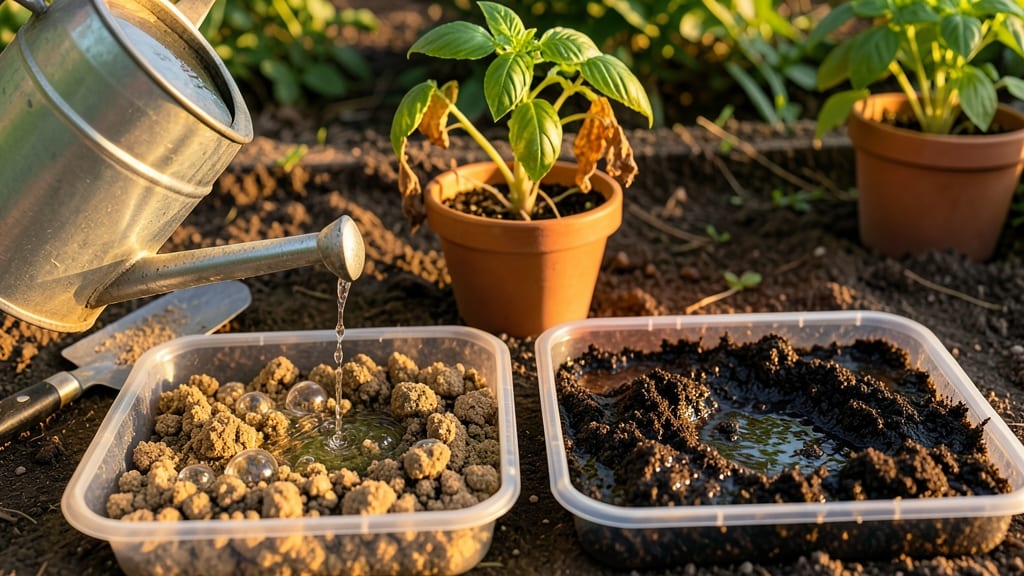
Your soil repelling water like oil on pavement? 🌱 That’s hydrophobic soil, and it’s silently starving your plants—even when you water. I’ve seen tomato plants wilt mid-season because the soil refused to drink, and the fix isn’t complicated once you know why it happens.
The culprits are usually three things: too much clay compacting the soil, organic matter burning out from heat or chemicals, or a waxy layer forming from old plant oils.
My neighbor’s roses nearly died last summer until we broke through the repellent layer with a mix of compost and a simple wetting agent. You’ll restore moisture retention in under an hour with the right approach—no heavy machinery or fancy tools needed.
The key is breaking the surface tension so water soaks in, then feeding the soil long-term to keep it thirsty the right way. Works for vegetable gardens, flower beds, and even potted plants. Let’s turn that dry, crumbly mess into sponge-like soil that holds moisture where it belongs.
The Hidden Triggers Behind Repellent Soil
If your soil acts like a water-repelling sponge, something’s disrupting its natural ability to absorb moisture. Hydrophobic soil isn’t just stubborn—it’s often the result of specific, science-backed causes that can be traced back to how water, organic matter, and soil particles interact.
Let’s break down the key culprits turning your garden into a desert.
When soil bakes under intense heat—especially in dry, sunny climates—organic matter breaks down and releases water-repellent compounds like waxes and fatty acids. These substances coat soil particles, creating a hydrophobic barrier that prevents water from penetrating.
- Why it happens: High temperatures (above 90°F/32°C) accelerate the oxidation of organic materials, leaving behind hydrophobic residues.
- Actionable sign: Soil that beads up like oil when wet or stays dry even after watering.
- 💡 Pro tip: Mulch with straw or wood chips to shield soil from direct sunlight and slow moisture loss.
Soil needs humus and microorganisms to act as sponges, holding water and creating pathways for absorption. When organic matter is depleted—due to poor composting, over-tilling, or synthetic fertilizers—soil particles become densely packed and water-resistant.
- Why it happens: Over time, organic materials decompose, leaving behind clay or sand particles that lack the structure to retain moisture.
- Actionable sign: Soil that crumbles when dry and feels gritty or compacted.
- ✨ Fix it: Amend with compost, leaf mold, or peat moss to restore porosity and water-holding capacity.
Certain chemicals—whether from fertilizers, pesticides, or even cleaning products—can alter soil chemistry and trigger hydrophobicity. For example:
- Synthetic fertilizers: High salt or urea concentrations can disrupt soil aggregates, making particles repel water.
- Petroleum-based products: Oil spills or even old motor oil residues leave hydrophobic coatings on soil.
- Alkaline soils (high pH): Excess lime or sodium can bind clay particles into waterproof clumps.
💡 Pro tip: Test your soil’s pH and flush contaminated areas with water before amending. Avoid over-fertilizing—opt for organic, slow-release options.
Soil that’s alternately baked by drought or waterlogged from heavy rains develops a dual-layer effect: The top layer becomes hydrophobic from heat, while the lower layers stay saturated, creating a water-repellent crust.
- Why it happens: Rapid drying causes clay particles to shrink and crack, trapping air pockets that block water entry.
- Actionable sign: Water pools on the surface instead of soaking in, even after heavy rainfall.
- 🔥 Solution: Gently aerate the soil with a fork or use a soil conditioner like gypsum to break up compacted layers.
Each of these factors can turn your soil into a water-resistant puzzle—but the good news? Most are reversible with the right adjustments. Next, we’ll dive into how to diagnose and fix hydrophobic soil in your garden or lawn.
Fixing Hydrophobic Soil Step-by-Step
Now that you know the root causes of hydrophobic soil, let’s tackle the fixes—tailored to each issue. These solutions are designed to be practical, cost-effective, and easy to implement, whether you're dealing with compaction, organic matter loss, chemical buildup, or erosion.
Follow the steps below to restore water absorption and revive your soil’s health.
---
If your soil is packed like a brick, water can’t penetrate. Loosening it is your first priority.
#### 🍳 Loosen the Top Layer - Hand tools: Use a garden fork, broadfork, or mattock to gently break up the top 6–12 inches of soil.
Work in small sections to avoid compacting fresh areas. - Aeration tools: Rent a core aerator (commonly used for lawns) to pull small soil plugs, improving drainage and water infiltration. - Pre-soak: Lightly water the area before digging to reduce resistance and make the process easier.
#### 👨🍳 Add Organic Matter - Compost or aged manure: Mix in 1–2 inches of compost to improve structure and water retention.
Aim for 10–20% organic matter by volume. - Leaf mold or peat moss: These break down slowly and enhance soil crumb structure. - Biochar (optional): Sprinkle a thin layer to boost microbial activity and water retention.
> 💡 Pro Tip: Avoid tilling if your soil is already dry—it can worsen compaction. Instead, use a broadfork to lift and separate soil layers without disturbing them too much.
---
Hydrophobic soil often lacks the organic "glue" that helps water stick. Rebuilding it is key.
#### 🔪 Amend with Carbon-Rich Materials - Top-dress with compost: Spread a ½-inch layer over the soil and lightly rake in. Repeat every 3–6 months. - Use cover crops: Plant clover, vetch, or winter rye in the off-season.
Till them into the soil when they’re green to add organic matter. - Mulch heavily: Apply 2–3 inches of wood chips, straw, or pine needles to protect the soil and slowly decompose into nutrients.
#### ⏰ Give It Time - Organic matter takes months to years to fully integrate. Be patient—consistent additions yield the best results. - Test your soil’s organic content annually with a simple soil test kit to track progress.
> 🌡️ Pro Tip: If your soil is sandy, mix in hydrated lime or gypsum (calcium sulfate) to improve water retention without altering pH drastically.
---
If your soil is repelling water due to salts, oils, or pesticides, flushing and conditioning are essential.
#### 🔥 Flush with Water (Gently) - Slow, deep watering: Use a soaker hose or drip irrigation to apply water slowly over 24–48 hours.
Avoid heavy downpours, which can cause runoff. - Repeat weekly: Continue for 3–4 weeks to gradually leach out salts or oils. - Add wetting agents: Mix 1–2 tbsp of a natural wetting agent (like soy-based or molasses-based) into a gallon of water and apply evenly.
#### 🎯 Condition with Clay or Humic Acids - Bentonite clay: Mix 1–2 lbs per 100 sq ft into the top 6 inches. Clay particles help bind water and improve structure. - Humic acid or fulvic acid: These organic compounds break down hydrophobic compounds and enhance microbial activity.
Use as a soil drench (follow package instructions).
> ✨ Pro Tip: If your soil has petroleum or oil residues, sprinkle baking soda or hydrogen peroxide (3%) lightly over the area, then water thoroughly to neutralize the hydrocarbons.
---
Once you’ve fixed the issue, take these steps to prevent recurrence:
1. Avoid overworking wet soil – Compacted soil stays compacted. Wait until it’s 50–70% dry before tilling or digging. 2. Use mulch year-round – A 3-inch layer of organic mulch protects soil from erosion and retains moisture. 3. Test soil regularly – Check pH and organic matter annually.
Aim for a pH of 6.0–7.0 and 3–5% organic matter for most plants. 4. Reduce synthetic chemicals – Opt for organic pesticides, compost teas, or neem oil instead of harsh chemicals. 5. Encourage earthworms – They aerate soil naturally.
Add castings or worm beds to boost their population. 6. Water deeply but infrequently – 1–2 inches per week (including rain) encourages deep root growth and reduces surface crusting.
--- For a fast reference, here’s how to match your soil’s issue to the solution:
| Problem | Immediate Fix | Long-Term Solution | |---------------------------|--------------------------------------------|------------------------------------------| | Compaction | Broadfork + compost | Mulch + cover crops | | Low organic matter | Top-dress with compost | Cover crops + mulch | | Chemical/salt buildup | Flush with water + wetting agent | Bentonite clay + humic acid | | Erosion or dry crust | Hydromulch or straw | Deep mulch + rainwater harvesting |
--- By following these steps, your soil should absorb water like a sponge within a few weeks to a few months, depending on the severity. Stay consistent, and your plants will thank you with healthier roots and lush growth! 🌱💧
Frequently asked questions
Why does my soil suddenly repel water after a hot summer?
Extreme heat breaks down organic matter, releasing waxy compounds that coat soil particles and create a water-repellent barrier. This is especially common in sandy or clay-heavy soils where moisture evaporates quickly. Mulching with straw or wood chips can help shield soil from future heat damage.
Can I fix hydrophobic soil without adding compost?
Yes! For immediate results, mix in bentonite clay (1-2 lbs per 100 sq ft) or use a wetting agent (like soy-based solutions). These break surface tension and help water penetrate. However, long-term solutions require organic matter to maintain water retention.
How do I know if my lawn soil is hydrophobic?
Perform the water test: Pour 1 cup of water on dry soil. If it beads up or pools instead of soaking in within 10 seconds, your soil is hydrophobic. Also check for dry patches that stay hard even after rain—this is a classic sign of repellent soil.
Will synthetic fertilizers make hydrophobic soil worse?
High-salt fertilizers (like urea) can increase hydrophobicity by binding soil particles. Always flush soil with water after applying synthetic fertilizers, and consider switching to organic options like compost tea or slow-release organic fertilizers.
How long until my soil stops repelling water after treatment?
Most soils show improvement within 2-4 weeks of proper treatment (compost + aeration), but full recovery may take 3-6 months depending on severity. Monitor progress by testing water absorption weekly—consistent moisture retention means success!