
How To
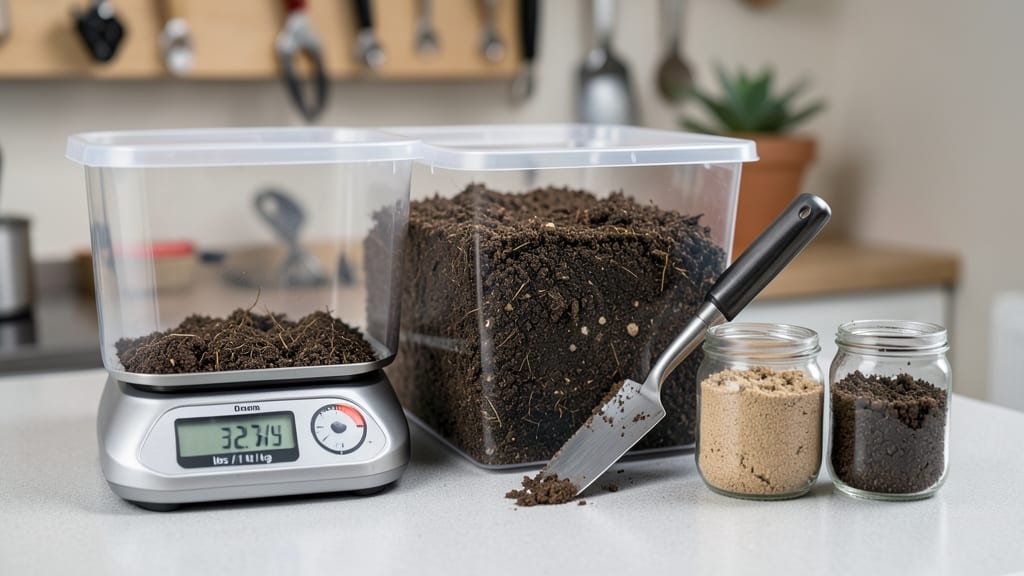
Determining the weight of 2 cubic feet of soil reveals it typically ranges from 40 to 60 pounds when completely dry, but swells to 50 to 80+ pounds once fully saturated with water, depending on the specific soil composition.
Understanding this weight variation is crucial for gardening tasks like moving soil or calculating container loads. The difference between dry and wet soil stems from how much water each particle type can absorb—sandy soil holds less moisture, while clay retains significantly more, making it much heavier when damp.
For example, a wheelbarrow full of clay soil can feel nearly twice as heavy after rain compared to dry conditions. 🌱 This knowledge helps prevent overloading equipment or misjudging plant root space requirements.
Most gardeners use this weight estimate to plan projects like raised beds or potting mixes. A simple trick is to fill a known-volume container (like a 2-cubic-foot bucket) with dry soil, weigh it, then adjust for moisture by adding up to 30% more weight.
This method works for both loose topsoil and denser subsoil, though compacted soil may weigh even more due to reduced air pockets.
💡 In This Article
- How Soil Composition Affects 2 Cu Ft Weight
- Practical Ways to Estimate Soil Weight for Gardening
How soil composition affects 2 cu ft weight
Soil weight varies dramatically based on particle size and composition. Sandy soil, made up of large particles with high porosity, typically weighs 35-45 pounds per 2 cubic feet when dry because its loose structure traps less water.
In contrast, clay soil—composed of tiny, tightly packed particles—can reach 50-70 pounds dry due to its dense mineral structure. Loam, the ideal gardening mix with balanced sand, silt, and clay, usually falls in the 45-55 pound range dry.
The real weight shift happens when moisture enters the equation. Sandy soil absorbs water quickly but only holds about 10-20% of its weight in additional moisture, adding 4-8 pounds when saturated.
Clay, however, can absorb 30-50% of its dry weight in water, potentially adding 20-35 pounds when wet—explaining why clay soil feels so much heavier after rain. 🌧️ Organic matter in loam also plays a role, as decomposed plant material can hold up to 5x its dry weight in water.
Compaction further alters weight by reducing air pockets. A well-trodden garden path might see dry soil weight increase by 15-25%** compared to loose soil, while waterlogged conditions can nearly double the weight of clay-based soils.
This is why construction sites often specify "bulk density" measurements—accounting for both natural compaction and moisture variations that affect equipment load calculations.
Here's how the numbers break down for common soil types:
- Sandy soil: Dry 35-45 lbs | Saturated 40-50 lbs (+5-10 lbs)
- Loamy soil: Dry 45-55 lbs | Saturated 55-70 lbs (+10-15 lbs)
- Clay soil: Dry 50-70 lbs | Saturated 70-90+ lbs (+20-30 lbs)
For gardeners, this means your 2 cu ft wheelbarrow load could feel like three times the work after heavy rain if you're moving clay soil.
The key is understanding your soil's texture—just squeeze a handful: if it forms a tight ball, you're dealing with heavy clay; if it crumbles easily, it's likely sandy.