
Landscaping
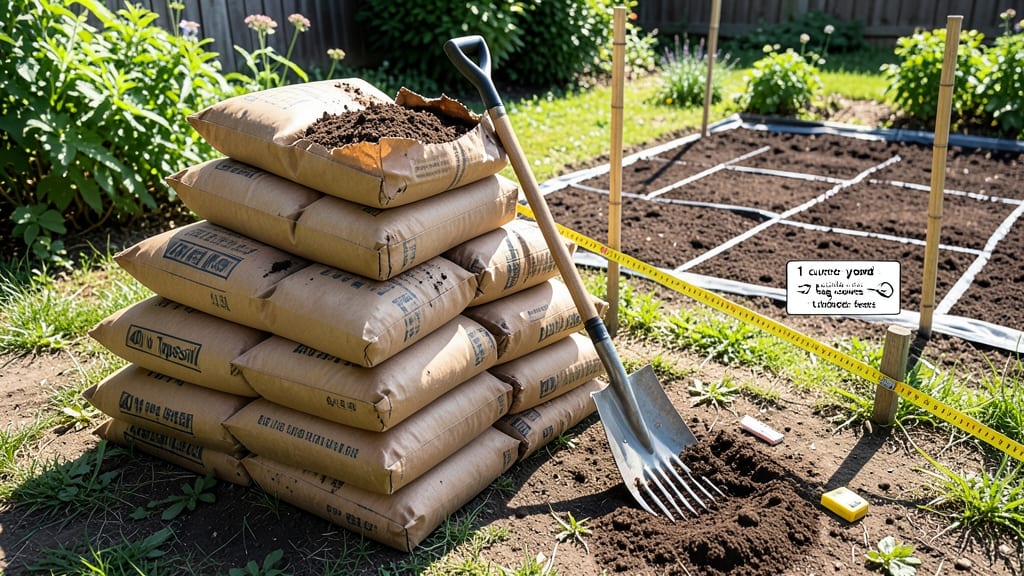
To figure out how many 40 lb bags of topsoil you need for a yard (3 cubic feet), plan for about 27 to 30 bags, though this can jump to 35+ bags if your soil is loose or damp. Always verify the cubic feet per bag since brands vary—wet or heavy soil packs differently than dry, sandy mixes.
Understanding this math starts with knowing that a cubic yard equals 27 cubic feet, and topsoil bags rarely match that volume perfectly. 🌱 The weight-to-volume ratio shifts based on moisture—wet soil feels heavier but takes up less space when compacted.
For example, a bag labeled "40 lbs" might only hold 1.5 cubic feet of dry, sandy soil, while clay-heavy mixes could deliver just 1 cubic foot per bag.
I always recommend buying 10% extra to account for these variations, especially if you're working with uneven garden beds or heavy rainfall conditions.
Pro tip: Check the manufacturer's specs for "cubic feet per bag" rather than relying solely on weight. Some premium brands pack their bags with higher density, meaning you might need fewer bags overall.
For large projects, consider renting a dump truck or ordering bulk delivery to avoid the hassle of counting individual bags—your back will thank you!
💡 In This Article
- Calculating Topsoil Volume: Cubic Feet vs. Weight
- Real-World Topsoil Bag Shopping Guide
Calculating topsoil volume: cubic feet vs. weight
Here's what's actually happening when you compare weight to volume: topsoil bags labeled "40 lbs" don't contain a consistent cubic feet measurement because soil density varies wildly.
Sandy soil, for example, typically weighs about 80-100 lbs per cubic foot when dry, while clay-heavy mixes can reach 120-140 lbs per cubic foot. This means the same 40 lb bag might hold 0.4 to 0.5 cubic feet of sandy soil but only 0.3 cubic feet of clay soil.
The key factor is porosity—sandy soil has more air pockets, while clay packs tightly.
Moisture content throws another wrench into calculations. Wet soil can weigh 30-50% more than dry soil due to water absorption, but it compresses differently when stored in bags.
A bag of damp soil might measure 10-15% less volume than the same weight of dry soil because water fills the air gaps between particles. 🌧️ This is why spring deliveries often require more bags—the soil arrives heavier and less voluminous.
For precise planning, multiply your cubic yard needs by the soil's bulk density (typically 1.2-1.5 tons per cubic yard for topsoil).
This science explains why your math might need adjustment. A cubic yard (27 cubic feet) of sandy topsoil might require 54-60 bags (27 ÷ 0.45 cubic feet per bag), while clay-heavy topsoil could demand 80-90 bags (27 ÷ 0.3 cubic feet per bag).
The industry standard of 27-30 bags per yard assumes an average density of 1.3 tons per cubic yard, but always verify with your supplier's density specs for their specific mix.
Compaction plays a sneaky role too. When you spread topsoil in your garden, it naturally settles 10-20% more than when it's in bags. This means you'll need slightly more bags than your initial calculation to account for this settling.
For example, if you calculate 30 bags for a yard, consider rounding up to 33 bags to ensure full coverage after compaction. This extra buffer prevents those frustrating "almost done" moments where you realize you're short by 5 bags.
Here's a practical comparison: A 1 cubic foot bag (common for some brands) would theoretically require 27 bags per yard, but most 40 lb bags contain 1.25-1.5 cubic feet of average topsoil.
That's why the standard falls between 27-30 bags—it's a balance between weight and volume that accounts for typical soil types. Always ask your supplier: "What's your cubic feet per bag measurement?" before making assumptions.
For visual learners, imagine stacking 27 standard 40 lb bags—they'd occupy roughly the same space as a cubic yard, but only if each bag contains 1 cubic foot.
Most bags exceed this, which is why you'll often see 27 bags ≈ 1 yard as a baseline, but real-world adjustments are always needed. The denser the soil, the more bags you'll need to fill that same yard.