
Neem Oil
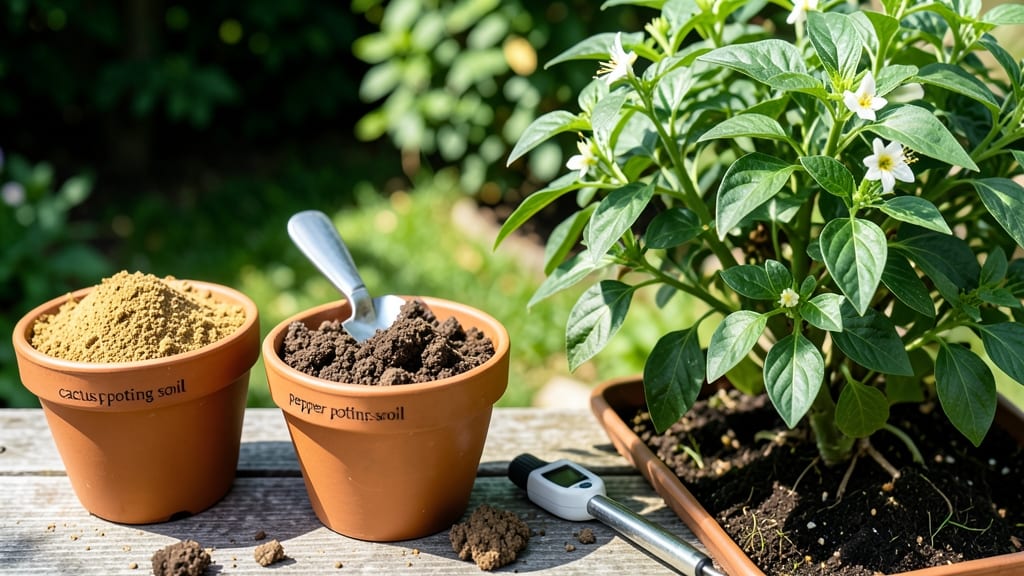
You can use cactus potting soil for peppers, but it requires careful adjustments: its fast-draining nature can dehydrate pepper roots, and its low organic matter limits nutrient availability. Amending with compost or all-purpose soil creates a balanced growing medium that supports healthy pepper development.
Peppers thrive in soil that retains moisture while allowing airflow, unlike cacti which demand bone-dry conditions. 🌱 The gritty mineral content of cactus soil disrupts pepper root systems by preventing proper hydration, while its lack of nitrogen and phosphorus stunts foliage and fruit production.
To adapt it, blend with 50% compost and 20% perlite—this mimics the moisture retention and nutrient density peppers need without sacrificing drainage. I’ve found that container-grown peppers benefit most from this mix, as their roots can’t seek deeper moisture like in-ground plants.
Regular soil tests are your best friend here: check moisture levels at 1-2 inches deep daily during hot weather, and supplement with fish emulsion every 4-6 weeks to compensate for the soil’s nutrient gaps.
The key is monitoring—if leaves yellow or growth slows, your mix needs more organic matter. For in-ground beds, till in aged compost first to create a nutrient-rich layer before adding any cactus soil blend.
💡 In This Article
- Why Cactus Soil Fails Peppers: Root Health and Nutrient Gaps
- How to Adapt Cactus Soil for Peppers: Safe Mixing Ratios and Amendments
Why cactus soil fails peppers: root health and nutrient gaps
Cactus soil is engineered for plants that thrive in arid conditions, with a mineral-heavy composition designed to mimic desert environments. This means it contains 60-70% inorganic matter (like volcanic rock or coarse sand) to prevent moisture retention, which is deadly for pepper roots that need consistent hydration.
Peppers require soil that holds 20-30% moisture by volume—a level cactus soil simply can't maintain without constant watering, leading to root dehydration and stunted growth. 🔥
The real problem lies in the nutrient profile. Cactus soil lacks organic matter, which means it’s nearly devoid of nitrogen (essential for leafy growth) and phosphorus (critical for fruiting). Peppers need 0.5-1% nitrogen and 0.1-0.2% phosphorus in their soil to produce healthy foliage and develop fruit.
In contrast, cactus soil typically contains less than 0.1% nitrogen and almost no phosphorus, forcing plants to compete for scarce resources. This deficiency shows up as yellowing leaves and poor fruit set.
Another key issue is the pH imbalance. Cactus soil often has a pH of 6.5-7.5, which is acceptable, but its lack of organic acids means peppers can’t access micronutrients like iron or zinc efficiently.
These nutrients are vital for pepper plants to develop strong cell walls and resist diseases. Without them, peppers become susceptible to blossom-end rot and other deficiencies, even if you’re watering and fertilizing regularly. 💫
Consider this comparison: a typical garden soil holds 5-10% organic matter, while cactus soil has less than 5%**. This organic matter acts like a sponge, slowly releasing nutrients and moisture to roots.
Without it, peppers struggle to establish a robust root system, making them more vulnerable to temperature fluctuations and pests. The gritty texture also disrupts the soil’s structure, preventing beneficial microbes from colonizing and breaking down organic material into plant-available nutrients.
For example, if you plant bell peppers in pure cactus soil, you’ll likely see slow growth and small, misshapen fruits within 4-6 weeks. The roots won’t spread efficiently because the soil lacks the fine particles needed for root hairs to anchor and absorb water.
Even with frequent watering, the roots can’t access moisture quickly enough, leading to wilting despite the soil appearing damp on the surface. This is why blending is non-negotiable for pepper cultivation. ✨
Think of it like feeding a car with premium fuel but no oil: the engine (pepper plant) will sputter and stall. Cactus soil provides the "fuel" (minerals) but lacks the "oil" (organic matter and nutrients) to keep everything running smoothly.
The result? A plant that looks healthy on the surface but is starving beneath it. 🌱