
How To
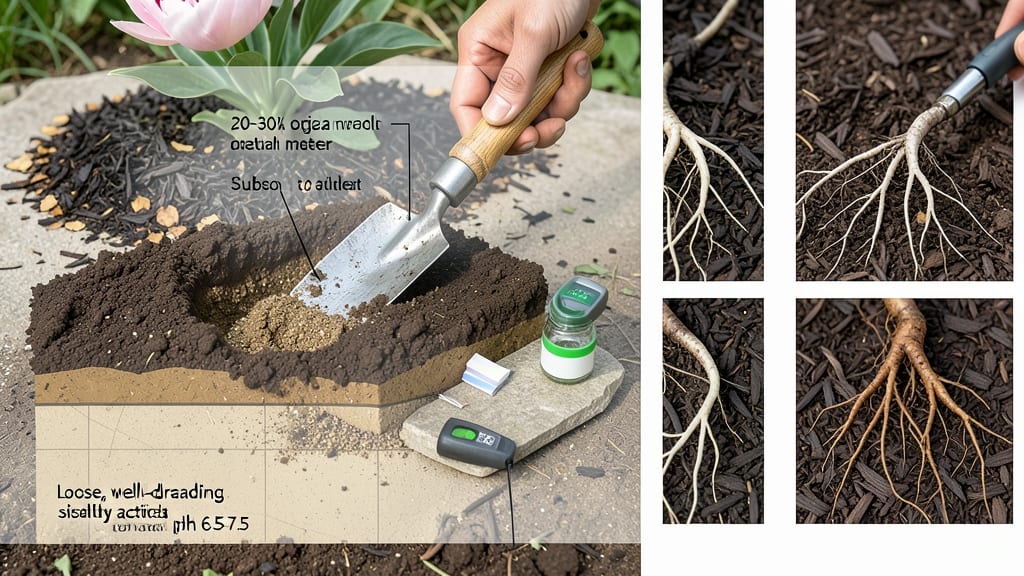
Peonies demand the right peony soil requirements to reward you with bold, fragrant blooms—and getting it wrong means years of disappointment. 🌸 I learned this after my first peony plants struggled in heavy clay, producing weak stems and sparse flowers.
The secret isn’t just any good soil—it’s well-draining, slightly acidic loam rich in organic matter, with a pH between 6.0 and 7.0. Without this foundation, even the hardiest peony roots can’t thrive.
Start with a soil test to check your pH and texture. If your soil is too sandy, mix in 2-3 inches of compost and a handful of peat moss to improve moisture retention. Clay-heavy soil?
Amend with coarse sand or perlite to prevent waterlogging, which rots those precious roots. The goal is a crumbly, almost cake-like texture—light enough to breathe, but sturdy enough to support those heavy blooms.
Once planted, mulch annually with 2-3 inches of organic mulch (like shredded bark) to maintain moisture and slowly improve the soil. Avoid fresh manure—it burns peony roots. Within 2-3 years, your soil will reward you with strong stems, lush foliage, and blooms so abundant they’ll make neighbors jealous.
This isn’t just about pretty flowers—it’s about longevity. Peonies can live for decades when given the right start. Skip the shortcuts, and your garden will thank you for years to come.
📚 In This Guide
- What you need
- Instructions
- Tips and common mistakes
- Wrapping up and next steps
What you need
- ● Garden soil (native or topsoil): 5–10 cubic feet (depending on planting size; peonies need well-draining loam).
- ● Compost or well-rotted manure: 2–3 gallons per plant (adds organic matter and nutrients).
- ● Peat moss or coconut coir: 1–2 gallons (boosts acidity and improves aeration; avoid fresh peat).
- ● Perlite or coarse sand: 1–2 cups per plant (ensures drainage; avoid fine sand).
- ○ Lime (optional but critical): 1–2 lbs of pelletized dolomitic lime per 100 sq ft (adjusts pH to 6.5–7.5; test soil first!).
- ● Balanced fertilizer (10-10-10 or 5-10-10): 1–2 tbsp per plant (apply sparingly—peonies hate excess nitrogen!).
- ● Garden trowel or spade: For digging holes (12–18" deep, 12–18" wide).
- ● Garden fork: To loosen compacted soil (especially if planting in clay).
- ● pH testing kit: Highly recommended—peonies hate alkaline soil!
- ● Gloves and knee pads: Because gardening is hard work!
- ● Watering can or hose with gentle nozzle: For post-planting hydration.
- ● Mulch (pine bark or straw): 2–3 inches to retain moisture and suppress weeds.
- ● Slow-release organic fertilizer (e.g., bone meal): 1 tbsp per plant (for phosphorus-loving peonies).
- ● Soil conditioner (e.g., BioChar): 1 cup per hole (improves structure and microbial activity).
- ● Epsom salt (magnesium sulfate): 1 tbsp per plant (if soil tests low in magnesium).
Creating the perfect soil mix for peonies
Peonies demand specific soil conditions to thrive—here’s how to craft the ideal growing medium.
🌱 Step 1: Start with a Loamy Base
Peonies crave a loamy soil that balances sand, silt, and clay for optimal drainage and nutrient retention. Begin with 40% topsoil—this provides essential organic matter and structure. I always test my garden soil first by squeezing a handful: if it crumbles easily, it’s ready; if it sticks together, amend it.
Add 30% compost to improve fertility and microbial activity. Peonies are heavy feeders, and compost releases nutrients slowly over time. Avoid fresh manure—it can burn roots and disrupt the pH balance. Instead, opt for well-aged compost or leaf mold for a gentler nutrient boost.
💧 Step 2: Amend for Drainage and Acidic pH
Peonies refuse soggy soil—poor drainage leads to root rot and lost blooms. Mix in 20% coarse sand or perlite to create air pockets and prevent waterlogging. I like perlite because it’s sterile and won’t compact over time like some sands. For every 1 cubic foot of soil, add 1 quart of perlite—this ensures excess moisture drains away while retaining enough water for roots.
Peonies prefer a slightly acidic to neutral pH (6.5–7.0). Test your soil with a kit before planting. If it’s too alkaline (above 7.5), mix in 10% peat moss—it lowers pH gradually. For acidic soil (below 6.0), add crushed limestone sparingly. Aim for small adjustments: ½ cup per cubic foot of mix is plenty to avoid shocking the roots.
☀️ Step 3: Build a Raised Bed or Mound
Peonies hate wet feet, so elevate them if your native soil drains poorly. Create a 12-inch-high mound or raised bed using your amended mix. This mimics their natural preference for well-drained hilltops. For each peony, dig a hole twice as wide as the root ball but no deeper—peonies resent being planted too deep, which can rot the crown.
Fill the hole halfway with your custom mix, then place the peony root system on top. Spread the roots outward gently—never bend them—and cover them with the remaining soil. Press lightly to eliminate air pockets, but don’t compact. Water deeply to settle the soil around the roots, ensuring no gaps remain.
✂️ Step 4: Mulch for Moisture and Protection
Apply 2–3 inches of organic mulch (like shredded bark or straw) around the base of the peony. This conserves moisture, regulates soil temperature, and suppresses weeds—all critical for peonies, which despise competition. Keep mulch 3–4 inches away from the crown to prevent rot and pests like slugs.
Replenish mulch annually in early spring. Over time, organic matter breaks down and improves soil structure. I top-dress with a thin layer of compost each year to maintain fertility. Avoid heavy mulches like wood chips, which can acidify the soil over time and disrupt the pH balance peonies need.
⏰ Step 5: Monitor and Adjust Over Time
Peonies are slow to establish but reward patience. After planting, water deeply once a week unless rain provides 1 inch of moisture. Overwatering is their biggest enemy—yellowing leaves signal soggy roots, while drooping blooms often mean thirst. Adjust your watering based on rainfall: in summer, peonies need consistent moisture, but they’ll tolerate brief dry spells once established.
Every 3–4 years, test soil pH and amend if needed. Peonies in ideal conditions produce lush, disease-free blooms for decades. If blooms fade quickly, it’s often a sign of over-fertilizing—stick to organic matter and avoid synthetic nitrogen, which promotes leafy growth at the expense of flowers.
Tips & tricks for perfect peony soil mix
These essential strategies will help you create the ideal growing environment for peonies that thrive for decades.
Soil Texture Check: Before mixing, test your native soil's texture by squeezing a handful—if it forms a tight ball, it needs more sand or perlite (as specified in Step 2). For the 40% topsoil base in Step 1, I recommend using a blend of garden soil and a small amount of fine sand (about 10%) if your soil is too heavy. This subtle adjustment prevents compaction while maintaining the loamy structure peonies love.
Compost Quality Matters: The 30% compost in Step 1 should be well-aged (at least 6 months old) to avoid heat spikes that can damage peony roots. I've learned this the hard way—fresh compost can raise soil temperatures to dangerous levels. For best results, use leaf mold or composted leaf litter, which breaks down slowly and improves soil structure without risking heat stress.
pH Testing Precision: When testing soil pH in Step 2, use a digital meter for accuracy rather than color-changing kits. I've found that kits can be off by 0.5 points, which makes a big difference for peonies. If your soil tests at 7.2 (slightly alkaline), you'll need that 10% peat moss for every cubic foot—don't skip this adjustment, as even small pH shifts affect nutrient availability.
Mulch Placement Technique: For the 2-3 inches of mulch in Step 4, create a small berm around the plant base to keep mulch exactly 3-4 inches away from the crown. This prevents moisture buildup that leads to crown rot. I use a narrow shovel to carefully shape the soil into a gentle slope before adding mulch—this simple technique has saved multiple peony plants from fungal issues.
Pro Tips for Peony Soil Requirements
- These essential strategies will help you create the ideal growing environment for peonies that thrive for decades.
- Soil Texture Check: Before mixing, test your native soil's texture by squeezing a handful—if it forms a tight ball, i...
- Compost Quality Matters: The 30% compost in Step 1 should be well-aged (at least 6 months old) to avoid heat spikes t...
Frequently asked questions
Got questions about peony soil? You’re not alone!
Here are answers to the most common concerns—so you can grow showstopping blooms with confidence.
What type of soil do peonies need most?
Peonies thrive in well-draining, fertile loam with a slightly acidic to neutral pH (6.0–7.5). Avoid heavy clay or sandy soils—amend with compost or organic matter to mimic their ideal woodland garden conditions. A mix of 50% topsoil, 30% compost, and 20% perlite works wonders!
When is the best time to prepare the soil for planting peonies?
Prepare the soil 2–4 weeks before planting (fall or early spring). This gives microbes time to break down amendments. For fall planting (ideal in most zones), aim for 6–8 weeks before frost—just enough time for roots to establish before winter dormancy.
Can peonies grow in containers? What soil mix should I use?
Yes! Use a large container (at least 18" deep) with a mix of 60% potting soil, 20% perlite, and 20% compost. Add a slow-release fertilizer (like bone meal) at planting. Drainage holes are a must—peony roots rot in soggy soil. Repot every 3–4 years to refresh nutrients.
My peony leaves are yellowing—is the soil too acidic?
Yellowing leaves often signal poor drainage or nutrient issues, not just pH. Test your soil (pH strips or a lab kit) first—peonies tolerate 6.0–7.5. If drainage is the culprit, raise the plant with a mound of soil or add organic matter. For yellowing from iron deficiency, apply chelated iron or compost.
Do peonies need special soil for herbaceous vs. tree peonies?
Both types prefer similar soil, but herbaceous peonies (die back in winter) benefit from extra compost for spring growth. Tree peonies (evergreen) need slightly better drainage—avoid waterlogging. For both, mulch lightly in winter (2–3 inches) to protect roots without suffocating them.
Wrapping up and next steps
Growing stunning peonies starts with the right soil—well-draining, slightly acidic loam rich in organic matter is your secret to lush, vibrant blooms! 🌸 With the right amendments (like compost, sand, or sulfur) and proper pH balance, you’ll create the perfect foundation for these show-stopping flowers.
Don’t let soil stress hold you back—your garden’s future beauty is just a few shovelfuls away!
Ready to transform your garden? Test your soil today, make the necessary adjustments, and watch your peonies thrive. Happy planting! 🌱