
How To
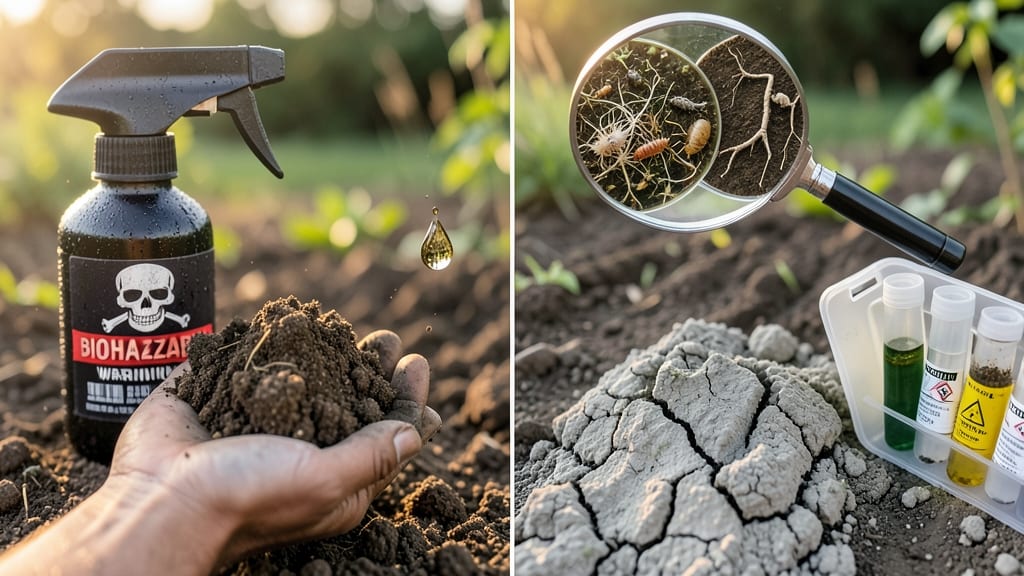
The effects of chemical weed control on soil and environment include microbial disruption, organic matter depletion, and nutrient leaching, alongside groundwater pollution and wildlife harm. Prolonged use devastates soil fertility and biodiversity, often necessitating years of organic restoration.
Chemical herbicides don't just kill weeds—they create a chain reaction in your soil that can take years to reverse. 🌱 The active ingredients, like glyphosate, don't discriminate; they wipe out beneficial bacteria and fungi that break down organic matter, leaving your soil lifeless and compacted.
Worse yet, these chemicals often linger in groundwater, creating dead zones where aquatic life struggles to survive. I've seen gardens where the soil turned to dust after just three years of heavy herbicide use, requiring compost tea and cover crops just to bring it back.
What's even more concerning is how these chemicals interact with your local ecosystem. For instance, 2,4-D (a common herbicide) has been linked to bee colony declines by disrupting their navigation systems. The long-term cost isn't just environmental—it's financial too.
Many gardeners end up spending more on soil amendments and organic alternatives than they would have on manual weed control in the first place.
💡 In This Article
- How Herbicides Degrade Soil Health Over Time
- Restoring Soil After Chemical Weed Control: Organic Recovery Methods
How herbicides degrade soil health over time
Herbicides like glyphosate and 2,4-D work by disrupting plant growth hormones, but their damage extends far beyond weeds. These chemicals contain active ingredients that mimic natural plant hormones, causing uncontrolled growth in weeds—but they also interfere with soil microbes that decompose organic matter.
For example, glyphosate can kill up to 90% of beneficial bacteria in the top 6 inches of soil, including nitrogen-fixing bacteria like Rhizobium and mycorrhizal fungi that form symbiotic relationships with plant roots.
The real kicker? Herbicides don't just kill microbes—they alter soil chemistry. Glyphosate, for instance, chelates essential minerals like magnesium, calcium, and phosphorus, making them unavailable to plants. Over time, this creates a nutrient imbalance where plants struggle to uptake even the nutrients present in the soil.
Studies show that repeated glyphosate applications can reduce soil organic matter by 30-50% within 3-5 years, turning once-fertile soil into a compacted, lifeless substrate. 🌱
Different herbicides target different soil components. For example, 2,4-D (a common broadleaf herbicide) breaks down soil aggregates by disrupting fungal hyphae that bind soil particles together. This leads to increased erosion and water runoff, washing away precious topsoil.
Meanwhile, atrazine (a triazine herbicide) has been shown to persist in soil for decades, contaminating groundwater and creating "dead zones" where aquatic ecosystems collapse. The pH of the soil can also shift, often becoming more acidic as microbial activity declines.
Clay particles, which hold water and nutrients, suffer too. Herbicides like dicamba interfere with the formation of stable clay-humus complexes, reducing the soil's water-holding capacity by up to 40%. This means your plants are more susceptible to drought stress, even in well-watered conditions.
The cumulative effect? Soil that was once dark, crumbly, and rich becomes pale, dense, and resistant to root penetration—like trying to grow plants in concrete. 💥
What most people don't realize is how these changes ripple through the ecosystem. Soil microbes aren't just passive inhabitants—they're the backbone of nutrient cycling. When herbicides wipe them out, the entire food web suffers. Earthworms, which aerate soil and mix organic matter, decline by 60-80% in treated areas.
This creates a vicious cycle: fewer worms mean less organic matter incorporation, which means even more herbicide is needed to control weeds, further degrading the soil.
Consider this: a single application of glyphosate can reduce microbial biomass by 50% within weeks, and it takes 2-5 years of organic amendments to restore even basic microbial diversity. The cost isn't just environmental—it's economic too.
Many farmers and gardeners end up spending $500-$2,000 per acre on soil remediation after just a few years of herbicide use, not to mention the lost crop yields from degraded soil. The bottom line? Chemical weed control isn't just killing weeds—it's killing the foundation of your garden's health. ✨