
Diseases
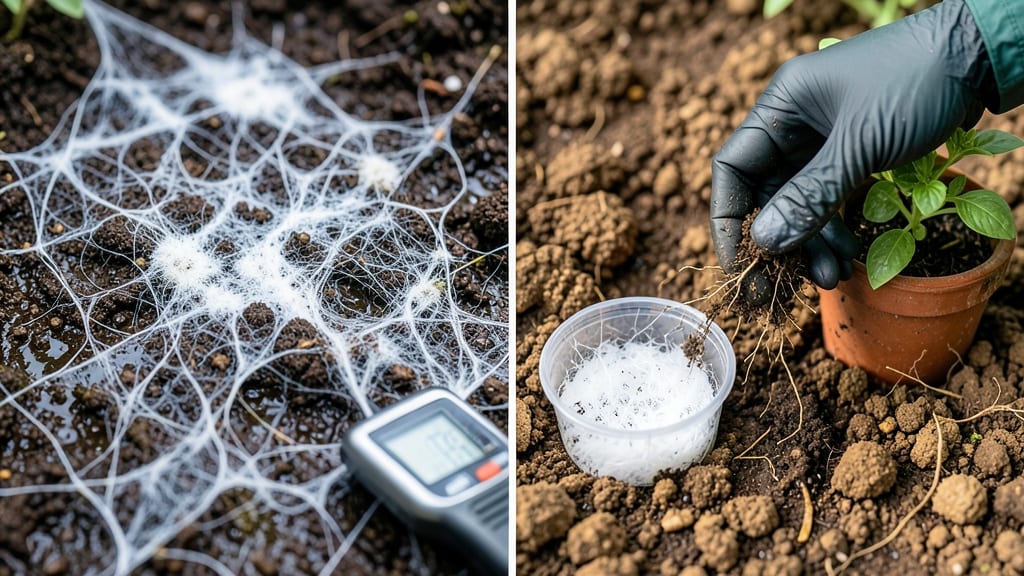
When your garden soil has white fungus, it’s usually harmless mold like Penicillium or Aspergillus, though it can indicate overwatering or poor drainage. While most types are safe, black mold or aggressive spread may damage plant roots—check soil moisture and airflow to address the issue.
That white fungus you’re seeing is often just nature’s way of breaking down organic matter, like Penicillium which helps decompose plant debris. 🌱 However, if it’s spreading rapidly or turning dark, it could mean your soil is too wet or lacks proper aeration.
I’ve found that adding coarse sand or perlite to heavy clay soils can work wonders—it improves drainage while keeping moisture levels balanced. For existing fungal growth, a light sprinkle of baking soda (about 1 tablespoon per gallon of water) can help restore a healthier microbial balance without harming plants.
What’s key is acting before the problem worsens. If you notice roots looking mushy or plants wilting despite regular watering, that’s your cue to adjust your care routine. Most gardeners overlook airflow, but simply loosening compacted soil or adding mulch can prevent future outbreaks.
The goal is to create an environment where beneficial microbes thrive while keeping harmful fungi in check.
💡 In This Article
- Identifying Common White Fungus in Garden Soil
- How to Prevent and Fix White Fungus in Soil
Identifying common white fungus in garden soil
White fungal growth in garden soil typically appears when moisture levels are consistently high, creating the perfect environment for microbial activity. The most common culprits are Penicillium and Aspergillus—both are saprophytic molds that thrive on decomposing organic matter like fallen leaves or plant debris.
These fungi produce white, powdery or fuzzy colonies that spread slowly across the soil surface, often accompanied by a faint musty aroma. They're generally harmless to plants but indicate your soil may be too damp or lacking proper aeration.
The key difference between harmless molds and dangerous pathogens lies in their appearance and behavior. Penicillium usually forms blue-green or white fuzzy patches, while Aspergillus creates dense, powdery colonies.
In contrast, harmful fungi like Rhizoctonia or Pythium appear as dark, water-soaked lesions on plant stems or roots, often accompanied by wilting. 🌱 The texture of the soil also provides clues—healthy soil should crumble easily when dry, while fungus-prone soil may feel gummy or cling to your fingers, signaling excess moisture retention.
Temperature plays a crucial role in fungal growth, with most white molds thriving between 60-80°F. If your garden is shaded or lacks airflow, these conditions persist longer.
I've noticed that containers and raised beds are particularly vulnerable because they can dry out unevenly, creating pockets of excess moisture where fungi take hold.
The visual pattern matters too—slow-spreading white growth is usually benign, but rapid expansion with darkening edges suggests a more aggressive pathogen that could harm plant roots.
To properly identify the fungus, examine it under natural light and note its texture and spread rate. Harmless molds typically grow in isolated patches, while pathogenic fungi often appear along root zones or plant bases.
A simple pH test (ideal range is 6.0-7.0) can also help—soils with extreme pH levels (below 5.5 or above 8.0) are more susceptible to fungal overgrowth.
If you're unsure, collect a small sample in a sealed bag and observe it for 24-48 hours—rapid changes in color or smell indicate a potential problem.
Consider this practical test: Press a small amount of the white growth between your fingers. If it crumbles easily and smells earthy, it's likely harmless mold. However, if it feels slimy or leaves a dark stain, that's a red flag for a more serious issue.
The key is acting before the fungus spreads—most gardeners don't realize how quickly these problems can escalate from a minor cosmetic issue to a full-blown plant health crisis. 💫