
Tools
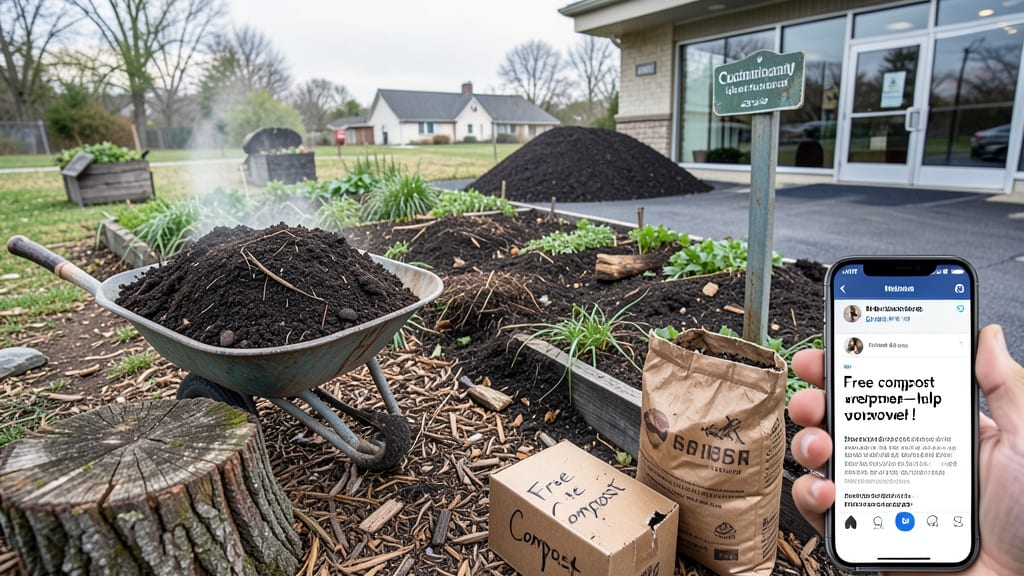
To get free soil for your garden, check local construction sites for unused topsoil, ask neighbors or community gardeners for compost or extra dirt, or visit tree-trimming services for wood chip mulch that breaks down into nutrient-rich soil. Always verify legality before removal.
Getting free soil for your garden is easier than you might think, especially if you know where to look.
Many construction sites discard perfectly good topsoil, and tree-trimming services often give away wood chips that eventually turn into rich organic matter. 🌱 I've found that simply asking around in neighborhood groups or gardening clubs can also yield surprising results—people are often happy to share their excess compost or garden soil.
Just remember to check local regulations first, as some areas restrict soil removal without proper permits.
Beyond free sources, you can also create your own soil mix at home using household waste like coffee grounds, eggshells, or yard trimmings. These materials break down over time, adding nutrients to your garden beds naturally.
The key is patience and layering—combining different organic materials creates a balanced, nutrient-dense growing medium that rivals store-bought options.
💡 In This Article
- Legal Ways to Source Free Topsoil Locally
- Community and DIY Methods for Free Garden Soil
Legal ways to source free topsoil locally
Construction sites are goldmines for free topsoil, but you must approach this legally.
Many developers remove topsoil before building, leaving piles of nutrient-rich dirt that would otherwise end up in landfills. 🌿 The key is timing—contact the site manager during early excavation phases (typically 2-4 weeks before pouring foundations) when unused topsoil is still on-site.
Some sites even offer it for free to avoid disposal fees, while others may charge a nominal handling fee ($5-$20 per cubic yard) to cover transportation costs.
Roadwork projects and municipal landfills often have similar opportunities. Public works departments sometimes redistribute excavated soil from road repairs or utility installations, especially if it contains minimal contaminants.
Always ask for a material safety data sheet (MSDS) to verify the soil is free of chemicals or heavy metals—some construction sites use treated soil that's unsafe for gardens. 🚧 For example, soil from asphalt removal may contain residual bitumen, while topsoil from undisturbed areas is typically safe after basic testing (a simple pH test kit costs $10 and can reveal potential issues).
Tree-trimming services provide another legal source: wood chips. When trees are removed, companies often give away 3-5 cubic yards of wood chips per load for free or a small fee. These chips break down into nutrient-rich humus over 1-3 years, improving soil structure and moisture retention. 🌳 The catch?
You'll need to store them in a well-drained area (like a compost bin with airflow) to prevent mold. Some cities even offer free chipped wood through municipal green waste programs—check your local recycling center for details.
Always verify permits before removing soil. Many areas require a soil removal permit if you transport more than 1 cubic yard, while some prohibit removal entirely to protect native ecosystems.
Call your local department of environmental protection to confirm rules—some counties allow free soil if you use it on-site (e.g., for erosion control), while others mandate fees for off-site transport. 📋 Pro tip: Bring a 5-gallon bucket to construction sites—small quantities are often overlooked for free, even if larger hauls require paperwork.
Ethical sourcing matters too. If a site is actively donating soil, prioritize that over taking what might be needed for restoration.
Some developers partner with local gardens to repurpose excess topsoil—ask if they have a "first come, first served" policy for community members. 🌱 For example, the Master Gardener programs in many states maintain lists of approved soil sources and can connect you with legal, high-quality options in your area.
Safety is critical when handling free soil. Wear a dust mask (N95 rating) when working with construction soil, as it may contain fine particles from demolition.
Wood chips from tree services are safer but can harbor spores or pests—sterilize them by baking at 180°F for 30 minutes if you notice mold or insects. Always store soil in perforated bags or open piles to prevent compaction and improve aeration.