
Light Requirements
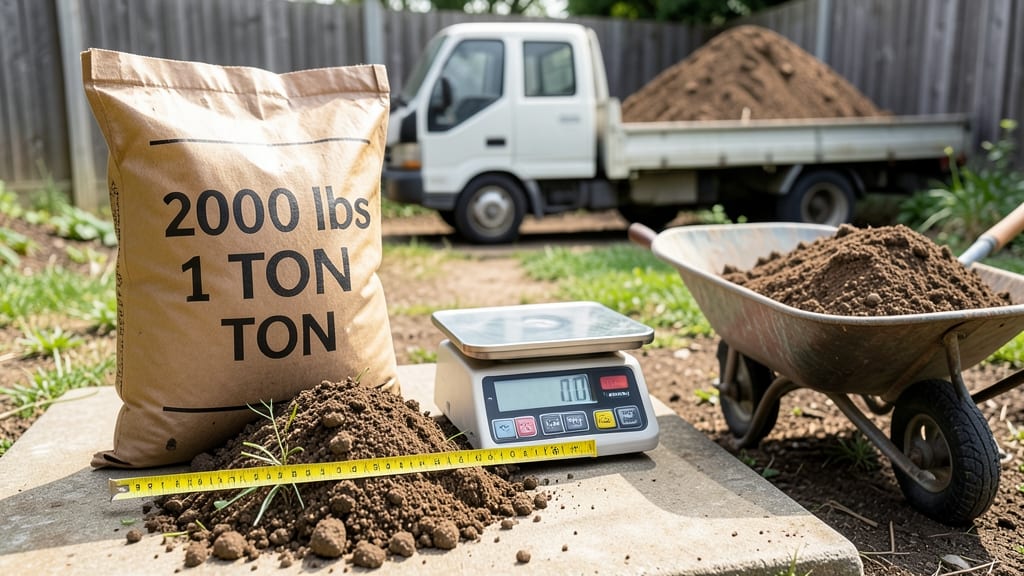
One yard of topsoil weighs approximately 2,000 to 2,700 pounds (or 1 to 1.35 tons), depending on moisture content and soil composition. Loose, dry topsoil averages closer to 2,000 lbs, while damp or compacted soil can exceed 2,500 lbs per cubic yard.
Understanding topsoil weight helps you plan landscaping projects accurately. A cubic yard of topsoil isn't just a fixed number—it varies based on how much water it holds and its composition. 🌱 For example, sandy soil weighs less than clay-heavy soil because sand particles are lighter and less dense.
This means your project's soil type can change the total weight by hundreds of pounds, impacting delivery costs and equipment needs.
Most suppliers use 2,000 pounds per cubic yard as a baseline estimate, but I always recommend confirming with your vendor. They'll often adjust based on your specific soil mix and moisture levels. This small detail can save you from overordering or dealing with unexpected delivery fees.
💡 In This Article
- Factors Affecting Topsoil Weight Variations
- Practical Topsoil Weight Calculations for Landscaping Projects
Factors affecting topsoil weight variations
Topsoil weight fluctuates primarily due to its moisture content, which can vary by up to 50% between dry and saturated conditions. A cubic yard of dry topsoil might weigh 2,000 pounds, but when fully saturated with water, that same volume can swell to 2,700 pounds or more.
This happens because water fills the pore spaces between soil particles, significantly increasing overall density. For example, clay-heavy topsoil holds more water than sandy soil, making it heavier even when both are measured in the same cubic yard volume.
The organic matter percentage also plays a critical role—soil with 5-10% organic content (like compost or decomposed plant material) weighs slightly less than purely mineral-based topsoil. This is because organic matter has a lower bulk density than minerals.
Meanwhile, particle density (how tightly packed the soil is) creates another variation: sandy soil has larger particles with more air pockets, reducing weight, while clay particles are smaller and pack more tightly, increasing weight.
A cubic yard of pure sand might weigh 2,200 pounds, while clay-rich topsoil can approach 2,800 pounds when damp.
Compaction is another key factor—foot traffic or heavy machinery can compress topsoil, reducing its volume while increasing weight. For instance, a freshly delivered cubic yard of loose topsoil might weigh 2,100 pounds, but after being spread and compacted (like in a garden bed), the same volume could weigh 2,500 pounds or more. This is why suppliers often recommend ordering 5-10% more than your calculated needs to account for settling and compaction during installation.
Even the type of organic amendments mixed into topsoil affects weight. Peat moss, for example, is lighter than coconut coir or well-rotted manure, which can add 100-300 pounds per cubic yard depending on the mix.
If you're working with a supplier, ask for the specific blend—some "premium" topsoil mixes include additional nutrients that increase weight beyond standard ranges.
For practical purposes, moisture content is the biggest wild card. A sudden rainstorm can add hundreds of pounds to a delivered load, making it critical to check soil dampness before ordering.
Pro tip: Use a soil moisture meter or press a handful—if water drips out, the soil is too heavy for accurate weight estimates. 💧
Understanding these variations helps avoid surprises during delivery. For example, a project requiring 10 cubic yards of topsoil might actually need 11-12 cubic yards if the soil is compacted or if you plan to till it deeply.
Always confirm with your supplier whether their weight estimates are based on dry, moist, or saturated conditions.