
Landscaping
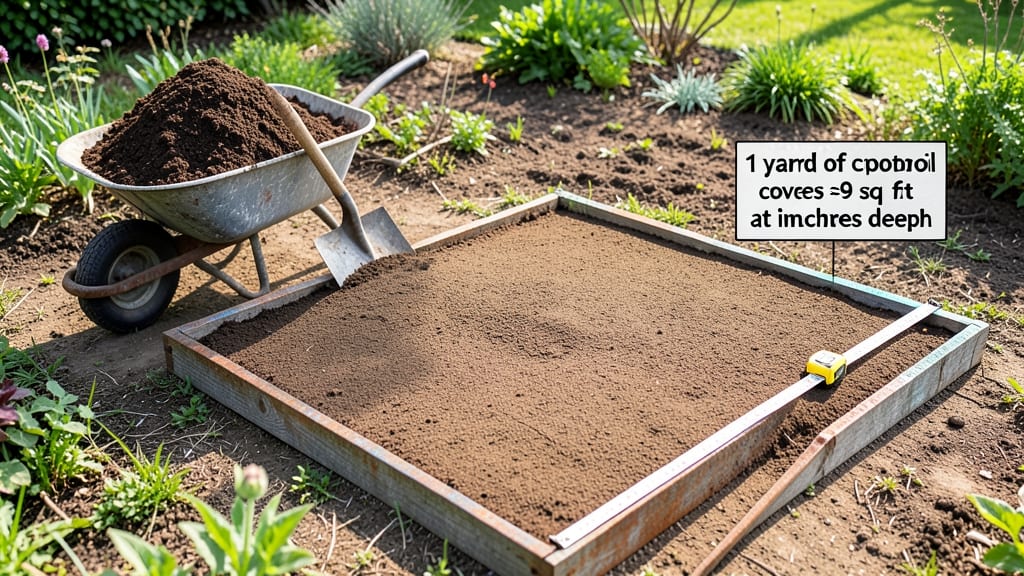
A yard of topsoil covers 100 square feet when spread 3 inches deep, the standard depth for most gardening and landscaping projects. Adjust depth to alter coverage—deeper layers require less area, while thinner applications expand square footage.
Understanding this math is key to avoiding costly overages or shortages.
A cubic yard of topsoil (27 cubic feet) converts to 100 square feet at 3-inch depth because of the simple formula: 324 cubic feet (1 yard × 12 inches × 12 inches) ÷ 3 inches = 108 square feet, rounded to 100 for practical purposes. 🌱 For example, a 10'×10' garden bed needs 1 yard, but a 20'×20' area would require 4 yards.
I always recommend measuring your space first—most garden centers sell topsoil by the cubic yard, so precise calculations save money and trips.
Depth matters more than you'd think. A 2-inch layer stretches a yard to cover 150 square feet, while a 4-inch layer cuts coverage to 75 square feet. This is why professional landscapers often specify depth—they're balancing cost, plant root needs, and erosion control.
For raised beds, I typically use 6 inches to ensure roots have room to grow without competing with weeds.
💡 In This Article
- Calculating Topsoil Coverage by Depth and Project Needs
- Topsoil Coverage Tips for Common Landscaping Tasks
Calculating topsoil coverage by depth and project needs
The math behind topsoil coverage comes down to volume divided by depth. A cubic yard of topsoil contains 27 cubic feet (3 feet × 3 feet × 3 feet), but when spread, its coverage depends entirely on how thick you lay it.
The standard 3-inch depth (0.25 feet) creates that familiar 100 square feet coverage because 27 cubic feet ÷ 0.25 feet = 108 square feet—rounded down to 100 for practical ordering. This formula works for any depth: divide 27 by your target depth in feet to get square footage.
Depth directly impacts how far your topsoil will go. A 2-inch layer (1/6 foot) stretches a yard to cover 162 square feet, while a 4-inch layer (1/3 foot) cuts coverage to 81 square feet.
This is why flower beds often use 3-4 inches—enough for roots but not so deep it becomes wasteful. For lawn topdressing, I've seen pros use 1/4-inch layers to spread a yard over 270 square feet, perfect for leveling uneven patches without smothering grass.
Project type dictates ideal depth. Vegetable gardens typically need 6-12 inches of topsoil for deep-rooted crops like tomatoes, while shallow-rooted herbs might thrive in just 3 inches. The key is matching depth to plant needs—too little restricts growth, while too much can compact and suffocate roots.
For example, a 10'×10' raised bed (100 sq ft) at 6 inches deep would require 2.5 cubic yards (100 ÷ 4 = 25 sq ft per yard at 6-inch depth).
Real-world adjustments often come into play. Uneven ground means some areas need extra topsoil, while slopes may require deeper layers to prevent erosion. I always add 10% extra when ordering for these variables—it's better to have a little left over than to run short mid-project.
For large areas, consider renting a soil screed (a long straightedge) to ensure even depth distribution, which saves both material and labor.
Topsoil composition also affects coverage slightly. Lighter, less compacted soils spread more easily than heavy clay-based mixes, which can compress and reduce actual coverage by 10-15%. This is why amending topsoil with compost or sand before spreading can improve both coverage and plant growth.
The texture matters just as much as the depth—think of it like spreading frosting on a cake: smooth application ensures even coverage.
For precision, I recommend using a tape measure and level for larger projects or a simple shovel and string line for smaller beds. Mark your area, then use the string to create a level guide for consistent depth.
This method has saved me from over-ordering (and wasted trips to the garden center) more times than I can count. The visual guide ensures every shovel full lands at the same thickness.
Remember: the 3-inch rule is a starting point**—adjust based on your specific needs. Whether you're creating a new flower bed or repairing a lawn, understanding this relationship between depth and coverage puts you in control of both your budget and your garden's success. 🌿