
Light Requirements
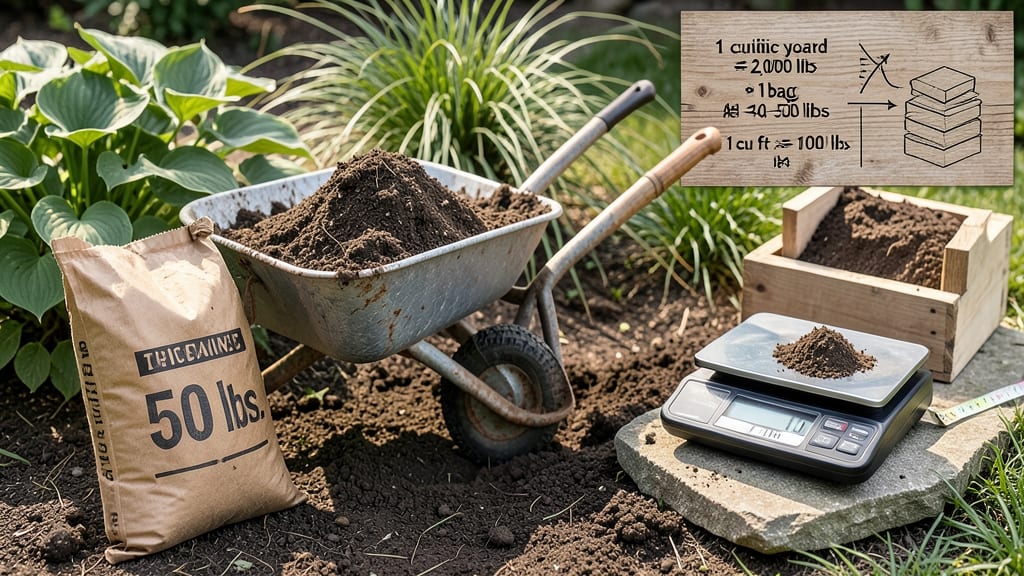
To determine how much topsoil weighs, expect 2,000 to 2,200 pounds per cubic yard or 100 to 120 pounds per cubic foot, with variations based on moisture levels and soil density.
Understanding topsoil weight helps you plan for projects like garden beds or lawn top-dressing. 🌱 The weight range reflects how moisture and compaction change density—wet or packed soil can tip the scale toward the heavier end, while dry, loose soil leans lighter.
For example, a 5-gallon bucket of topsoil typically weighs 30 to 40 pounds, making it manageable for small projects, but larger volumes require heavy machinery or teamwork. Always account for these factors when estimating delivery needs or calculating material costs.
This variation isn't just about numbers—it directly impacts how much you'll need for your project.
A 100-square-foot garden bed at 6 inches deep might require 3 to 4 cubic yards of topsoil, but if your soil is already compacted, you may need to adjust the volume to avoid overloading your space. Knowing these weights helps you avoid surprises when ordering materials or planning for labor.
💡 In This Article
- Factors Affecting Topsoil Weight Variations
- Calculating Topsoil Weight for Landscaping Projects
Factors affecting topsoil weight variations
Moisture content is the single biggest factor influencing topsoil weight. Dry topsoil can weigh as little as 1,800 pounds per cubic yard, while saturated soil may exceed 2,500 pounds—that's a 38% difference in weight for the same volume. The reason?
Water fills the pores between soil particles, significantly increasing overall density. For example, a 5-gallon bucket of dry topsoil might weigh 30 pounds, but when wet, it could swell to 40 pounds or more. This variation explains why suppliers often specify "dry weight" for deliveries. 💧
Soil composition plays a critical role too. Sandy topsoil, with larger particles and more air space, typically weighs 1,800-2,000 pounds per cubic yard, while clay-heavy soil—dense and compact—can reach 2,400 pounds.
The organic matter percentage matters as well: soil with 5-10% organic content (like compost) weighs less than mineral-heavy soil because organic material has lower bulk density. For instance, a cubic foot of organic-rich topsoil might weigh 90 pounds, whereas mineral-heavy soil could hit 120 pounds.
Compaction levels create another major variation. Loose, freshly tilled topsoil weighs 20-30% less than packed soil due to increased air pockets.
For example, a 100-square-foot garden bed filled with loose topsoil at 6 inches deep might require 3 cubic yards, but if you compact it (like in a heavily walked lawn area), you could need 2.5 cubic yards for the same volume.
This difference impacts both material costs and project planning. 🏗️
Regional differences also affect weight. Topsoil from humid climates tends to retain more moisture, increasing weight, while arid-region soil stays lighter.
For example, topsoil from the Pacific Northwest (high organic matter, moist climate) might average 2,100 pounds per cubic yard, while Southwestern soil (drier, sandier) could be closer to 1,900 pounds. Even within a region, soil from different sources varies—peat-based mixes are lighter, while loam blends are heavier.
One often-overlooked factor is temperature. Cold soil holds more moisture (since water expands when frozen), increasing weight temporarily. In winter, a cubic yard of topsoil might weigh 2,300 pounds, but once thawed and dried in summer, it could drop to 2,000 pounds.
This seasonal fluctuation is why landscapers recommend ordering topsoil in dry, warm months for more predictable weights. ❄️
For practical purposes, most suppliers use a standard weight of 2,200 pounds per cubic yard as a baseline, accounting for average moisture and compaction. However, if your project requires precise calculations (like heavy machinery load limits), factor in a 10-15% buffer for moisture variations.
Always check with your supplier for local soil profiles—they often provide weight ranges based on their specific blends. 📊