
Light Requirements
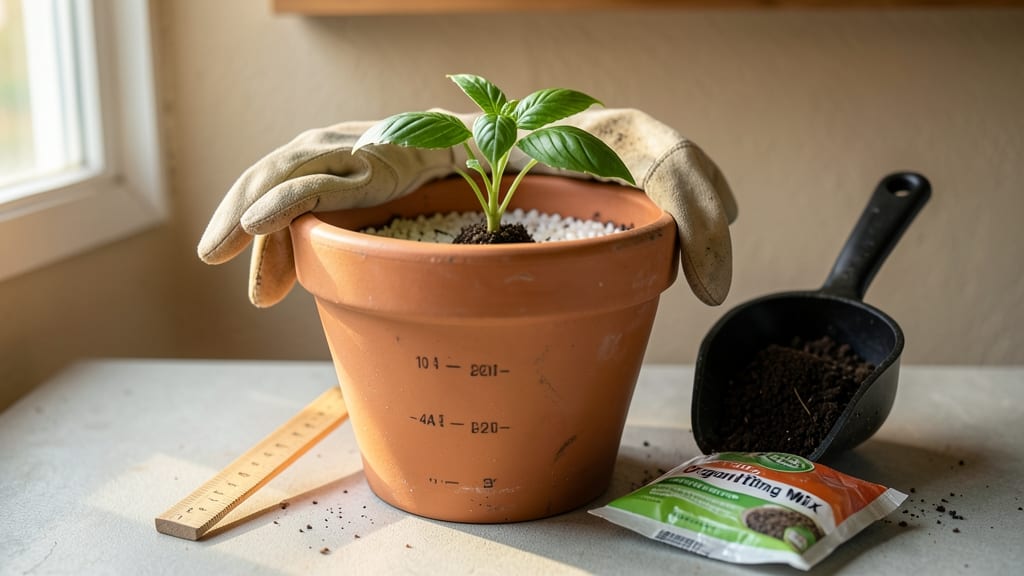
For a 10-gallon pot, you'll need 2.5 to 3 gallons of soil to support healthy root systems while allowing proper drainage. Heavier mixes or large plants may require up to 3.5 gallons, while lightweight cactus soil can work with as little as 2 gallons. Always maintain 1-2 inches of headspace at the top for watering.
Understanding soil volume isn't just about filling space—it's about creating the right environment for roots to thrive. 🌱 A 10-gallon container gives you flexibility depending on your plant's needs: succulents and lightweight mixes need less volume because they store water in their leaves, while heavy shrubs or trees demand more soil to support their root mass.
I recommend measuring your pot's usable depth first (subtracting drainage holes) and then calculating based on your plant's root spread—this ensures you're not overpacking or leaving too much empty space.
What many gardeners overlook is how soil type affects volume requirements.
For example, a standard potting mix with perlite will settle differently than pure coconut coir or mineral-based blends. 💡 Pro tip: If you're repotting, gently compress the soil as you add it to eliminate air pockets while still maintaining good aeration.
This small adjustment can make a big difference in how your plant establishes itself in its new home.
💡 In This Article
- Calculating Soil Volume for 10-Gallon Pots by Plant Type
- Best Soil Mixes and Drainage Tips for 10-Gallon Containers
Calculating soil volume for 10-Gallon pots by plant type
The soil volume you need in a 10-gallon pot isn't one-size-fits-all—it depends on your plant's root system and how much moisture it prefers. 🌿 For example, a succulent or cactus with shallow roots and water-storing leaves only needs 2 gallons of soil because their roots don't spread deep.
The same pot filled with 3 gallons of soil for a herb like rosemary would give its fibrous roots room to expand while still maintaining proper aeration.
Heavier plants like small citrus trees or shrubs demand more soil—up to 3.5 gallons—because their root balls are dense and require stability. The extra weight also helps anchor the plant against wind.
Meanwhile, lightweight mixes like orchid bark or perlite-heavy blends settle differently, often requiring 10-20% more volume than standard potting soil to achieve the same root coverage.
This is why a 10-gallon pot might feel "full" with 3 gallons of regular soil but only hold 2.5 gallons of a fluffy, airy mix.
Root depth matters too. Plants with taproots (like carrots or small trees) need soil that extends to at least 80% of the pot's height, while shallow-rooted plants (like strawberries) thrive in just 40-50% soil depth.
For instance, a 12-inch-tall pot (typical for 10-gallon containers) should have 8-10 inches of soil for a citrus tree but only 5-6 inches for a basil plant. Always measure from the drainage holes upward—this ensures roots have room to grow without crowding.
Soil density plays a hidden role. A heavy clay blend might weigh 1.2 lbs per gallon, while a peat-based mix could weigh just 0.8 lbs per gallon.
This means your 10-gallon pot could hold 3 gallons of clay soil by weight but only 2.5 gallons of peat mix by volume. Weighing your soil before filling the pot prevents overpacking, which can suffocate roots by cutting off oxygen.
Consider seasonal adjustments too. In hot climates, plants like tomatoes need 10-20% more soil volume to retain moisture, while cool-weather crops (like kale) can thrive in slightly less soil because they grow slower.
The key is balancing root oxygen needs (which require air pockets) with water retention—a delicate act that changes with the seasons. 🌡️
Pro tip: If your plant arrives in a nursery pot, gently remove it and measure the root ball's diameter. Multiply that by 1.5 times to determine the minimum soil volume needed for a healthy transition.
For example, a 6-inch root ball needs at least 2.5 gallons of soil in a 10-gallon pot to avoid root binding.