
Light Requirements
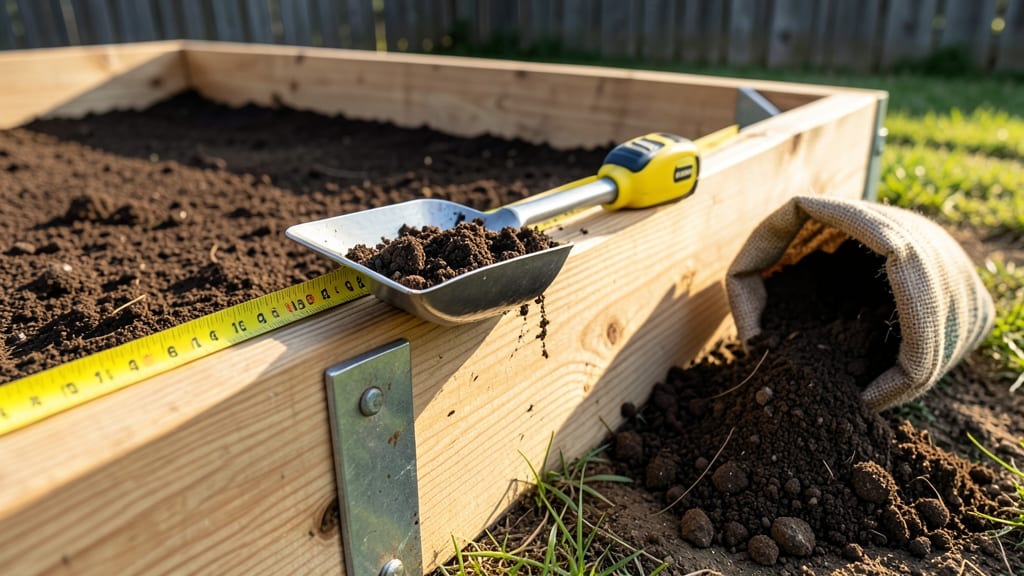
To calculate how much soil for a 4x8 raised bed, you'll need 1.33 cubic feet per inch of depth—so 10.67 cubic feet for an 8-inch-deep bed or 21.33 cubic feet for 16 inches. Simply multiply your bed's length, width, and depth to determine total soil volume required.
Understanding this calculation is key because raised beds aren't just about filling empty space—they're about creating the right growing environment. 🌱 A deeper bed (like 12-18 inches) gives roots more room to spread, while shallower beds (6-8 inches) work well for smaller plants.
The formula works because cubic feet accounts for both the surface area and depth, giving you an accurate measurement of what you'll need to buy. I always recommend adding 10-15% extra to account for settling and amendments like compost or perlite.
For a 4x8 bed, that means you're looking at roughly 1 bag of soil per inch of depth (most bags are 1-2 cubic feet), but the actual amount depends on how tightly you pack the soil. Loose, fluffy soil will require more volume than compacted dirt.
Pro tip: layer your soil mix—start with 2-3 inches of compost at the bottom for drainage, then add your topsoil blend, and finish with a top layer of mulch to retain moisture.
💡 In This Article
- Calculating Soil Volume for Raised Beds by Depth
- Best Soil Mix for 4x8 Raised Beds: Quantity and Composition
Calculating soil volume for raised beds by depth
The formula for calculating soil volume—length × width × depth—works because it converts your bed's physical dimensions into cubic feet, the standard unit for measuring soil. For a 4x8 raised bed, that means multiplying 4 feet × 8 feet × your chosen depth in feet.
For example, an 8-inch deep bed converts to 0.67 feet (8 ÷ 12), resulting in 21.33 cubic feet (4 × 8 × 0.67). This formula accounts for both the surface area and depth, ensuring you buy exactly what you need without over- or under-estimating.
Depth matters more than most gardeners realize. Roots need at least 6-8 inches for most vegetables, but deep-rooted plants like tomatoes or carrots thrive in 12-18 inches of soil.
The deeper your bed, the better drainage and root expansion, but too much depth (over 24 inches) can waste soil and create maintenance challenges. Loose, organic soil settles over time—expect 10-20% compaction after watering and root growth, which is why I always recommend buying 10-15% more soil than your calculation.
For instance, a 16-inch bed (2.67 feet) needs 21.33 cubic feet of loose soil but will settle to ~18 cubic feet once planted.
Here's the science: Soil porosity—the space between particles—affects how much volume you actually need. Sandy soil is loose and requires more cubic feet to fill the same space, while clay is dense and needs less.
A typical 60% topsoil/30% compost/10% perlite mix (ideal for raised beds) is fluffier than pure topsoil, so it expands to fill more space.
This is why a 1.33 cubic feet per inch rule works—it accounts for the average porosity of a well-amended soil blend. 🌱 For example, a 10-inch bed (0.83 feet) needs 8.33 cubic feet of this mix, but only 6.67 cubic feet of dense clay would fill the same space.
Practical tip: Use the "scoop method" to estimate soil volume before buying. Fill a 5-gallon bucket (about 0.22 cubic feet) with your soil mix and count how many buckets fit into your bed. For a 4x8 bed at 12 inches, you'd need roughly 48 buckets (10.67 ÷ 0.22).
This hands-on approach helps visualize the volume and adjust for your specific soil's compaction. Pro move: Buy soil in 2-cubic-foot bags—they're easier to carry and let you layer the bed precisely, reducing waste.
One common mistake? Ignoring the board thickness of your raised bed. If your bed has 2-inch-high sides, the internal depth might be 6 inches less than the external height. Always measure the interior dimensions where the soil will sit.
For example, a bed labeled "12 inches tall" might only hold 8 inches of soil if the boards are 2 inches thick. Double-check this before calculating—it's a 33% difference in soil volume!
For heavy plants like squash or melons, consider layering soil types. Start with 2-3 inches of coarse sand or gravel at the bottom for drainage, then add 6-8 inches of your soil mix, and top with 2-4 inches of compost-rich soil.
This creates an ideal root environment while using slightly less total soil. The sand/gravel layer reduces compaction from watering, so your plants get consistent moisture without the soil packing down.
Final pro tip: If you're reusing soil from another bed, test its organic matter content first. A simple jar test (fill a jar with soil and water, shake, then let it settle) shows how much compost you need to add.
Aim for 5-10% organic matter—any less, and your soil will compact too much over time. 💫 This small step saves you from buying extra soil later when your bed starts to shrink after a season.