
Light Requirements
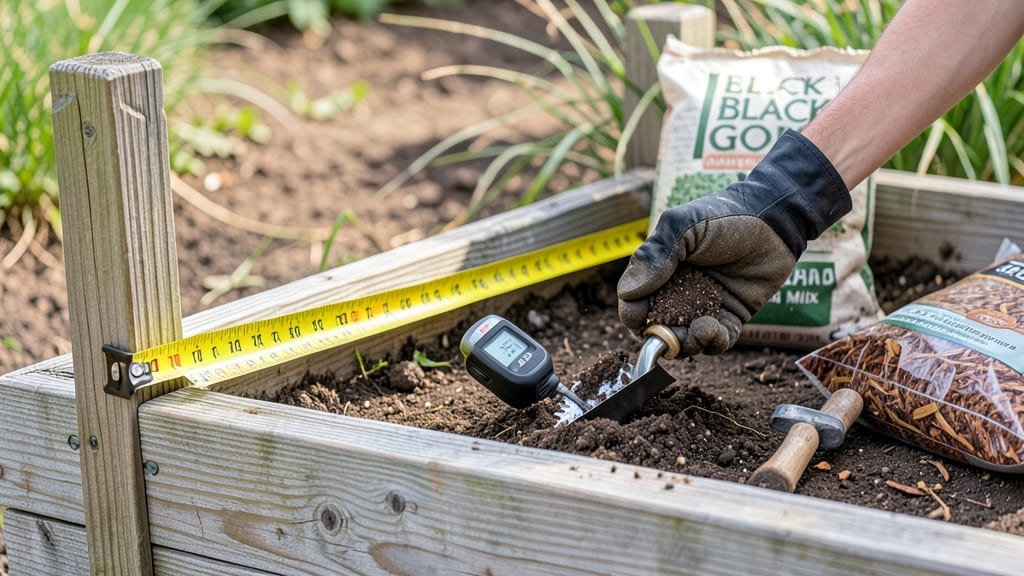
To fill a raised bed, you'll need 1 cubic foot of soil per square foot of bed area per inch of depth—meaning a standard 4’x8’ bed with 12” sides requires 384 cubic feet (about 28 cubic yards). Adjust your soil depth based on plant needs: deep-rooted vegetables like tomatoes need 12–18” of soil, while herbs and shallow-rooted plants thrive in 6–10”. Always blend topsoil with compost and organic matter for the best drainage and fertility.
Understanding soil volume is key to avoiding waste or running short. A simple formula—length × width × depth—gives you cubic feet, which you can then convert to cubic yards (divide by 27).
For example, that same 4’x8’ bed at 12” depth needs 384 cubic feet, but if you're planting carrots or potatoes, you might want to increase the depth to 18", adding another 192 cubic feet. 🌱 I always recommend buying about 10% extra soil to account for settling, especially if you're using a mix with compost—it compresses over time.
Plus, different plants have different needs, so checking root depth requirements before filling helps you avoid over- or under-filling your bed.
Another pro tip: if your bed has a sloped or irregular shape, break it into sections and calculate each part separately. For circular beds, use the formula πr² for the base area, then multiply by depth.
And remember, the right soil mix makes all the difference—too much clay can suffocate roots, while too much sand drains too quickly. A balanced blend of topsoil, compost, and perlite keeps moisture and nutrients where your plants need them most.
💡 In This Article
- Calculating Soil Volume for Raised Garden Beds
- Best Soil Mixes for Raised Bed Vegetables and Flowers
Calculating soil volume for raised garden beds
The core calculation for soil volume is straightforward: multiply your bed's length by width by depth (all in feet). For a standard 4’x8’ bed with 1-foot sides, that’s 32 cubic feet—but most beds are deeper.
A 12-inch depth means you’re actually working with 1-foot of height, so the math becomes 4’ × 8’ × 1’ = 32 cubic feet per foot of depth.
This is why a 12-inch bed needs 384 cubic feet total (32 × 12). 🌱 The key here is converting inches to feet—12 inches equals 1 foot, but many gardeners forget this step and underestimate their needs.
For irregular shapes, break the bed into simpler sections. A circular bed with a 5-foot diameter and 12-inch depth requires πr² × depth. The radius (r) is 2.5 feet, so π × (2.5)² × 1 = 19.63 cubic feet per foot of depth.
At 12 inches, that’s 235.6 cubic feet. Pro tip: Use a tape measure for accuracy—eyeballing can lead to 20-30% errors in volume estimates. And always round up when ordering soil, since settling reduces volume by 10-15% over time, especially with compost-heavy mixes.
Depth matters more than you might think. Shallow-rooted herbs like basil or thyme need just 6-8 inches of soil, while deep-rooted crops like asparagus or tomatoes require 18-24 inches. The difference?
A 4’x8’ bed jumps from 192 cubic feet (8” depth) to 576 cubic feet (18” depth)—that’s nearly 3 cubic yards more soil. Always check plant root depth charts before filling, as over-filling wastes resources while under-filling stunts growth. 💫
Terrain adjustments are critical for accuracy. If your bed sits on a slope, measure the lowest point for depth—soil will naturally settle more on the uphill side. For uneven terrain, calculate the average depth by measuring multiple spots and averaging.
And remember: soil weight matters. A cubic yard of garden soil typically weighs 2,000-2,400 pounds, so a 28-cubic-yard order for a 4’x8’x12” bed means you’re moving 56,000-67,200 pounds—that’s why a wheelbarrow or tractor helps! 🚜
Here’s a quick reference for common bed sizes:
- 4’x8’ bed: 32 cubic feet per foot of depth (e.g., 12” = 384 cubic feet)
- 3’x6’ bed: 18 cubic feet per foot of depth (e.g., 10” = 150 cubic feet)
- 2’x4’ bed: 8 cubic feet per foot of depth (e.g., 8” = 64 cubic feet)
For circular beds, use this formula: π × radius² × depth. Example: A 6-foot diameter bed with 12-inch depth needs 339 cubic feet. Always verify your math with an online calculator to avoid surprises when the soil arrives! ✨