
Container Gardens
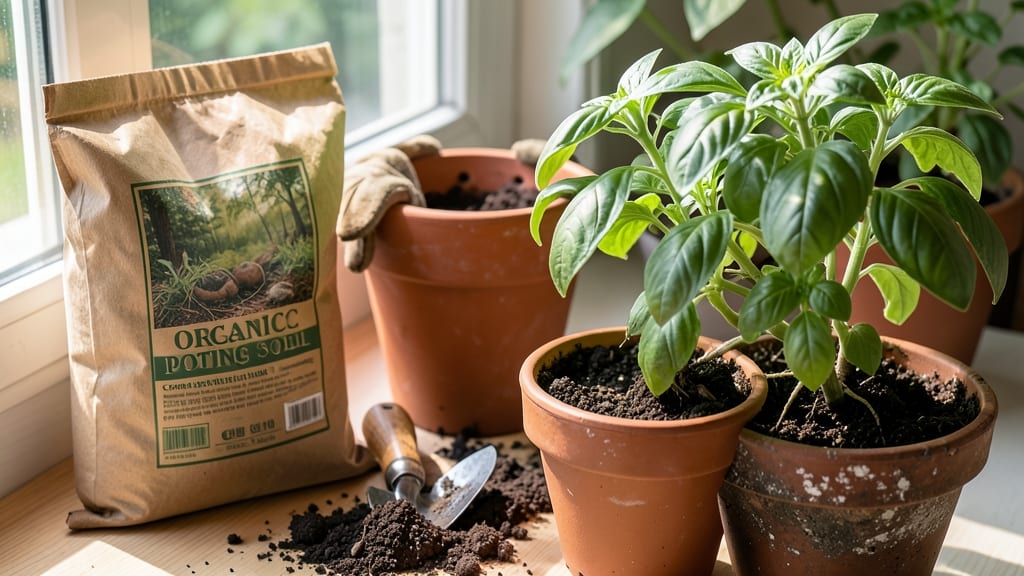
To change soil in potted plants every 12 to 18 months prevents nutrient depletion and root-bound issues, but tropical plants may need refreshes every 6 months due to faster decomposition. Always check for signs like stunted growth or foul odors before repotting.
Soil quality declines faster than many gardeners realize, especially in sealed containers where moisture and roots accelerate decomposition. 🌱 The organic matter breaks down within 1-2 years, leaving behind dense, nutrient-poor substrate that strangles roots.
Tropical plants like ferns or calatheas decompose even quicker because their fast growth demands more resources, while succulents can sometimes go 2-3 years between refreshes. I always test soil moisture and smell—if it's compacted or smells musty, it's time for a change.
Beyond the clock, watch for visual cues: roots circling the pot's edge, leaves yellowing despite proper watering, or a crust forming on the surface.
These signs indicate the soil has lost its structure and ability to support healthy growth. 🌿 The key is balancing routine refreshes with plant-specific needs—some may thrive longer in the same soil if you supplement with compost or fertilizer between changes.
💡 In This Article
- Why Potted Plant Soil Degrades Over Time
- Signs Your Potted Plants Need Fresh Soil
Why potted plant soil degrades over time
Potted plant soil breaks down through a natural process called organic matter decomposition, where microbes and fungi consume the peat, compost, and bark components. This process releases nutrients initially, but after 12-18 months, the soil structure collapses into a dense, compacted mass.
The roots struggle to penetrate this hardened layer, leading to root-bound conditions where roots circle the pot instead of growing outward. 🌱
Nutrient leaching is another critical factor—watering flushes out essential minerals like nitrogen, phosphorus, and potassium. Over time, the soil loses its ability to retain moisture and nutrients, forcing plants to compete aggressively for what's left.
Tropical plants like ferns or calatheas decompose even faster because their high metabolic rates demand constant nutrient replenishment. In contrast, succulents and cacti can last 2-3 years in the same soil due to slower growth and lower water needs.
The soil's pH balance also shifts over time, becoming more acidic as organic matter decomposes. This change can lock out nutrients, even if they're present, because plants can't absorb them efficiently. For example, a pH below 6.0 can make phosphorus unavailable, leading to stunted growth despite regular watering. 💫
Compaction is another silent killer—foot traffic, repotting disturbances, and root pressure compress the soil particles, reducing aeration. Roots need oxygen to respire, and compacted soil suffocates them. You can test this by squeezing a handful of soil: if it holds its shape like wet clay, it's time for a refresh.
Even well-draining mixes break down over time, losing their ability to prevent waterlogging.
Plant type dictates the refresh cycle: tropicals (like monsteras or peace lilies) may need soil changes every 6 months, while Mediterranean herbs (like rosemary or thyme) can thrive for 2-3 years with minimal intervention.
The key is observing how your plant responds—wilting, yellowing leaves, or slow growth are red flags that the soil can no longer support healthy development. 🌿
One often-overlooked factor is salt buildup from tap water or fertilizers. Over time, minerals accumulate in the soil, creating a crust on the surface and altering the soil's chemistry. This can lead to nutrient lockout, where plants show signs of deficiency despite receiving fertilizer.
Flushing the soil with distilled water or using rainwater can help mitigate this issue between refreshes.