
Advice
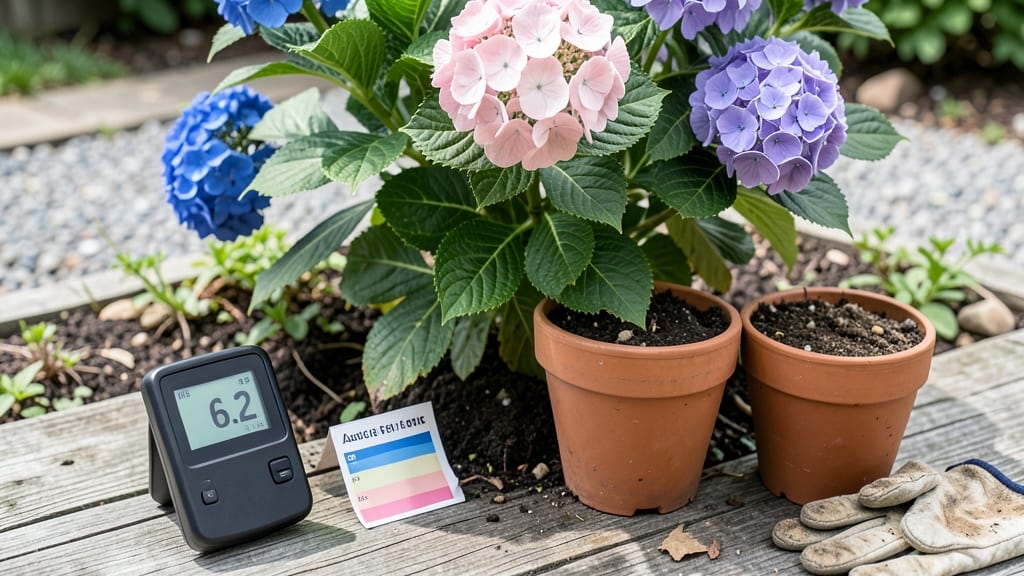
Hydrangea color shifts dramatically with soil pH: acidic conditions (5.0–5.5) create vibrant blue blooms, while neutral soil (6.0–6.5) produces soft pink flowers, and slightly alkaline (6.5–7.0) encourages rich purple hues. Simple soil tests and amendments like sulfur or lime can transform your hydrangeas' colors season after season.
This color-changing magic happens because soil pH affects how hydrangeas absorb aluminum—a key mineral that binds to pigments in their petals. 🌸 When the soil is acidic, aluminum becomes available, creating blue hues, while higher pH levels reduce aluminum uptake, shifting colors toward pink or purple.
The most dramatic changes occur in mophead and bigleaf varieties, though some modern hybrids like 'Endless Summer' stay more consistent regardless of soil conditions. Testing your soil in early spring gives you time to adjust before blooming season begins.
For practical results, I recommend using a simple soil test kit (available at garden centers) to measure your current pH. If your soil is too alkaline for blue blooms, mix in elemental sulfur or pine needles to lower the pH gradually.
Conversely, wood ash or crushed eggshells can raise pH for pink or purple flowers. Remember that these changes take time—typically 2-3 months—to fully affect your plants. Regular monitoring keeps your hydrangeas looking their best year after year.
💡 In This Article
- How Soil pH Directly Affects Hydrangea Bloom Colors
- Step-by-Step Guide to Adjusting Soil pH for Hydrangeas
How soil pH directly affects hydrangea bloom colors
The color transformation in hydrangeas starts with a chemical dance between soil pH and aluminum availability. In acidic soil (pH 5.5), aluminum ions become soluble and get absorbed by the plant roots.
These ions then bind to delphinidin, a pigment precursor in hydrangea petals, creating the vivid blue we love. 🌸 This process is why blue hydrangeas thrive in the 5.0–5.5 range—it's not just about acidity but the precise availability of aluminum that triggers this pigment shift.
When soil becomes more neutral (pH 6.0–6.5), aluminum becomes less available, and the plant's pigments shift toward cyanidin, producing pink blooms. The transition happens because higher pH levels cause aluminum to precipitate out of solution, leaving other pigments to dominate.
For purple hues (pH 6.5–7.0), you're essentially seeing a mix of both pigment pathways—some aluminum still available but not enough to fully saturate the blue, combined with the natural pink undertones. This is why purple hydrangeas often appear more muted than their blue or pink counterparts.
The most dramatic color changes occur in mophead (Hydrangea macrophylla) and bigleaf varieties, where pigment production is most sensitive to pH fluctuations. However, modern hybrids like 'Endless Summer' have been bred to produce consistent colors regardless of soil conditions, thanks to genetic modifications that stabilize pigment production.
These varieties are perfect if you want reliable color without soil adjustments. 💫 For traditional varieties, though, the pH effect is undeniable—think of it as nature's built-in color palette controlled by simple chemistry.
What most gardeners don't realize is that this process isn't just about the final color—it's also about the plant's overall health. Extreme pH levels (below 5.0 or above 7.5) can stress hydrangeas, leading to smaller blooms or yellowing leaves.
The sweet spot for both color vibrancy and plant vitality is typically between 5.0–6.5, where you get the best of both worlds: stunning blooms and healthy growth. This balance explains why many gardeners aim for slightly acidic to neutral conditions when cultivating these showstopping shrubs.
For a real-world example, consider the popular 'Nikko Blue' hydrangea. When grown in pH 5.2 soil, its blooms will be a rich, true blue. Move that same plant to pH 6.3 soil, and you'll see soft pink flowers within a season.
The transformation happens because the plant's pigment pathways literally rewire themselves based on what minerals are available in the soil. It's like having a natural pH-sensitive paint that changes colors based on its environment!
One fascinating exception is the oakleaf hydrangea (Hydrangea quercifolia), which produces white flowers regardless of soil pH. This occurs because its pigment production pathway is fundamentally different—it relies more on other flavonoids that aren't as sensitive to aluminum availability.
This natural variation shows how complex plant chemistry can be, even within the same genus. 🌿 Understanding these nuances helps explain why some hydrangeas respond dramatically to pH changes while others remain more color-stable.