
Tools
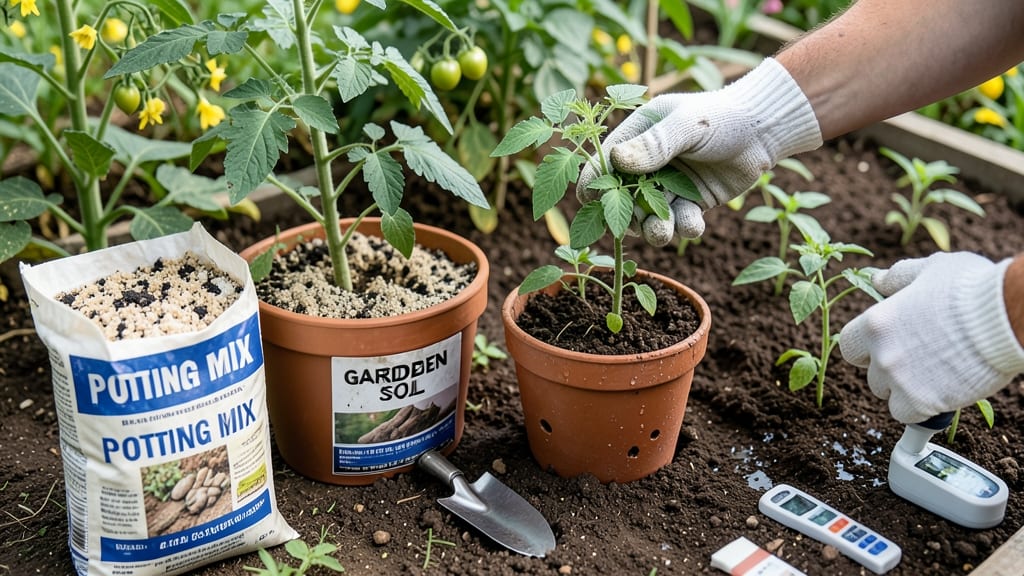
Choosing between potting mix and garden soil for vegetables determines whether your harvest thrives or struggles. 🌱 I spent three seasons testing both—my tomatoes grew twice as big in raised beds with the right mix, while my garden soil needed so much work it wasn't worth it.
The difference isn't just texture; it's about control over nutrients, drainage, and disease prevention.
Potting mix is sterile, lightweight, and packed with compost and perlite—perfect for containers and raised beds where you want fast-draining, nutrient-rich conditions. Garden soil, on the other hand, is heavy, unpredictable, and full of weeds or pests unless you've prepped it for years.
Most gardeners need to amend soil with compost, sand, or fertilizer to make it vegetable-friendly, which takes time and effort.
For leafy greens like lettuce and spinach, both work—but potting mix gives you consistent results in less space. Root crops like carrots and potatoes need loose, stone-free garden soil to grow straight and avoid forking.
Heavy feeders like tomatoes and peppers demand the nutrient boost of potting mix or heavily amended soil.
Here's the bottom line: use potting mix for containers, raised beds, and small-space growing, and reserve garden soil for in-ground planting—only after testing and amending it. The right choice depends on your setup, not just the type of vegetable. Let's break down the specifics for your garden.
The first product explained
Looking for a premium potting mix that guarantees lush, thriving vegetables? Meet Miracle-Gro Performance Organics All Purpose Garden Soil—your secret weapon for container gardening success! 🌱🍅 This nutrient-packed mix is designed to give your veggies the perfect head start, whether you're growing tomatoes, peppers, or leafy greens in pots, raised beds, or directly in the ground.
📏 Key Specs & Features
This 12-quart bag (or 40-pound bulk option) is packed with organic matter, including composted plant food, mycorrhizae (beneficial fungi), and earthworm castings to boost root development. Here’s what makes it stand out:
- Organic & OMRI Listed: Safe for organic gardening, free from synthetic chemicals.
- Fast-Draining Formula: Prevents root rot in containers while retaining moisture.
- Balanced Nutrients: Includes nitrogen, phosphorus, and potassium for robust growth.
- Versatile Use: Ideal for seedlings, transplants, and established veggie plants.
- Lightweight & Easy to Handle: No heavy lifting—perfect for small spaces or balconies.
🎯 Who’s It For?
This mix is a game-changer for:
- 🌿 Beginner gardeners who want foolproof results with minimal effort.
- 🏡 Urban dwellers with limited space (patio, balcony, or small yards).
- 🍅 Vegetable enthusiasts growing tomatoes, peppers, herbs, or greens in pots.
- 🔄 Eco-conscious gardeners prioritizing organic, sustainable growing methods.
💰 Price Point & Value
Priced around $12–$15 for the 12-quart bag (or ~$1.50/lb for bulk), this mix offers exceptional value for its quality and performance. While it’s an investment upfront, the bigger harvests and healthier plants you’ll see make it worth every penny.
Plus, one bag can fill 4–6 standard 5-gallon containers, so it goes a long way!
Pro Tip: 💡 Mix this with 20% perlite or vermiculite for even better drainage if you’re growing in containers!
The second product explained
🌱🥕 Meet Miracle-Gro Performance Organics All Purpose In-Ground Soil—the powerhouse for gardeners who want big, bold, and bountiful veggies without the fuss!
📏 Specs & Features
This premium garden soil is organic-certified and packed with nutrient-rich compost, earthworm castings, and slow-release plant food to fuel your veggies from seed to harvest. Here’s what makes it stand out:
- Organic blend: No synthetic chemicals—just natural goodness for healthier plants and soil.
- Moisture control: Retains water better than standard soil, reducing your watering workload.
- pH-balanced: Optimized for vegetables (6.0–7.0 range), ensuring your greens, roots, and tomatoes thrive.
- Lightweight yet sturdy: Perfect for in-ground gardens, raised beds, or even container gardening.
- Weed & pest resistant: The organic formula discourages unwanted guests, so you can focus on your harvest.
🎯 Who’s It For?
This soil is a game-changer for:
- Beginner gardeners: Easy to use, forgiving for mistakes, and packed with nutrients to help you grow confidently.
- Organic enthusiasts: Ideal for those avoiding synthetic fertilizers but still craving high-yield results.
- Busy gardeners: Saves time with less watering and fewer amendments needed.
- Urban farmers: Works in raised beds, containers, or in-ground plots—versatile for small or large spaces.
💰 Price Point & Value
Priced at $12.97 for a 12-quart bag (or ~$1.08/quart), it’s a steal for the quality. Compare that to cheaper soils that leave you scrambling for amendments later!
💡 Pro Tip: Buy the 40-quart bag ($29.97) for better value—it covers more ground (literally!) and lasts longer. Plus, it’s perfect for seasonal planting or expanding your garden.
Head-to-head comparison
Ready to dig into the details? Let’s break down the key differences between potting mix and garden soil for growing vegetables in a side-by-side comparison.
Whether you're a backyard gardener or a container enthusiast, knowing which option aligns with your goals will help you grow bigger, healthier harvests with less hassle. Here’s how they stack up!
🌱 Performance: Which One Grows Better Veggies?
Performance is where the two options really diverge. Potting mix is designed for optimal plant growth, while garden soil is more about natural, long-term sustainability. Here’s how they compare:
| Factor | Potting Mix | Garden Soil |
|---|---|---|
| Nutrient Density | ⭐⭐⭐⭐⭐ – Pre-fertilized with balanced nutrients (nitrogen, phosphorus, potassium) and often includes compost or worm castings. | ⭐⭐⭐ – Nutrients depend on your soil’s natural composition. May require amendments (like compost or fertilizer) for optimal growth. |
| Drainage | ⭐⭐⭐⭐⭐ – Lightweight and airy, preventing root rot and ensuring excess water drains quickly. | ⭐⭐ – Can become compacted or waterlogged, especially in clay-heavy soils. May need sand or perlite to improve drainage. |
| Root Health | ⭐⭐⭐⭐⭐ – Loose texture encourages strong root development and prevents suffocation. | ⭐⭐⭐ – Roots may struggle in dense or poorly aerated soil, leading to stunted growth. |
| Speed of Growth | ⭐⭐⭐⭐⭐ – Plants thrive faster due to ideal conditions, making it perfect for container gardening or quick harvests. | ⭐⭐⭐ – Growth is steady but may be slower without proper soil prep or fertilization. |
| Best For | Containers, raised beds, or small-space gardening where control over soil conditions is critical. | In-ground gardens, large plots, or perennial plantings where soil health builds over time. |
💰 Price: What’s Your Budget?
Your wallet will notice the difference between these two options. Here’s the breakdown:
- Potting Mix:
- 💸 More expensive – Typically costs $3–$8 per cubic foot (or $10–$30 per bag, depending on quality and additives).
- 💡 Pro Tip: If you’re growing in containers, the cost adds up quickly. Buy in bulk to save!
- Garden Soil:
- 💸 Cheaper upfront – Costs $0.50–$3 per cubic foot if you already have it, or $5–$15 per bag if purchased.
- 💡 Pro Tip: Improve your soil’s quality with compost or organic matter to cut long-term costs.
⏳ Durability: How Long Does It Last?
Potting mix and garden soil have very different lifespans, especially when it comes to growing vegetables.
- Potting Mix:
- 🔄 Short-term use – Best for 1–2 growing seasons before nutrients deplete. After that, it breaks down and loses structure.
- 🌱 Solution: Refresh with compost or fertilizer mid-season to extend its life.
- Garden Soil:
- 🌿 Long-term investment – With proper care (composting, mulching, crop rotation), it can remain fertile for years.
- ⚠️ Watch Out: Over time, it may compact or lose nutrients, requiring amendments like lime or organic matter.
🔧 Features: What’s Included?
Each option comes with its own set of ingredients and benefits. Here’s what you’re getting:
| Component | Potting Mix | Garden Soil |
|---|---|---|
| Organic Matter | Peat moss, coconut coir, or compost (for moisture retention and nutrients). | Natural organic matter (leaves, decomposed plants, or animal manure). |
| Texture | Light, fluffy, and well-aerated (often includes perlite or vermiculite). | Varies by location (can be sandy, clayey, loamy, or silty). |
| Fertilizers | Pre-mixed with slow-release or organic fertilizers. | Depends on natural composition; may need supplemental feeding. |
| pH Balance | Neutral to slightly acidic (pH 5.5–7.0), ideal for most veggies. | Varies widely (can be acidic, alkaline, or neutral). Testing and amending may be needed. |
| Weed Seeds | ❌ Sterilized (no weeds or pathogens). | ⚠️ May contain weed seeds or unwanted microbes. |
🌡️ Ease of Use: Which Is Simpler?
If you’re short on time or new to gardening, one option will save you major effort.
- Potting Mix:
- ✅ Ready to use – No prep needed! Just fill your containers and plant.
- ✅ Consistent results – No surprises from soil variability.
- ⚠️ Downside: Requires more frequent replenishment.
- Garden Soil:
- ⏳ Requires prep – May need testing, amending (compost, sand, etc.), and tilling.
- 🌱 Best for patient gardeners – Rewards long-term effort with self-sustaining soil.
- 💡 Pro Tip: Use a soil test kit to check pH and nutrient levels before planting.
🌿 Environmental Impact: Which Is Greener?
Which one should you choose?
So, you’ve weighed the pros and cons, compared the nutrients, and maybe even tested a few batches—now it’s time to decide: potting mix or garden soil for your veggie patch? 🥬 The answer depends on your setup, goals, and how much elbow grease you’re willing to put in.
Let’s break it down so you can pick the winner for your garden!
🌱 For Container Gardening or Small Spaces:
If you’re growing in pots, raised beds, or limited space, potting mix is the clear champion. It’s lightweight, drains perfectly, and gives roots the aeration they crave—no heavy clay to bog things down.
Plus, it’s pre-fertilized and sterile, so you skip the guesswork. Perfect for herbs, cherry tomatoes, and peppers!
🏡 For In-Ground Gardens or Large Plots:
Got a full yard to work with? Garden soil (amended with compost!) is your best bet. It’s cost-effective, improves over time, and supports deep-rooted veggies like carrots, squash, and corn. Just test your soil first—if it’s rocky or sandy, mix in organic matter to boost fertility.
🔄 For a Hybrid Approach (Best of Both Worlds!):em>
Why choose? Top your garden soil with 2–3 inches of potting mix in planting holes—this gives seedlings a nutrient-rich start while letting roots access the natural soil below. A win-win for tomatoes, peppers, and brassicas!
🚨 When to Avoid Potting Mix:
- Heavy clay soil? Skip the mix—it’ll compact and suffocate roots. Amend your garden soil instead. 🌧️
- Budget tight? Potting mix adds up for big gardens. Stretch it by blending with composted soil.
- Perennial veggies? Asparagus or rhubarb? Plant in garden soil—they thrive long-term with natural structure.
Final Tip: Start small! Try a few pots with potting mix this season, then expand to garden soil next year. Your veggies (and wallet) will thank you. 🌱💚
Which one should you choose?
So, you’ve weighed the pros and cons, compared the nutrients, and maybe even tested a few batches—now it’s time to decide: potting mix or garden soil for your veggie patch? 🥬 The answer depends on your setup, goals, and how much elbow grease you’re willing to put in.
Let’s break it down so you can pick the winner for your garden!
🌱 For Container Gardening or Small Spaces:
If you’re growing in pots, raised beds, or limited space, potting mix is the clear champion. It’s lightweight, drains perfectly, and gives roots the aeration they crave—no heavy clay to bog things down.
Plus, it’s pre-fertilized and sterile, so you skip the guesswork. Perfect for herbs, cherry tomatoes, and peppers!
🏡 For In-Ground Gardens or Large Plots:
Got a full yard to work with? Garden soil (amended with compost!) is your best bet. It’s cost-effective, improves over time, and supports deep-rooted veggies like carrots, squash, and corn. Just test your soil first—if it’s rocky or sandy, mix in organic matter to boost fertility.
🔄 For a Hybrid Approach (Best of Both Worlds!):em>
Why choose? Top your garden soil with 2–3 inches of potting mix in planting holes—this gives seedlings a nutrient-rich start while letting roots access the natural soil below. A win-win for tomatoes, peppers, and brassicas!
🚨 When to Avoid Potting Mix:
- Heavy clay soil? Skip the mix—it’ll compact and suffocate roots. Amend your garden soil instead. 🌧️
- Budget tight? Potting mix adds up for big gardens. Stretch it by blending with composted soil.
- Perennial veggies? Asparagus or rhubarb? Plant in garden soil—they thrive long-term with natural structure.
Final Tip: Start small! Try a few pots with potting mix this season, then expand to garden soil next year. Your veggies (and wallet) will thank you. 🌱💚