
How To
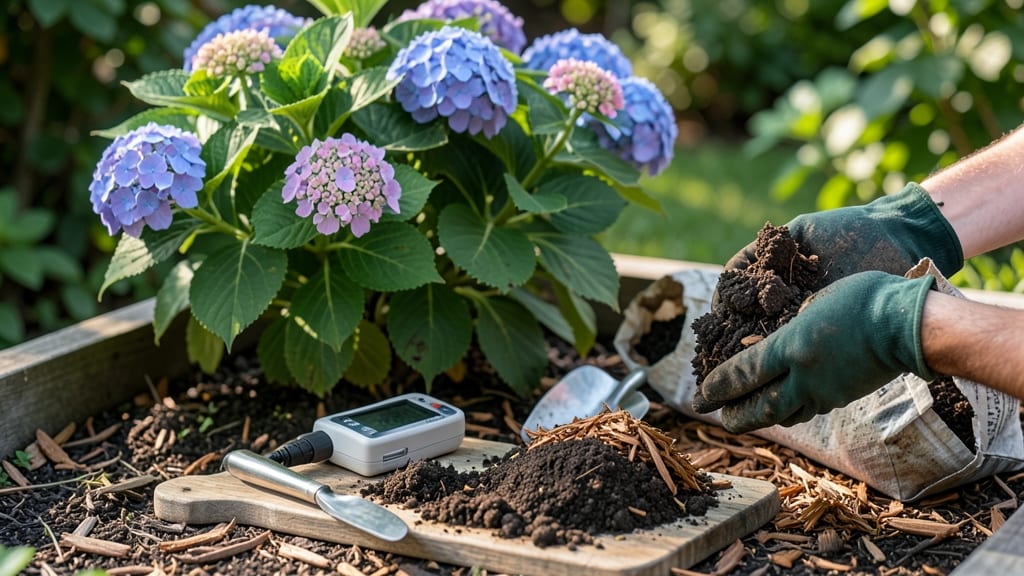
Your hydrangeas won’t thrive in dry, rocky soil—the hydrangea soil requirements are all about moist, acidic loam for those jaw-dropping blooms. 🌸 I learned this the hard way after my first hydrangea plants wilted despite perfect sunlight. The fix?
A soil mix that holds water like a sponge while staying rich in organic matter. Most garden soils need amendments to hit the sweet spot: 5.2–5.5 pH for blue flowers, 6.0+ for pink. Test your soil first—many garden centers offer cheap kits.
If your soil is too alkaline, add elemental sulfur (follow package rates) or peat moss to lower the pH gradually. For drainage, think "swampy but not soggy." Amend heavy clay with perlite or coarse sand, and mix in compost or aged manure to feed those hungry roots.
My hydrangeas now burst with color every summer, and the secret is in the soil—not just the sun. Works for both in-ground and container plants. Let’s get that soil prepped right!
📚 In This Guide
- What you need
- Instructions
- Tips and common mistakes
- Wrapping up and next steps
What you need
- ● Topsoil (or garden soil): 2–3 cubic yards (enough to fill a 4’x4’ bed to a depth of 12–18 inches). Opt for loamy soil with good drainage.
- ● Peat moss or coconut coir: 2–3 bags (5–10 cubic feet each). Boosts acidity and moisture retention—critical for hydrangeas!
- ● Compost: 1–2 bags (2–4 cubic feet). Adds organic matter for nutrient-rich soil.
- ● Sulfur (elemental or aluminum sulfate): 1–2 lbs. Adjusts pH to acidic (5.2–6.0) for vibrant blooms.
- ● Slow-release fertilizer (10-10-10 or 20-20-20): 1–2 lbs. Feeds roots without burning.
- ● Garden fork or tiller: For aerating and mixing soil (rent if needed!).
- ● Garden gloves: Protect your hands from thorns and rough soil.
- ● pH testing kit: Digital or liquid test strips to monitor acidity levels.
- ● Wheelbarrow or bucket: For hauling soil amendments (10–15 gallons capacity).
- ○ Rake: Smooths soil after amending (optional but helpful!).
- ● Perlite or vermiculite: Improves drainage in heavy clay soils.
- ● Mulch (pine bark or pine needles): Retains moisture and keeps roots cool.
- ● Organic matter boosters: Coffee grounds (for acidity) or worm castings (for nutrients).
- ● Soil moisture meter: Ensures consistent hydration—hydrangeas hate dry spells!
How to prepare the perfect soil for hydrangeas
Here's how I create the ideal hydrangea soil—moisture-retentive, acidic, and rich in organic matter—for vibrant blooms all season.
🌱 Step 1: Start With a Well-Draining Base
Hydrangeas need soil that drains well but holds moisture—think of it like a damp sponge, never soggy. Begin by mixing equal parts garden soil and compost (I use a 50-50 blend) to create a loose, airy foundation. If your native soil is heavy clay, add 1 part perlite or coarse sand to break up compaction. This ensures roots get oxygen while retaining enough water to prevent wilting.
Test your soil's drainage by filling a jar halfway with your mix, adding water, and checking if it drains within 30 minutes. If water pools at the top, add more perlite. If it drains too fast, blend in peat moss or coconut coir to slow it down. The goal is a balance where water drains but doesn’t rush through.
💧 Step 2: Adjust pH for Color Control
Hydrangea blooms change color based on soil pH—blue in acidic soil (pH 5.0-5.5), pink in alkaline (pH 6.0-7.0), and purple in neutral. To acidify, mix in sulfur or peat moss (I use 1 cup per 5 gallons of soil). For alkaline soil, add crushed limestone sparingly. Test pH with a kit before planting; hydrangeas are sensitive to sudden shifts.
I like to add pine needles or oak leaves to the mix—they decompose slowly and keep the soil naturally acidic. Avoid fresh mulch, which can rob nitrogen and slow growth. Instead, use composted pine bark for a steady pH boost. Re-test pH after 2-3 weeks to confirm adjustments.
☀️ Step 3: Amend for Moisture Retention
Hydrangeas thrive in consistently moist soil but despise soggy roots. To retain moisture without waterlogging, blend in 20% organic matter—I use well-rotted leaf mold or worm castings. These hold water like a sponge while improving soil structure. Avoid fresh manure; it burns roots and disrupts pH balance.
For extra insurance, top the amended soil with 2-3 inches of mulch (I use shredded bark or pine straw). This keeps moisture in and weeds out while preventing soil crusting. Water deeply after amending to settle the mix and remove air pockets. Stick your finger 2 inches down—if it feels dry, water again.
⏰ Step 4: Maintain Soil Health Year-Round
Hydrangeas need 1-2 inches of water weekly (more in heatwaves). I check soil moisture by lifting a plant gently—if the root ball feels light, it’s time to water. Overwatering causes yellow leaves, while underwatering leads to crispy edges. A drip irrigation system keeps moisture even and prevents fungal diseases.
Every spring and fall, top-dress with 1-2 inches of compost to replenish nutrients. Avoid high-nitrogen fertilizers—they promote leafy growth at the expense of blooms. Instead, use a balanced, slow-release fertilizer (10-10-10) in early spring. Prune spent blooms in late summer to encourage next year’s flowers.
Tips & tricks for perfect hydrangea soil mixes
These simple strategies will help you create the ideal growing environment for show-stopping hydrangea blooms.
Drainage Test Pro Tip: When testing your mix's drainage in Step 1, use a clear jar so you can actually see the water movement. The 30-minute guideline works best when the jar is filled to the halfway mark—this mimics real planting conditions. If water disappears in under 10 minutes, you need more peat moss or coconut coir to slow drainage. Too slow? Add perlite gradually until you hit that sweet spot where water drains but doesn't rush through.
pH Adjustment Hack: For the Step 2 pH adjustments, I've found that sulfur works faster than peat moss—it can shift pH by 0.5-1.0 points in just 2-3 weeks. If you're starting with neutral soil (pH 7.0), aim for 1.5 cups of sulfur per 5 gallons to reach that ideal 5.0-5.5 range. And here's a secret: crushed eggshells (baked and crushed) can help lower pH too, though they work more slowly over months.
Organic Matter Selection: In Step 3, worm castings might be pricier, but they're worth it—they contain beneficial microbes that boost root health. If you're on a budget, well-rotted leaf mold is the next best option. Pro tip: mix in a handful of coffee grounds too (they're acidic and provide nitrogen), but don't overdo it—more than 5% can make your mix too dense. The 20% organic matter guideline is your sweet spot for that perfect balance.
Mulch Layer Strategy: That 2-3 inch mulch layer in Step 3 does more than just retain moisture—it creates a natural barrier against weeds and temperature swings. I like to use pine straw because it's naturally acidic and breaks down slowly. For extra protection in summer, add a second layer of mulch after the first one decomposes halfway through the season. This two-step approach keeps moisture levels consistent all year.
Pro Tips for Hydrangea Soil Requirements
- These simple strategies will help you create the ideal growing environment for show-stopping hydrangea blooms.
- Drainage Test Pro Tip: When testing your mix's drainage in Step 1, use a clear jar so you can actually see the water movement.
- pH Adjustment Hack: For the Step 2 pH adjustments, I've found that sulfur works faster than peat moss—it can shift pH by 0.5-1.0 points in just 2-3 weeks.
Frequently asked questions
Got questions about keeping your hydrangeas thriving? Here are answers to the most common concerns about hydrangea soil requirements—so you can grow lush, vibrant blooms with confidence!
What is the best soil pH for hydrangeas?
The ideal pH range for hydrangeas is 5.2 to 6.2—slightly acidic. Blue hydrangeas (macerata) thrive in more acidic soil (pH 5.2–5.5), while pink varieties (grandiflora) prefer pH 6.0–6.2. Test your soil with a kit or send a sample to a local extension office for precise results.
Can hydrangeas grow in clay soil?
Yes, but amend it first! Clay soil drains poorly and can suffocate roots. Mix in 3–4 inches of compost or peat moss to improve aeration and moisture retention. Avoid heavy amendments like sand, which can worsen drainage issues. Over time, clay breaks down with organic matter.
How often should I water hydrangeas?
Hydrangeas need consistent moisture—water deeply 2–3 times per week (more in extreme heat or sandy soil). Aim for 1–1.5 inches of water weekly, focusing on the root zone (not the leaves). Mulch with 2–3 inches of organic mulch (like shredded bark) to retain moisture and regulate soil temperature.
What can I use instead of peat moss for acidic soil?
If peat moss is hard to find, try these acid-loving soil amendments:
- Pine bark fines (great for drainage + acidity)
- Coconut coir (sustainable, retains moisture)
- Composted leaves (adds organic matter + slight acidity)
- Aluminum sulfate or sulfur (for quick pH adjustments—use sparingly!)
Why are my hydrangea leaves yellowing?
Yellow leaves often signal overwatering, poor drainage, or nutrient deficiencies. Check these fixes:
Drainage issue? Amend soil with perlite or compost to improve airflow.
Too much water? Let the top 1–2 inches of soil dry between waterings.
Nutrient deficiency? Fertilize with an acid-loving plant food (like 10-10-10) in early spring.
Iron chlorosis? Add chelated iron or composted green material.
Pro Tip: Yellowing only on new leaves? It’s likely a magnesium deficiency—sprinkle Epsom salt around the base (1 tbsp per plant).
Wrapping up and next steps
Growing stunning hydrangeas starts with the right soil—moist, well-draining, and slightly acidic (pH 5.2–6.2) is the golden ticket! 🌸 Whether you’re amending clay, sand, or loam, a mix of organic matter like compost or peat moss will keep roots happy and blooms bold.
Don’t overthink it: hydrangeas are forgiving, but consistency is key.
Ready to transform your garden? Start small: Test your soil’s pH, tweak the mix, and watch your hydrangeas thrive. Happy gardening—your future blooms will thank you! 🌿