
How To
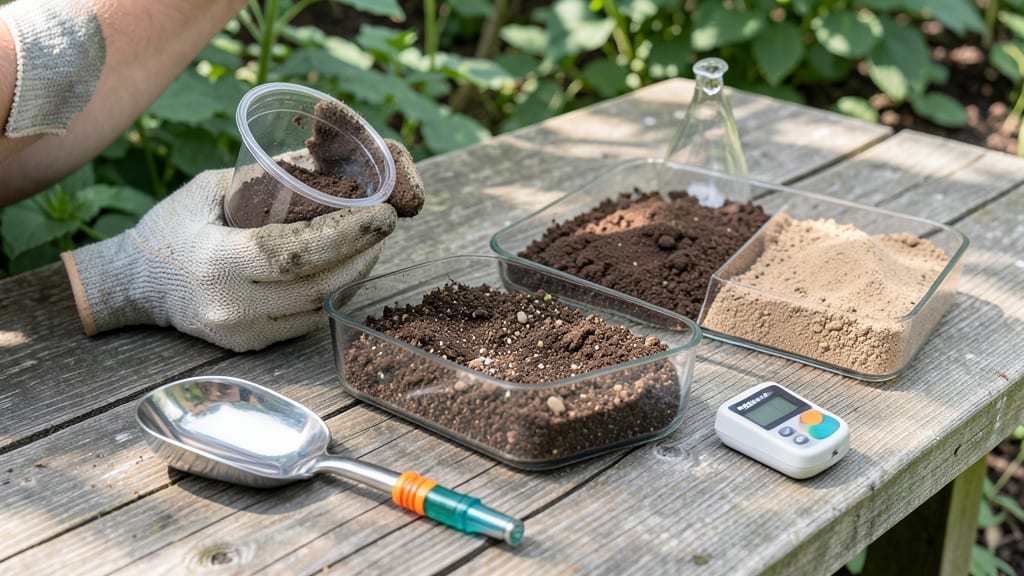
Loamy soil means a balanced mix of sand, silt, and clay—ideal for gardening—providing excellent drainage, moisture retention, and nutrient availability for healthy plant growth. Its crumbly texture and rich organic matter make it the gold standard for most crops and lawns.
Loamy soil is often called the "perfect" gardening medium because it strikes the ideal balance between drainage and water retention. 🌱 The 40-40-20 ratio of sand, silt, and clay creates tiny air pockets that roots thrive in while holding enough moisture for consistent plant hydration.
Unlike heavy clay or sandy soil, loamy soil also acts like a natural fertilizer, breaking down organic matter into nutrients plants can easily absorb. This is why professional gardeners and farmers consider it the foundation for robust plant health and high yields.
What makes loamy soil truly special is its ability to support beneficial microbial life in the root zone. The right texture encourages earthworms and beneficial bacteria that further enrich the soil over time.
For home gardeners, this means less work maintaining soil quality—once you have the right balance, your plants will tell you when they need minor adjustments through their growth patterns.
💡 In This Article
- How Loamy Soil Forms and Its Ideal Composition
- Testing and Improving Your Garden’s Soil Type
How loamy soil forms and its ideal composition
The magic of loamy soil lies in its precise particle ratio: roughly 40% sand, 40% silt, and 20% clay. This balance creates microscopic spaces between particles that hold both air and water—critical for root respiration and nutrient delivery.
Sand particles (0.05-2mm) provide drainage, while silt (0.002-0.05mm) retains moisture and nutrients, and clay (<0.002mm) acts like a sponge for water and minerals.
Together, they form a porous structure that crumbles easily when dry but holds together when wet, unlike pure clay which becomes brick-hard or pure sand which drains too quickly.
Organic matter plays an equally vital role—think of it as the soil's "glue" and nutrient bank. Decomposed plant material (like leaf litter or compost) binds particles together while feeding microbes that break down nutrients into plant-available forms.
In loamy soil, you'll often find 5-10% organic matter, which improves water retention by 20-30%** compared to mineral-only soil. This organic component also creates a darker color (that rich brown hue) and a pleasant, earthy aroma when tilled—unlike sterile sand or dense clay.
The microbial activity here can reach millions of organisms per teaspoon, constantly recycling nutrients that would otherwise leach away.
This ideal composition directly impacts plant roots. The balanced texture allows roots to penetrate easily without resistance, while the air pockets prevent suffocation. For example, tomato plants in loamy soil develop 30-50% more root mass than in clay because they don't struggle to push through compacted layers.
The moisture retention also means plants experience less than 10% water stress during dry spells compared to sandy soils where water drains within hours. Even lawn grasses show this benefit—loamy soil supports 25% thicker turf with deeper root systems that resist drought and disease.
What most gardeners don't realize is how temperature regulation works in loamy soil. The particle mix acts like insulation, keeping roots 5-10°F cooler in summer heat and 3-7°F warmer in winter chill compared to exposed soil. This stable environment lets plants focus energy on growth rather than temperature adaptation.
The clay fraction also helps buffer pH fluctuations, maintaining a near-neutral 6.5-7.0 range where most nutrients are available—unlike sandy soils that can swing to 5.0 or below when acidic amendments are added.
To visualize this balance, imagine holding a handful of perfect loamy soil: it should feel slightly gritty (sand), smooth when rubbed between fingers (silt), and just slightly sticky when wet (clay).
When you squeeze it, it forms a 1-2 inch ribbon that breaks cleanly—this "ribbon test" is how soil scientists quickly identify loamy texture. The crumb structure should resemble coffee grounds or dark chocolate chunks, not powder (sand) or dense clay lumps.
This texture is why loamy soil is often called "self-mulching"—it naturally breaks down into plant-friendly clumps without needing constant tilling.
For those curious about the science, this particle balance creates what's called a "stable aggregate structure." The clay particles attract organic molecules and silt, forming micro-aggregates (0.25-2mm) that then bind together into larger crumbs.
This hierarchical structure gives loamy soil its signature resilience—it can withstand compression from foot traffic (like in vegetable gardens) without becoming compacted like clay. The air-filled pores account for 25-30% of the soil volume, which is optimal for oxygen delivery to roots and microbial respiration.
One fascinating fact: loamy soil's water-holding capacity is about 15-20% by volume, meaning a cubic foot holds 1.5-2 gallons of available water for plants.
This is precisely why gardeners often see 50% higher yields in loamy soil compared to other types—plants never experience the "thirsty" phase where they wilt between waterings. The clay fraction holds water against gravity, while the sand fraction prevents waterlogging, creating the perfect Goldilocks zone for root health. 🌱