
How To
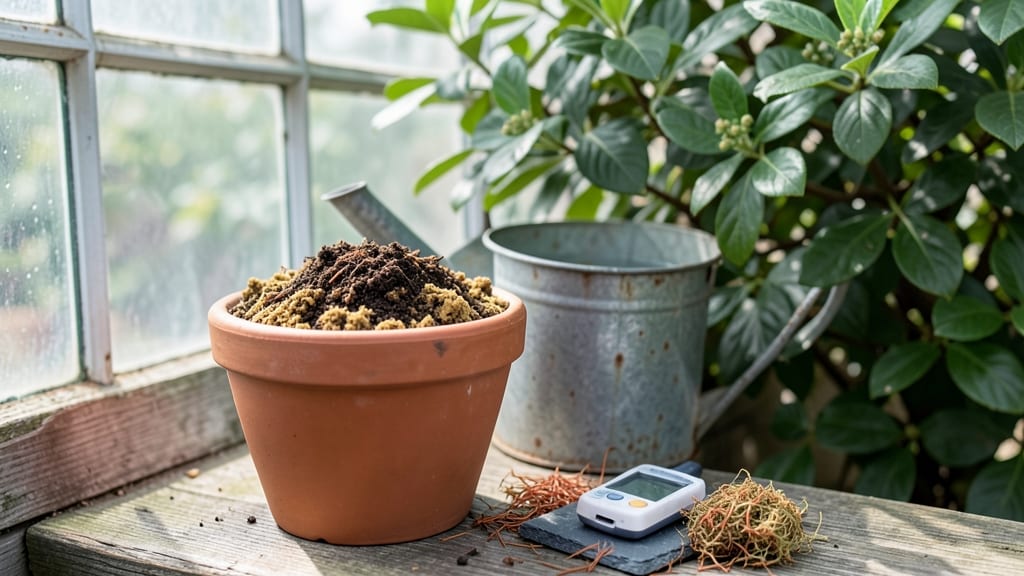
Your blueberries won't thrive in regular potting soil—acidic pH is non-negotiable for those deep purple berries. 🌿 I learned this the hard way when my first batch turned out tiny and sour, despite perfect sunlight and water. The fix?
A precise soil blend that mimics their natural bog habitat, where pH hovers between 4.5 and 5.5. Start with a 50/50 mix of peat moss (or coconut coir) and pine bark fines—this gives you a naturally acidic base.
Test your soil first with a simple pH meter (they’re cheap and accurate), then adjust with elemental sulfur if it’s too alkaline. For every 0.5 pH point too high, add 1 teaspoon of sulfur per gallon of mix and re-test in 2 weeks.
You’ll know you’ve nailed it when new leaves stay bright green, not yellow, and roots spread eagerly through the pot. The first harvest will be sweeter than store-bought, with berries plump enough to burst on your tongue.
And yes, this same formula works for azaleas, rhododendrons, and even some succulents like calceolarias. Skip the fancy additives—this is about science, not guesswork. A little patience with pH testing now means years of lush, fruiting plants without the frustration. Let’s get those blueberries thriving!
📚 In This Guide
- What you need
- Instructions
- Tips and common mistakes
- Wrapping up and next steps
What you need
- ● Peat moss or coconut coir: 50% of the mix (4 parts). Opt for premium, sterile peat moss for best acidity retention.
- ● Pine bark fines or orchid bark: 25% of the mix (2 parts). Ensures aeration and slows nutrient leaching.
- ● Perlite or vermiculite: 10% of the mix (1 part). Improves drainage—critical for root health!
- ● Sulfur powder (elemental or aluminum sulfate): 1–2 tbsp per gallon of mix. Adjusts pH to 4.5–5.5 (blueberry’s sweet spot).
- ● Slow-release organic fertilizer (acid-loving blend): 1 tbsp per gallon. Look for high nitrogen (N) and micronutrients.
- ● pH test kit (digital or liquid): 1 kit. Non-negotiable for precision—no eyeballing!
- ● Large mixing container: 5-gallon bucket or wheelbarrow. Clean and dedicated to acidic mixes.
- ● Gloves and dust mask: 1 pair each. Sulfur and peat can be dusty!
- ● Worm castings: 5% of the mix (½ part). Boosts microbial life—great for long-term soil health.
- ● Composted pine needles: 5% of the mix (½ part). Adds natural acidity and texture.
- ● Lime-free compost: 5% of the mix (½ part). Only if your local compost is not alkaline.
- ● Spray bottle with distilled water: 1. For final moisture adjustment before planting.
- ● pH buffer (e.g., aluminum sulfate): Small bag. For fine-tuning if your mix drifts from target pH.
How to create the perfect acidic potting mix for blueberries
Blueberries demand precise acidity—here’s how to dial in their ideal growing environment.
🌱 Step 1: Start with the Right Base Materials
Grab 4 parts peat moss—it’s the backbone of acidic mixes and holds moisture while staying light. Add 1 part perlite to prevent compaction and improve drainage. These two alone give you a pH around 5.5-6.0, perfect for blueberries. I like to mix them dry first in a wheelbarrow or large bin to distribute evenly.
Sift the blend to break up any clumps—blueberry roots hate dense soil. If you’re using sphagnum peat moss, it’s even better because it naturally resists decomposition and holds acidity longer. Skip garden soil entirely; it’s too alkaline and will throw off your pH balance.
💧 Step 2: Add Acidifying Amendments
Now it’s time to fine-tune the acidity. Stir in ½ cup pine bark fines for every 4 gallons of mix—this adds organic matter that slowly breaks down, keeping the pH stable. For an extra boost, mix in 1 tablespoon of elemental sulfur per gallon. This lowers pH gradually, but don’t overdo it—too much can harm roots.
If you’re using cottonseed meal (a common organic acidifier), add ½ cup per gallon. It’s a gentle way to lower pH while also feeding microbes. After adding amendments, give the mix a final stir to distribute everything evenly. The texture should feel fluffy but not powdery—like a damp sponge.
✂️ Step 3: Test and Adjust the pH
Use a digital pH meter (not liquid test kits—they’re less accurate) to check your mix. Aim for 4.5-5.5, the sweet spot for blueberries. If it’s too high (above 6.0), add a little more sulfur or pine fines. If it’s too low (below 4.0), mix in a bit of limestone sand—just ¼ cup per gallon—to raise it gently.
I like to test the mix in a small container first before committing to the full batch. Once you hit the right pH, store the remaining mix in a sealed bin. Over time, organic matter breaks down and pH can drift, so retest before each planting season.
☀️ Step 4: Plant and Maintain Acidic Conditions
Fill your blueberry pots (at least 12 inches deep) with your custom mix, leaving 1 inch of space at the top. Plant your blueberry bushes, ensuring the root flare sits just above the soil line. Water thoroughly with rainwater or distilled water—tap water can alter pH over time.
After planting, top-dress with ½ inch of fresh pine bark mulch to preserve acidity and retain moisture. Monitor the soil pH every 3-4 months using your meter. If it creeps above 5.5, add a light application of sulfur or peat moss to keep it in check. Blueberries thrive when their soil stays consistently acidic—this is the secret to year-after-year harvests.
Tips & tricks for perfect blueberry soil acid balance
Blueberries are picky about their soil—here’s how to nail that perfect acidic environment every time.
Base Material Tip: When mixing your 4 parts peat moss to 1 part perlite, don’t skip the sifting step! I’ve seen clumps in store-bought mixes that create air pockets where roots can’t grow properly. For extra acidity retention, use sphagnum peat moss—it holds its pH better than regular peat over time. Just remember, this isn’t a time to use garden soil; even a small amount can throw off your entire pH balance.
Acidifying Adjustments: That ½ cup of pine bark fines per 4 gallons is your secret weapon for long-term acidity. But here’s the thing—don’t just eyeball it! Use a kitchen scale for precision, especially if you’re scaling up. For the elemental sulfur, start with just 1 tablespoon per gallon and test before adding more. Too much can actually burn your blueberry roots, and you’ll know it’s overdone when you see yellowing leaves within weeks.
Testing Like a Pro: Your digital pH meter should read between 4.5-5.5—this is non-negotiable for blueberries. I test small batches first because adjusting a full wheelbarrow of mix is a pain. If you’re getting inconsistent readings, let the meter sit in the mix for 30 seconds before checking. And here’s a pro move: keep a small notebook to track your pH adjustments over time—you’ll spot patterns in how your mix changes season to season.
Long-Term Maintenance: That 3-4 month pH check is critical, but don’t wait until you see problems. Blueberries show stress symptoms slowly—yellowing leaves or stunted growth often mean it’s too late to save that season’s crop. Store your unused mix in sealed bins with a moisture barrier (like a plastic sheet) to prevent pH drift. And when you’re ready to use it, always water with rainwater or distilled water—tap water’s minerals will gradually raise your pH over time.
Pro Tips for Potting Soil Acidic
- Blueberries are picky about their soil—here’s how to nail that perfect acidic environment every time.
- Base Material Tip: When mixing your 4 parts peat moss to 1 part perlite, don’t skip the sifting step!
- Acidifying Adjustments: That ½ cup of pine bark fines per 4 gallons is your secret weapon for long-term acidity.
Frequently asked questions
Got questions about acidic potting soil for your blueberries? You’re not alone!
Here are some of the most common concerns—and straightforward answers—to help you grow thriving, happy plants.
How do I know if my potting soil is acidic enough for blueberries?
Blueberries love a pH between 4.5 and 5.5. Test your soil with a pH meter or test kit (available at garden centers). If it’s above 6.0, you’ll need to amend it with sulfur, peat moss, or pine bark fines to lower the pH. Pro tip: Avoid lime—it raises pH, which is the opposite of what you want!
How long does it take for potting soil to become acidic after adding amendments?
Patience is key! Adjusting pH takes time—usually 4 to 6 weeks for noticeable changes. Re-test your soil after this period. For faster results, mix amendments deeply into the soil and keep it consistently moist (but not soggy) to help the process along. Remember: Overdoing it can harm plants, so monitor closely.
Can I reuse acidic potting soil from last year’s blueberry plants?
Yes, but with caution! Over time, soil can lose its acidity due to organic matter breakdown. Refresh it by adding 10-20% new peat moss or pine fines and re-test the pH. If the soil looks depleted (dusty or compacted), consider repotting with a fresh mix. Bonus tip: Sterilize reused soil with heat or hydrogen peroxide to kill pests/diseases.
What are some signs my blueberries aren’t getting enough acidic soil?
Watch for these red flags:
- Yellowing leaves (chlorosis)—especially on new growth.
- Stunted growth or small, pale berries.
- Poor flowering or sparse fruit production.
Are there acidic potting soil alternatives if I can’t find peat moss?
Try these peat-free options to lower pH:
- Pine bark fines (great for structure + acidity).
- Coconut coir (sustainable and slightly acidic).
- Sphagnum moss (holds moisture + lowers pH).
- Composted pine needles (DIY-friendly!).
Wrapping up and next steps
Creating the perfect acidic potting soil for your blueberries is all about balance—just like crafting the ideal recipe! 🌱 With the right mix of peat moss, pine bark, and a touch of sulfur, you’ll give your plants the just-right pH (4.5–5.5) to thrive.
Don’t forget to test your soil regularly and adjust as needed—your blueberries will reward you with lush growth and sweet harvests!
Ready to take the next step? Grab your supplies, roll up your sleeves, and start planting—your future blueberry bush is waiting! 💙