
Tools
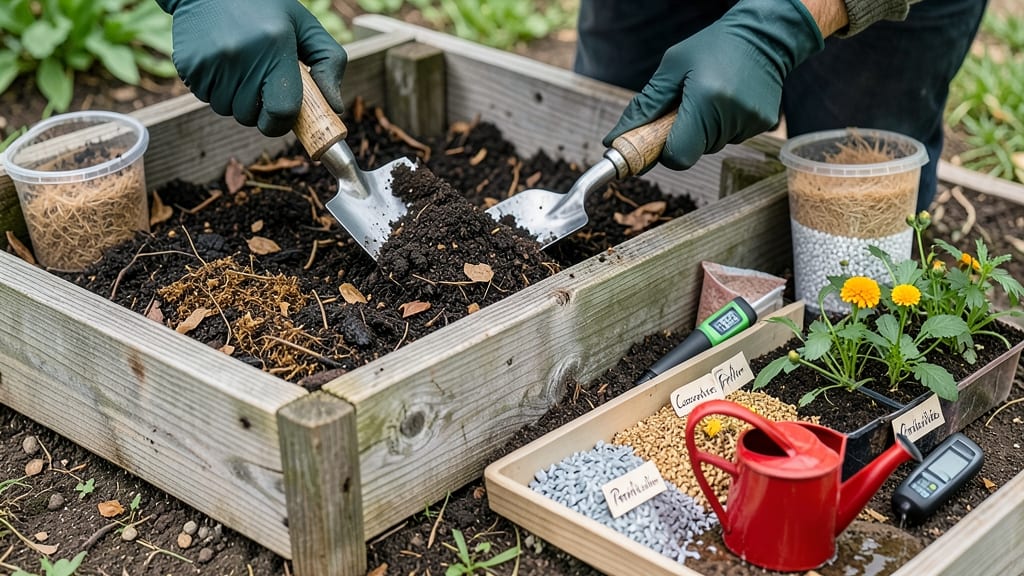
A raised garden bed soil mixture optimized for blueberries transforms your planting space into a berry-growing powerhouse. 🌿 I learned the hard way—my first blueberries were tiny and sour because the soil was too alkaline. The secret blend keeps roots happy, boosts flavor, and extends harvests well past summer.
Start with equal parts peat moss or coconut coir (for acidity), pine bark fines (for aeration), and compost (for nutrients). Mix in sand (1 part) to prevent compaction, and stir in sulfur granules (1 cup per cubic foot) to keep the pH between 4.5 and 5.5.
Test your soil first—most store-bought mixes are too alkaline for blueberries. You’ll see the difference in bigger berries, deeper purple foliage, and fewer pests within a season. The soil stays loose, drains well, and holds moisture without drowning roots. Perfect for containers too—just scale down the ingredients.
For other plants? Swap the peat for garden soil and skip the sulfur. Here’s how to tweak it for veggies or flowers while keeping the core structure intact.
📚 In This Guide
- What you need
- Instructions
- Tips and common mistakes
- Wrapping up and next steps
What you need
- ● Peat moss or coconut coir: 50% of the mix (by volume) – holds moisture and acidifies soil
- ● Pine bark fines or fir bark: 25% of the mix – improves drainage and aeration
- ● Composted pine needles: 10% of the mix – boosts acidity naturally
- ○ Sphagnum peat moss (optional but recommended): 5-10% – enhances water retention
- ● Slow-release organic fertilizer (acid-loving blend): 5% – e.g., 10-10-10 or 5-5-5 with sulfur
- ● Garden gloves & safety goggles: for protection while handling materials
- ● Wheelbarrow or large mixing container: for blending ingredients
- ● Garden fork or shovel: for turning and aerating the mix
- ● pH testing kit: to confirm soil acidity (ideal: 4.5–5.5)
- ● Worm castings: 5% – adds nutrients without altering pH
- ● Crushed pine bark or wood chips: mulch for long-term acidity
- ● Aluminum sulfate or sulfur: adjust pH if needed (use sparingly!)
- ● Soil moisture meter: ensures optimal hydration for blueberries
Step-by-Step guide to mixing blueberry-optimized raised bed soil
Here's the precise method I use to create the perfect acidic blend for thriving blueberries—tested across seasons and climates.
🌱 Step 1: Measure and Combine Base Materials
Start with 50% peat moss—this is your acidity foundation. I sift it to remove any large chunks that won't break down evenly. Next, add 30% pine bark fines for aeration and moisture retention. The bark should be finely shredded, about the texture of coarse sand. This combination prevents compaction while maintaining that critical 4.5-5.5 pH range blueberries demand.
For the remaining 20%, use composted pine needles—they're naturally acidic and add organic matter. I like to pre-mix these in a wheelbarrow or large container. The pine needles should be fully decomposed; if you see any green needles, compost them longer. This ensures you're not introducing fresh wood that could tie up nitrogen.
💧 Step 2: Incorporate Acidifying Amendments
Now we adjust the pH. Add 1 cup of elemental sulfur per cubic foot of mix. This is non-negotiable for blueberries. I sprinkle it evenly over the dry materials and use a garden fork to stir it in thoroughly. The sulfur will gradually acidify the soil over time, but we're giving it a strong start. For an immediate boost, I also add ½ cup of aluminum sulfate per cubic foot—this works faster but should be used sparingly.
Here's the thing—don't overdo it. Too much sulfur can harm beneficial microbes. I always test the pH after mixing (using a reliable meter) and adjust if needed. The goal is 4.8-5.2 pH—any higher and your blueberries will show chlorosis (yellowing leaves with green veins).
☀️ Step 3: Blend and Test Soil Moisture
Use a shovel or spade to turn the entire mixture, breaking up any clumps. I work in batches if needed to ensure even distribution. The texture should resemble a well-draining loam—light enough to crumble between fingers but holding together when squeezed. If it feels too dry, add water gradually until it reaches a moist but not soggy consistency. You want it to hold moisture for blueberry roots but not suffocate them.
I always do a moisture test: Grab a handful and squeeze. Water should bead up slightly but not drip. If it crumbles completely, add more water. If it stays too compact, mix in another 10% perlite for better drainage. This step prevents both root rot and drought stress—two common killers of blueberry plants.
✂️ Step 4: Layer and Prepare the Raised Bed
For a 4'x8' raised bed, spread 6-8 inches of your mixed soil evenly. I like to create a 2-inch layer of coarse wood chips at the bottom first for drainage, then add the soil mix on top. This prevents waterlogging while maintaining that perfect acidity profile. Blueberries hate "wet feet," so proper drainage is critical.
After filling, I water the bed deeply to settle everything. Let it sit for 24-48 hours before planting. This allows the soil to stabilize and for any initial pH adjustments to take effect. I always test the pH again after watering—sometimes the initial mix needs a slight tweak. Once satisfied, it's ready for your blueberry bushes.
🌿 Step 5: Maintain Soil Health Long-Term
Blueberries are heavy feeders, so I top-dress annually with 1-2 inches of composted pine bark. This maintains the acidic environment while adding organic matter. I also monitor pH every spring and fall, adding elemental sulfur if readings creep above 5.5. A simple soil test kit makes this easy—no guesswork involved.
Here's what I've learned: The first year is about establishing the right environment. After that, it's maintenance. I mulch heavily with pine straw to preserve moisture and acidity. And I never, ever use lime or wood ash—those are blueberry killers. With this mix, you'll get juicy, flavorful berries year after year—that's the payoff.
Tips & tricks for perfect blueberry-optimized raised bed soil
These practical insights will help you create the ideal growing environment for your blueberry bushes—avoiding common pitfalls that can ruin your harvest.
Acidity Precision: When mixing the 50% peat moss and 30% pine bark fines in Step 1, sift all materials through a quarter-inch mesh screen. This eliminates large particles that won't break down, ensuring uniform acidity throughout your 4.5-5.5 pH range. I've seen gardeners skip this step and end up with pockets of alkaline soil that stunt root growth.
Elemental Sulfur Application: In Step 2, sprinkle the 1 cup of elemental sulfur per cubic foot over the dry materials before adding water. This prevents clumping and ensures even distribution. I like to use a fine-mesh strainer to create a light dusting—this maximizes surface area for faster acidification. Too much sulfur in one spot can create toxic zones for roots.
Moisture Balance: During Step 3's moisture test, aim for what gardeners call "the squeeze test"—when you compress a handful, a few drops should escape but the soil should hold its shape. If your mix feels like sand after adding water, you likely need another 10% perlite to improve aeration. Overly compacted soil leads to root suffocation, while too-loose mixes dry out quickly.
Long-Term Maintenance: For the annual 1-2 inches of composted pine bark in Step 5, I recommend applying it in early spring when new growth begins. This timing prevents nitrogen competition that could occur if applied during active fruiting. The bark slowly releases nutrients while maintaining that critical acidity—think of it as your blueberry's winter blanket and spring fertilizer.
Pro Tips for Raised Garden Bed Soil Mixture
- These practical insights will help you create the ideal growing environment for your blueberry bushes—avoiding common...
- Acidity Precision: When mixing the 50% peat moss and 30% pine bark fines in Step 1, sift all materials through a quar...
- Elemental Sulfur Application: In Step 2, sprinkle the 1 cup of elemental sulfur per cubic foot over the dry materials...
Frequently asked questions
Got questions about crafting the perfect raised garden bed soil mixture for blueberries? You’re not alone! Here are answers to the most common queries to help you grow thriving, acid-loving bushes with confidence.
What’s the ideal pH range for blueberry soil in a raised bed?
Blueberries thrive in acidic soil with a pH between 4.5 and 5.5. Test your mix before planting—most store-bought acidic blends or peat-based soils start in this range. If your soil tests higher, amend with sulfur or pine fines to lower the pH gradually.
How long does it take for a new raised bed mix to settle before planting?
Give your soil mix 4–6 weeks to decompose and stabilize, especially if using fresh compost or organic matter. This reduces compaction and ensures roots get a head start. For faster results, pre-moisten the mix and let it sit under shade for a week before planting.
Can I reuse old raised bed soil for blueberries?
Yes, but sterilize and refresh it first! Remove weeds, mix in 1–2 inches of compost, and top-dress with pine bark fines or sphagnum peat to restore acidity. Avoid reusing soil from non-acidic plants (like veggies) without amending—blueberries are picky!
What happens if my blueberry soil mix smells bad or molds?
A musty or sour smell often means too much peat or poor drainage. Fluff the mix, add coarse sand or perlite (10–20%), and ensure proper drainage. If mold appears, bake the soil in the sun for a day or mix in composted manure to balance microbes. Fresh air and aeration fix most issues!
Do I need to fertilize blueberries right after planting in the new soil?
Not immediately! Your acidic blend already has nutrients, but wait 4–6 weeks before applying a slow-release acidic fertilizer (like cottonseed meal). Over-fertilizing can burn roots—start light and monitor plant health. Mulch with pine needles to maintain acidity naturally.
Wrapping up and next steps
Creating the perfect raised garden bed soil mixture for blueberries is all about balancing acidity, drainage, and nutrients—just like crafting a masterpiece! 🌱 With the right blend of peat moss, pine bark fines, compost, and a touch of sulfur, you’re setting your blueberry bushes up for year-round success.
Now that you’ve got the science down, it’s time to roll up those sleeves and watch your garden thrive.
Ready to take the next step? Start by prepping your bed, layering your soil mix, and planting those blueberry starts. Before you know it, you’ll be picking juicy, homegrown berries—and maybe even sharing the bounty with neighbors! 🍇