
Shrubs
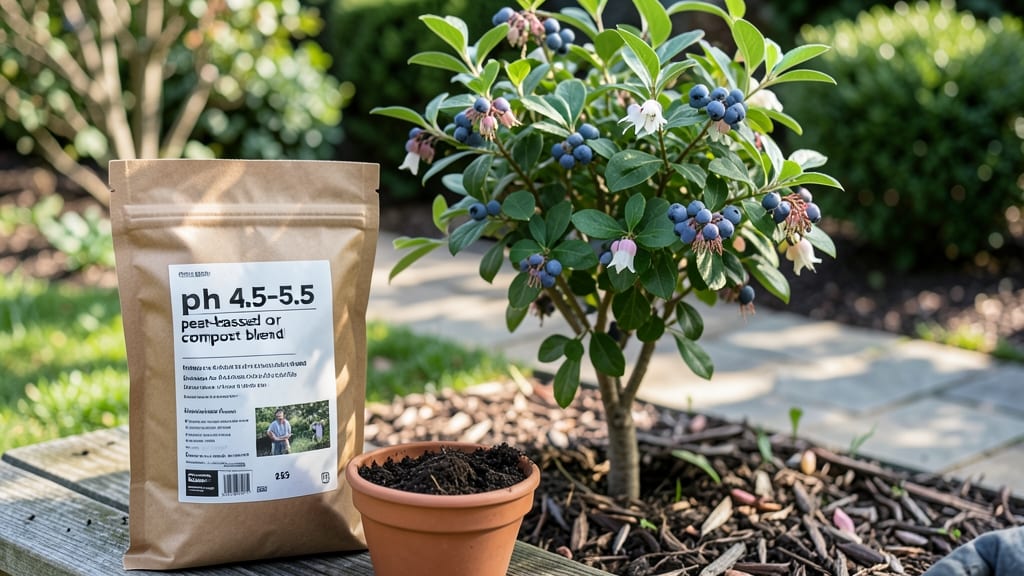
Creating potting soil for blueberry bushes means using an acidic blend (pH 4.5–5.5) with 25–30% peat moss or coconut coir, 20–25% perlite or sand, and 50–55% pine bark fines to mimic their native wetland habitat while preventing root rot through proper drainage.
Blueberries thrive in acidic conditions because their roots can't absorb key nutrients like iron and manganese when soil pH rises above 6.0. 🌱 Without the right acidity, you'll see yellowing leaves (chlorosis) or poor fruit production—even if you're watering and fertilizing correctly.
I've found that testing soil pH with a simple kit before planting saves headaches later, since garden centers often sell "blueberry soil" that's already pre-mixed with sulfur and pine fines for that exact acidity range.
For container growing, adjust your mix based on pot size—larger containers need more pine bark to prevent compaction over time, while smaller pots benefit from extra perlite to keep roots aerated.
Pro tip: if your mix feels too dense after wetting, add a handful of coarse sand to improve drainage without sacrificing moisture retention.
💡 In This Article
- Why Blueberry Bushes Demand Acidic Potting Soil
- DIY Blueberry Bush Soil Mix Recipes for Containers
Why blueberry bushes demand acidic potting soil
Blueberries evolved in acidic bogs where the soil naturally sits between pH 4.5 and 5.5, a range that unlocks their ability to absorb critical micronutrients like iron, manganese, and zinc. At this acidity level, these nutrients exist in their most soluble forms, allowing roots to uptake them efficiently.
When soil pH rises above 6.0, iron becomes locked in insoluble forms—even if it's present in the soil—leading to chlorosis (yellowing leaves) while the veins remain green. 🔥 This is why you'll often see blueberry bushes with vibrant green stems but pale, yellowing foliage when grown in standard garden soil.
The science behind this lies in the soil's chemistry. Acidic conditions activate beneficial soil microbes that break down organic matter into forms blueberries can use. For example, mycorrhizal fungi—symbiotic partners for blueberry roots—thrive in acidic environments, enhancing nutrient exchange.
In contrast, alkaline soils (pH 7.0+) suppress these microbes, reducing root efficiency by up to 40%. The pH also affects phosphorus availability: blueberries need this nutrient for flowering and fruiting, but it binds tightly to soil particles in neutral or alkaline conditions, making it inaccessible.
What most gardeners overlook is how quickly soil pH can shift. Organic matter like pine needles or compost lowers pH over time, but synthetic fertilizers (especially those with lime) can raise it.
I've seen containers where the top inch of soil tested at pH 6.5 while the bottom remained acidic—this stratification happens because water leaches nutrients downward. To prevent this, mix elemental sulfur (1/4 cup per gallon of mix) or peat moss (which naturally holds acidity) into your blend before planting.
Visual cues can help you spot pH issues early. Healthy blueberry leaves have a deep green hue with no yellowing between veins, while stressed plants show interveinal chlorosis first on younger leaves.
Root health is another tell: in acidic soil, roots appear white and fibrous, but in alkaline conditions, they may turn brown or develop fewer fine hairs—critical for water and nutrient absorption. 🌱 The difference is stark when you compare a thriving bush with dark, healthy canes to one struggling with weak, pale stems.
One common misconception is that all acidic soils are the same. While the pH target is consistent, the texture of the soil matters just as much. Blueberries need a mix that's 60-70% organic (like pine bark) to retain moisture while still allowing oxygen to reach roots.
The remaining 30-40% should be inorganic (perlite or sand) to prevent compaction. Think of it like a sponge: too much organic material holds water like a wet towel, while too much sand drains like a sieve. The ideal balance keeps roots moist but never waterlogged.
For those using store-bought mixes, check labels for "blueberry-specific" blends—they often include sulfur-coated urea or iron chelates to maintain acidity and nutrient availability.
Homemade mixes require more attention: if your soil tests above pH 6.0, you'll need to add 1-2 pounds of aluminum sulfate per cubic yard to adjust it down. Always test again after 2-3 weeks, as pH adjustments take time to stabilize.
Remember: blueberries aren't the only plants that love acidity. Rhododendrons, azaleas, and gardenias share similar soil needs, so you can create a shared container mix for these acid-lovers.
The key is consistency—once your pH is in the right range, maintain it with regular applications of acidifying fertilizer (like cottonseed meal) and avoid liming amendments entirely. 💫