
Container Gardens
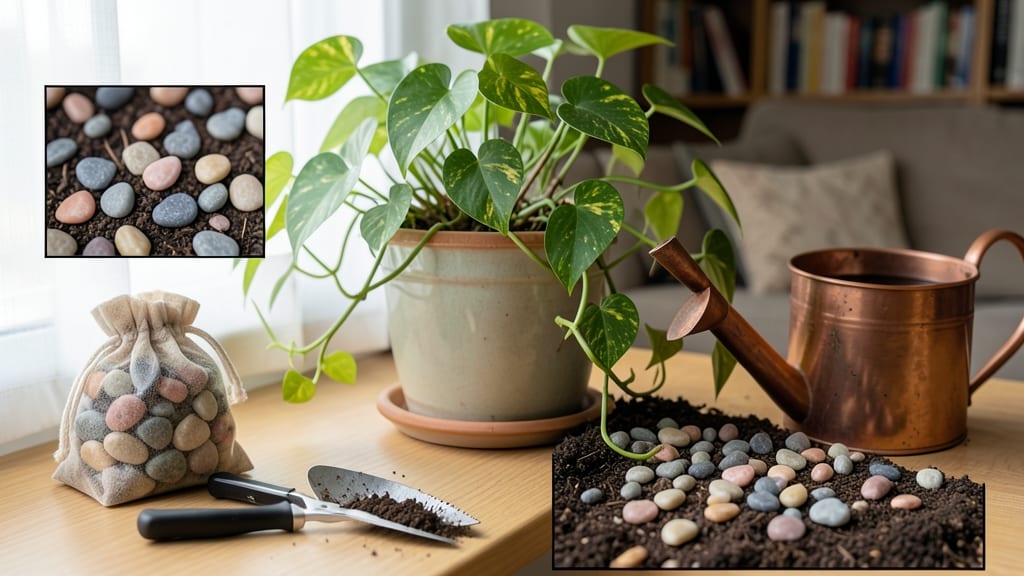
Putting pebbles on top of soil for indoor plants improves drainage and reduces overwatering risks, but improper layering can create moisture traps that promote root rot. Use a breathable barrier like fabric or coarse gravel, and match the approach to your plant's specific needs.
Adding decorative pebbles to your indoor plant pots creates a stylish look while serving a functional purpose—when done right.
The key lies in proper layering: a 1-inch layer of pebbles beneath the soil improves drainage, but placing them directly on top can actually suffocate roots by blocking airflow. 🌱 For moisture-sensitive plants like succulents or cacti, this technique works beautifully, but fern lovers should skip it entirely.
I've found that using lava rock (porous and lightweight) outperforms smooth river rocks, which can compact over time and reduce effectiveness.
What many gardeners overlook is the importance of the transition layer. A breathable fabric or landscape fabric between pebbles and soil prevents moisture buildup while allowing roots to expand. This simple addition transforms a potential risk into a reliable drainage solution.
Always pair pebble layers with pots that have drainage holes—otherwise, you're just creating a decorative moisture trap. For plants that prefer consistently damp soil, like calatheas or peace lilies, this method should be avoided entirely.
💡 In This Article
- How Pebbles Affect Indoor Plant Health and Growth
- Best Practices for Using Pebbles with Indoor Potted Plants
How pebbles affect indoor plant health and growth
The science behind using pebbles in plant pots revolves around two key factors: moisture regulation and oxygen exchange. When layered beneath the soil, pebbles create air pockets that improve drainage by allowing excess water to flow through the pot's drainage holes.
This is especially critical for plants like succulents or orchids, which thrive in well-draining conditions. The porous nature of materials like lava rock further enhances this effect by absorbing and releasing moisture gradually, mimicking natural soil conditions in arid climates.
However, the placement matters dramatically. A 1-inch layer of pebbles directly on top of soil can actually suffocate roots by blocking airflow to the upper soil surface. This creates anaerobic conditions where roots struggle to breathe, leading to root rot and fungal growth.
The ideal setup involves placing pebbles beneath the soil, creating a capillary break that prevents water from pooling at the bottom. For larger pots, a 2-inch layer works better, while smaller pots may only need ½ inch to avoid overwhelming the root system.
Plant type determines success rates. Moisture-loving plants like ferns or calatheas despise this method because their roots need consistent humidity. In contrast, drought-tolerant species like snake plants or haworthias benefit from the improved airflow and reduced soil compaction.
The texture also plays a role—rough, porous pebbles (like pumice) work better than smooth river rocks, which can compact over time and lose their drainage benefits.
Temperature fluctuations further complicate things. In cooler months, pebbles can absorb heat from the soil during the day and release it slowly, creating a microclimate that benefits tropical plants. But in hot climates, this same effect can overheat roots if the pot lacks insulation.
Always pair pebbles with pots that have drainage holes—otherwise, you're just creating a decorative moisture trap that worsens drainage issues.
What most gardeners miss is how pebble size affects performance. ¼-inch to ½-inch pebbles create optimal airflow, while larger stones (over 1 inch) leave too many gaps that fail to support root growth.
The ideal setup combines porous materials (like lava rock) with proper layering to balance drainage and root health. For visual appeal, you can add a thin decorative layer on top, but this should never exceed ½ inch to prevent moisture buildup.
Consider this real-world example: A 6-inch pot with a 1-inch lava rock layer beneath the soil and ¼-inch decorative pebbles on top works perfectly for a jade plant. The same setup fails miserably for a peace lily, which needs consistently moist soil.
The difference lies in understanding your plant's native environment and adjusting the pebble technique accordingly.