
Trees
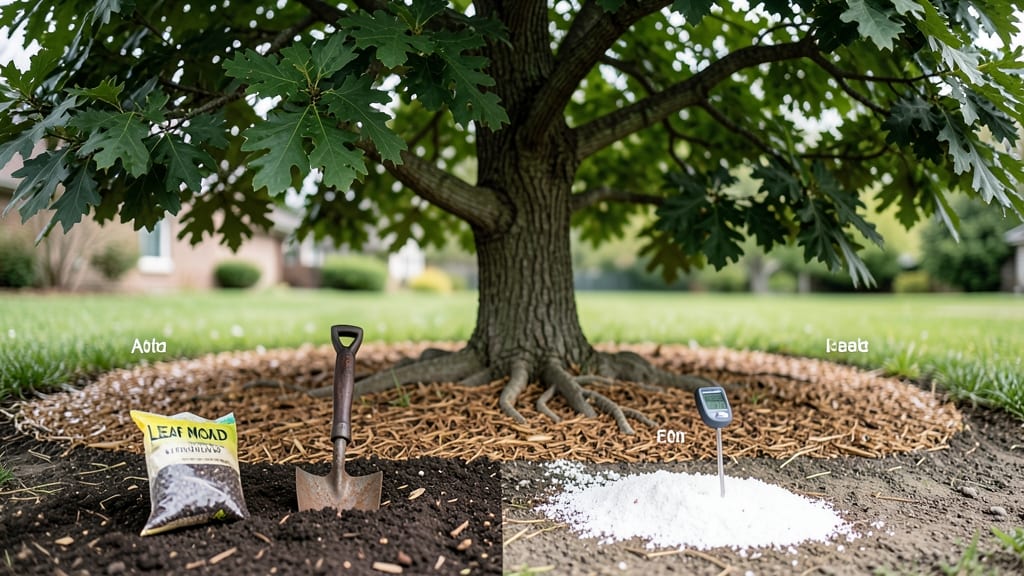
Soil amendments for trees improve root health and nutrient absorption by balancing pH, adding organic matter, or providing essential minerals. Choose amendments like compost, peat moss, or sulfur based on your tree species and soil type for optimal growth.
Soil amendments act like a customized vitamin boost for your trees, addressing specific deficiencies in your yard's natural soil. 🌳 For example, evergreens often thrive with sulfur to lower pH, while fruit trees benefit from compost to enhance microbial activity in the root zone.
I've found that testing soil pH first saves time—it tells you exactly what your trees are missing, whether it's calcium for clay soils or organic matter for sandy ones. The key is matching the amendment to both the tree's needs and your soil's current condition.
Think of amendments as a three-step process: first, you correct the soil's structure (like breaking up compacted clay with gypsum), then you feed the roots with essential nutrients (through slow-release options like worm castings), and finally, you create an environment where beneficial microbes can flourish.
This approach prevents over-fertilizing while ensuring your trees get exactly what they need to grow strong and healthy.
💡 In This Article
- How Different Soil Amendments Boost Tree Growth
- Best Soil Amendments by Tree Type and Soil Condition
How different soil amendments boost tree growth
Soil amendments work through three key mechanisms: microbial activation, nutrient availability, and physical soil structure improvement. Compost, for example, introduces beneficial bacteria and fungi that break down organic matter into nutrients trees can absorb.
These microbes form symbiotic relationships with roots, creating mycorrhizal networks that extend the tree's reach for water and minerals by up to 300%. The organic matter also improves soil porosity, allowing roots to penetrate deeper while retaining moisture better than compacted soil.
Fast-acting amendments like peat moss or pine bark fines provide immediate structural benefits by improving drainage in clay soils or moisture retention in sandy ones.
Peat moss, with its 85-90% organic composition, holds water like a sponge while maintaining aeration—critical for trees like oaks that need well-drained but moist roots. Meanwhile, sulfur-based amendments adjust pH levels by converting to sulfates in soil, lowering acidity for acid-loving trees like azaleas.
The transformation happens gradually over 4-6 weeks, giving roots time to adapt without shock.
Nutrient release rates vary dramatically between amendments. Slow-release options like composted manure or worm castings provide steady nourishment over months, while fast-acting fertilizers like ammonium sulfate deliver immediate but short-lived boosts.
For young trees, I recommend a 50-50 mix of both—compost for long-term health and a light application of bone meal for quick phosphorus uptake during early growth stages. This dual approach prevents nutrient spikes that can burn delicate root systems.
One often-overlooked benefit is how amendments improve soil temperature regulation. Organic matter like compost insulates roots against extreme heat or cold, maintaining a more stable 60-70°F range where microbial activity thrives. In urban areas where concrete and pavement create "heat islands," this insulation becomes especially valuable for maintaining root health.
The physical texture changes too—amended soil crumbles easily between fingers rather than forming dense clods, signaling better aeration for roots.
Consider the case of a struggling apple tree in alkaline soil. Adding elemental sulfur lowers the pH to 6.0-6.5 (ideal for apples), while incorporating compost introduces beneficial microbes that help the tree absorb the newly available nutrients.
The sulfur works by converting to sulfuric acid in the soil, but this process takes time—typically 2-3 months for full effect. Meanwhile, the compost's microbial activity begins immediately, creating a two-pronged approach to soil improvement.
For evergreens like pine or spruce, the focus shifts to maintaining acidity while improving drainage. Pine bark fines, with their 60% air space, prevent waterlogging that can suffocate roots, while aluminum sulfate provides the acidity these trees crave.
The key is balance—too much amendment can create nutrient imbalances just as easily as too little. Always test soil before and after amending to track progress.