
Tools
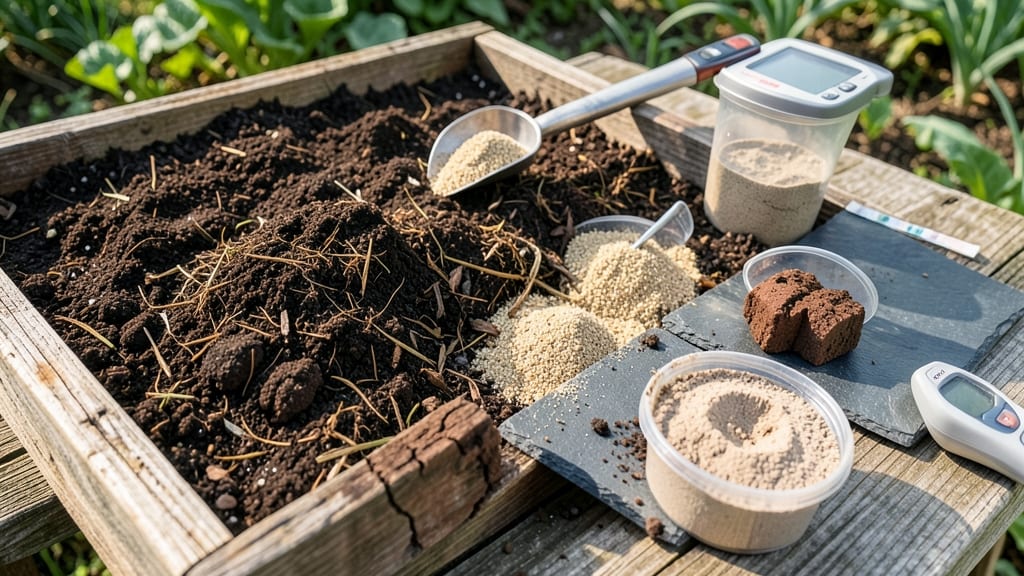
For raised vegetable gardens, the best soil composition is a balanced loam mix containing 40% sand, 40% silt, and 20% clay, plus 5-10% organic matter like compost or aged manure. This blend ensures proper drainage, nutrient retention, and root development, while allowing adjustments for specific plant types—leafy greens benefit from looser mixes, while root vegetables prefer slightly denser soil.
This balanced mix isn't just about numbers—it's about creating the perfect environment for roots to breathe and expand. 🌱 The sand component prevents compaction, the silt holds moisture without drowning roots, and the clay binds nutrients so plants can access them efficiently.
I've found that adding worm castings to the organic matter boosts microbial activity, which naturally improves soil structure over time.
What many gardeners overlook is how plant types interact with these ratios. For example, heavy feeders like tomatoes thrive in this balanced loam, while delicate herbs need slightly more sand to prevent overwatering.
Testing your soil's pH and nutrient levels before planting can save you from common mistakes like over-amending with compost, which can lead to nitrogen burns.
💡 In This Article
- How Loam Percentages Affect Plant Growth in Raised Beds
- Customizing Soil Mixes for Specific Vegetables in Raised Gardens
How loam percentages affect plant growth in raised beds
The science behind soil composition starts with particle size distribution. Sand particles (0.05-2mm) create air pockets that improve drainage, while silt (0.002-0.05mm) holds moisture and nutrients near root zones.
Clay (<0.002mm) acts like a nutrient sponge, binding essential minerals like phosphorus and potassium. 🌱 When these components work together in a 40-40-20 ratio, they create what soil scientists call "optimal porosity"—about 40-60% pore space—allowing both water and oxygen to reach roots efficiently.
This balance directly impacts root development. For example, carrots and radishes need loose soil with 60-70% sand to prevent forking, while tomatoes thrive in the standard loam because their fibrous roots can navigate the slightly denser structure.
The clay component also supports beneficial microbes that break down organic matter, releasing nutrients in forms plants can absorb—like nitrates from composted manure. Without enough clay, nutrients would leach away too quickly, even with regular fertilizing.
Drainage becomes critical in raised beds where water doesn't have natural pathways to escape. Too much sand (50%+) creates a "flash flood" effect where water drains too fast, while too much clay (30%+) causes compaction and root suffocation.
The 20% clay in balanced loam provides just enough structure to prevent erosion while maintaining moisture—like a well-worn hiking trail that's firm but not muddy. I've noticed this becomes especially important during heavy rain when raised beds can become waterlogged if the mix isn't properly balanced.
Microbial activity is where the magic happens. Healthy soil contains billions of bacteria and fungi per gram that decompose organic matter.
The silt fraction provides the perfect surface area (800x more than sand) for these microbes to colonize, while clay particles create micro-environments that protect them from drying out. This biological activity is why compost-amended loam often outperforms synthetic mixes—it builds long-term fertility rather than just providing immediate nutrients.
The 5-10% organic matter acts as microbial food, sustaining this ecosystem for months after planting.
Consider how different vegetables interact with these properties. Leafy greens like lettuce and spinach prefer lighter mixes (50% sand) because their shallow roots need quick access to moisture but can't tolerate waterlogging. In contrast, heavy feeders like peppers and eggplants benefit from the balanced loam's nutrient-holding capacity.
The clay component becomes particularly valuable for these plants during fruiting stages when they demand higher phosphorus levels for flower and fruit development. Without sufficient clay, these nutrients would wash away during irrigation.
One common mistake is assuming all vegetables need the same soil. For instance, blueberries require acidic loam (pH 4.5-5.5) with 40% peat moss instead of clay, while most vegetables prefer neutral pH (6.0-7.0).
The particle ratios create the physical environment, but the chemical properties—like pH and cation exchange capacity—determine what nutrients are actually available to plants. That's why testing your soil's texture and pH before planting can save you from costly corrections later. 🔍