
How To
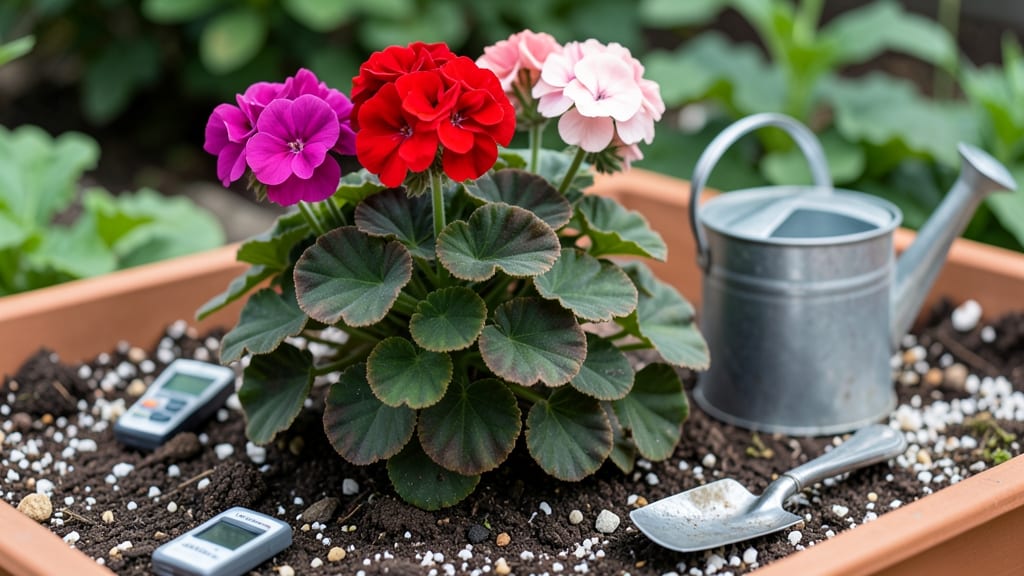
For geraniums, the ideal soil is well-draining and slightly acidic, featuring a 50% sand blend to prevent root rot while maintaining airflow, plus peat or perlite to promote healthy growth and vibrant flowers.
Geraniums are fussy about their growing conditions, and their soil needs are no exception. 🌱 The right mix—light, airy, and never soggy—keeps roots from rotting while providing just enough moisture to support those lush blooms.
I’ve found that adding a handful of compost to your DIY blend boosts nutrients without compacting the soil, and always test drainage by pouring water through a sample before planting. Overwatering is the fastest way to kill geraniums, so prioritize gritty textures over rich, heavy garden soil.
If you’re planting in containers, use a blend that’s 60% sand or perlite to ensure excess water drains within minutes. For in-ground plantings, amending native soil with 20% sand and 10% perlite mimics the loose, fast-draining conditions geraniums crave.
Pro tip: Avoid peat moss if your local climate is dry—it can dry out too quickly, leaving roots thirsty.
💡 In This Article
- Why Geraniums Need Fast-Draining, Slightly Acidic Soil
- DIY Geranium Soil Mix: Step-by-Step Recipe
Why geraniums need fast-draining, slightly acidic soil
Geranium roots are shallow and fibrous, meaning they spread horizontally rather than growing deep. This structure requires soil that mimics their natural Mediterranean habitat—lightweight and porous to prevent suffocation. When soil stays too wet, oxygen can't reach the roots, triggering anaerobic conditions that lead to root rot within days.
The 50% sand in ideal geranium soil creates tiny air pockets, allowing roots to breathe while still holding enough moisture to prevent wilting. Think of it like a sponge with holes: it soaks up water quickly but doesn't trap it.
The slightly acidic pH range of 6.0–7.0 is crucial because geraniums absorb nutrients most efficiently in this zone. Outside this range, the plant struggles to uptake essential minerals like phosphorus (critical for blooms) and iron (needed for chlorophyll production).
For example, soil with a pH below 5.5 can cause iron toxicity, turning leaves yellow, while pH above 7.5 locks out phosphorus, stunting flower production. You can test your soil's pH with a simple kit—most garden centers sell them for under $10.
Organic matter like peat moss or coconut coir acts as a moisture reservoir, but it must be balanced with gritty materials. Pure peat compacts over time, reducing airflow, while sand prevents this by maintaining structure.
Perlite is another excellent amendment because it adds 30–50% more porosity than sand alone, creating a looser texture that mimics volcanic soil where geraniums thrive in the wild. Without this balance, roots suffocate, and the plant becomes susceptible to fungal diseases like botrytis, which thrives in damp conditions.
Moisture retention is another hidden factor. Geraniums hate "wet feet"—even brief periods of soggy soil can kill them. The right mix ensures water drains within 10–15 minutes after watering, preventing root rot while keeping the soil slightly damp at the surface.
This is why container-grown geraniums often outperform in-ground plants: pots allow for precise drainage control. For in-ground plantings, mounding soil slightly above the root ball creates a natural drainage slope, directing excess water away from roots.
Consider this: In my own garden, geraniums planted in heavy clay soil (amended with only compost) produced sparse blooms and yellowing leaves until I added 30% perlite to the mix. Within weeks, the plants rebounded with vibrant flowers and darker green foliage.
The difference wasn't just aesthetics—it was survival. Geraniums aren't built for soggy conditions; they're drought-tolerant once established, but only if their roots can access oxygen.
One common mistake is assuming "fertile soil" equals good geranium soil. While compost adds nutrients, it also increases moisture retention, which is counterproductive. The key is function over fertility: geraniums prioritize drainage and aeration over rich organic matter.
A blend of 50% sand, 20% peat, and 30% compost strikes the perfect balance—light enough for roots to spread but with enough nutrients to support blooms. 🌸