
How To
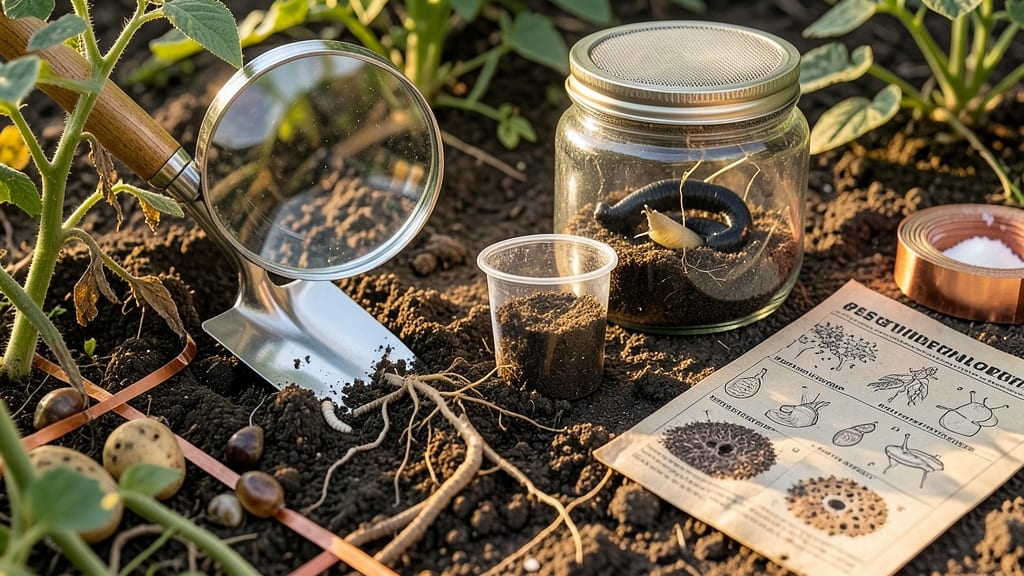
Your struggling garden might not be failing—it could be under siege from the challenge of soil pest identification. 🌱 Soil pests like grubs, nematodes, and slugs silently sabotage roots, stems, and leaves before you even notice.
I’ve pulled up plants with half their roots chewed away, only to find tiny white grubs hiding beneath the soil surface.
These invaders leave telltale signs: wilting despite watering, stunted growth, or plants that topple easily. Grubs create tunnels in roots, nematodes cause galls or yellowing, and slugs leave slime trails and ragged holes.
The key to stopping them starts with knowing what you’re up against—so you can act before your garden’s health takes a permanent hit.
With just a trowel, a magnifying glass, and this guide, you’ll learn to spot the damage early. I’ll walk you through what to look for, how to confirm the culprit, and the first steps to reclaim your soil—no lab tests required.
Most fixes are simple, but knowing when to call in reinforcements saves time and money.
Whether you’re dealing with a single wilting plant or a full-blown infestation, this visual guide cuts through the guesswork. You’ll recognize the patterns, understand the damage, and take action before your garden’s next harvest is at risk.
Hidden Triggers Behind Soil Pests
Soil pests don’t just appear out of nowhere—they’re drawn in by a mix of environmental, biological, and even human-made factors. Understanding these hidden triggers can help you spot warning signs early and take action before damage occurs.
Let’s break down the key reasons why these unwelcome guests show up in your garden.
Soil pests thrive when the ecosystem is out of balance. Healthy soil supports beneficial microbes, fungi, and insects that naturally suppress pests. But when soil becomes depleted or overly rich in certain nutrients, it weakens plants and attracts nuisances like:
- Root maggots & wireworms 🐛 – These pests target stressed plants with low nitrogen or high moisture.
- Fungal gnats & nematodes 🍄 – Overly wet, poorly drained soil creates the perfect breeding ground.
- Cutworms & slugs 🐌 – They favor soft, decaying organic matter in compacted or nutrient-poor soil.
Actionable Fix: Test your soil’s pH and nutrient levels (aim for 6.0–7.0 pH for most crops). Add compost, worm castings, or mycorrhizal fungi to boost microbial activity and deter pests naturally.
Many soil pests love damp conditions because moisture keeps their eggs and larvae hydrated. Common culprits include:
- Fungal gnats & shore flies 🪰 – Their larvae drown in soggy soil but die off in drier conditions.
- Nematodes 🐝 – These microscopic worms multiply rapidly in waterlogged soil, attacking roots.
- Cutworms & slugs 🌑 – They seek out moist areas to hide and feed.
Actionable Fix:
- Improve drainage with sand, perlite, or raised beds.
- Water deeply but less frequently to encourage strong root systems that resist pests.
- Use mulch (straw or wood chips) to regulate moisture without creating pest-friendly humidity.
While compost is great for soil, fresh, unbalanced organic matter (like manure or rotting leaves) can attract pests that feed on decaying plant material. Problematic pests include:
- Grubs & beetles 🪲 – They tunnel through compost-rich soil, damaging roots.
- Earwigs & pill bugs 🪳 – These detritivores thrive in damp, decomposing leaf litter.
- Wireworms 🐛 – They favor areas with high organic carbon, like grass clippings or straw.
Actionable Fix:
- Use well-aged compost (6+ months) to avoid attracting pests.
- Avoid piling organic matter directly against plant stems—keep it 6+ inches away.
- Rotate crops to prevent pest buildup in specific soil layers.
Stressed plants (from drought, disease, or poor growing conditions) produce sweeter sap and softer tissue, making them a buffet for pests. Common stress-related invaders:
- Aphids & whiteflies 🐞 – They cluster on new, tender growth.
- Root-knot nematodes 🕷️ – They exploit weakened roots, causing galls and stunted growth.
- Sowbugs & slugs 🐌 – They target plants recovering from transplant shock.
Actionable Fix:
- Hardening off seedlings before planting to reduce transplant stress.
- Provide consistent care (water, sunlight, nutrients) to keep plants resilient.
- Use resistant plant varieties (e.g., nematode-resistant tomatoes or aphid-resistant basil).
Sometimes, our own actions create pest-friendly conditions. Common mistakes include:
- Over-tilling soil 🔄 – Disrupts beneficial fungi and exposes pest eggs to the surface.
- Using synthetic fertilizers 🧪 – Can kill beneficial microbes, making soil more vulnerable.
- Ignoring weeds 🌿 – Weeds harbor pests like cutworms, flea beetles, and slugs that later move to crops.
- Poor sanitation 🧹 – Leaving plant debris (especially diseased or infested) invites pests back year after year.
Actionable Fix:
- Mulch heavily to suppress weeds and regulate soil temperature.
- Rotate crops annually to break pest life cycles.
- Clean up debris in fall to remove overwintering pest hiding spots.
Pests are highly sensitive to temperature, humidity, and seasonal changes. For example:
- Warmer winters 🌡️ – Allow pests like grubs and cutworms to survive longer.
- Heavy rains 🌧️ – Wash away natural predators (like ground beetles) while boosting fungal gnat populations.
- Drought stress 🏜️ – Weakens plants, making them easier targets for root borers and nematodes.
Actionable Fix:
- Monitor weather patterns and adjust watering/pest control timing accordingly.
- Use row covers in early spring to block flying pests before they lay eggs.
- Encourage natural predators (ladybugs, spiders, birds) with diverse plantings and water sources.
Pests rarely appear alone—they’re often part of a chain reaction. For example:
- Overwatering → Fungal gnats thrive.
- Fungal gnats → Weakened seedlings.
- Weak seedlings → Slugs and cutworms move in.
Break the cycle by addressing one factor at a time (e.g., fix drainage first, then introduce beneficial nematodes).
By tackling these root causes, you’ll make your garden a less appealing (and more resilient) place for soil pests. Next, we’ll dive into how to identify specific invaders based on their damage patterns—so you can act fast!
Fixing Soil Pest Problems Fast
Got unwanted critters digging up your garden? Don’t panic—most soil pest issues have simple, effective fixes. Below, we’ve mapped common causes to practical solutions, plus prevention tips to keep your soil healthy long-term. Let’s get your garden back in shape!
Cause: White grubs (larvae of beetles like Japanese beetles or June bugs) chew on roots, causing wilting or dead patches.
How to Fix It: 🔥 Handpick or Till (Best for Small Gardens)
- Wait until evening when grubs are near the surface.
- Use a trowel to gently lift soil and remove grubs by hand (wear gloves!).
- For larger areas, till the soil deeply (10–12 inches) to expose grubs to birds or predators.
🍳 Nematode Treatment (Chemical-Free)
- Apply beneficial nematodes (Heterorhabditis bacteriophora) to your soil. These microscopic worms infect and kill grubs naturally.
- Water the soil well before and after applying (follow package instructions).
👨🍳 Milky Spore or Bacillus thuringiensis (Bt) (Long-Term Control) - Milky spore (Bacillus popilliae) is a bacteria that thrives in soil and targets grubs.
It takes 2–3 years to establish but provides decades of protection. - Bt (Bacillus thuringiensis var. japonensis) is a fast-acting spray for immediate control. Reapply every 2–3 weeks during grub season.
🌱 Prevention Tips: ✅ Encourage Natural Predators: Attract birds (like robins) with shallow water dishes or plant native shrubs. ✅ Reduce Grub Habitats: Avoid overwatering or compacted soil—grubs love moist, soft ground. ✅ Crop Rotation: Plant non-host crops (like beans or peas) in affected areas to disrupt their life cycle.
Cause: Ants and termites tunnel through soil, damaging roots and structures. Termites are especially destructive, while ants may just be a nuisance.
How to Fix It: 🔪 Bait Stations (For Termites & Fire Ants)
- Use non-repellent termite baits (like Recruit HD or Advion) or fire ant baits (e.g., Amdro Fire Ant Killer).
- Place baits near mounds or high-traffic areas. Worker ants carry bait back to the colony, eliminating the queen.
🥘 Diatomaceous Earth (DE) (For Ants & Small Termites)
- Sprinkle food-grade DE around ant trails or termite entry points. It dehydrates pests but is safe for plants (reapply after rain).
- Pro Tip: Focus on soil cracks, mulch lines, and foundation edges.
⏰ Barrier Treatments (For Termites)
- Apply termiticide barriers (like Termidor) to soil around your home’s foundation or garden beds. This creates a chemical shield that repels termites.
🌡️ Prevention Tips: ✅ Remove Food Sources: Keep compost far from the house, store firewood away, and clean up spills (especially sugary or greasy). ✅ Seal Entry Points: Fill cracks in walls, foundations, and mulch with caulk or sand to block access. ✅ Mulch Wisely: Use gravel or metal mulch near structures instead of wood chips to deter termites.
Cause: These slimy pests leave behind irregular holes in leaves and chewed roots, thriving in damp, shaded soil.
How to Fix It: 💡 Beer Traps (Quick & Effective)
- Bury a shallow container (like a yogurt cup) filled with beer in the soil. Slugs are attracted to it and drown.
- Pro Tip: Refresh the beer every 2–3 days for best results.
🎯 Copper Barriers (Physical Deterrent)
- Place copper tape or wire around garden beds. The slight electric shock slugs feel when touching it keeps them away.
- Works best for raised beds or high-value plants.
✨ Iron Phosphonate Baits (Safe & Long-Lasting)
- Use Sluggo or Slug Magic—these baits contain iron, which kills slugs without harming pets or wildlife.
- Sprinkle in the evening when slugs are active.
🌿 Prevention Tips: ✅ Improve Drainage: Slugs love moist soil—add sand or perlite to heavy clay soils. ✅ Mulch Alternatives: Use pine needles, gravel, or sharp-edged mulch (like cedar chips) to deter slugs. ✅ Handpick at Night: Shake plants over a bucket in the evening and dispose of slugs (wear gloves!).
Cause: These yellowish-brown larvae (corn rootworm larvae) bore into seeds and roots, causing seedlings to rot or fail to sprout.
How to Fix It: 🔥 Floating Row Covers (For Seedlings)
- Use lightweight row covers over newly planted seeds to block wireworms from reaching them.
- Remove covers once plants are established.
🍳 Neem Oil Spray (Deters Adult Beetles)
- Spray neem oil on soil and plants to repel adult beetles before they lay eggs.
- Reapply every 7–10 days during beetle season.
👨🍳 Crop Rotation & Trap Crops
- Plant buckwheat or sorghum as a trap crop—wireworms prefer these over your veggies.
- Avoid planting corn, potatoes, or wheat in the same spot yearly.
🌱 Prevention Tips: ✅ Test Your Soil: Wireworms thrive in sandy, dry soils—amend with compost to improve moisture retention. ✅ Use Cover Crops: Plant rye or clover in the off-season to outcompete wireworms. ✅ Encourage Birds: Wireworms are food for chickens and quail—let them forage in your garden!
Want to keep pests out before they start? Follow this 5-step plan:
- Test Your Soil – Know your pH and nutrient levels (pests love stressed plants).
- Diversify Plants – Avoid monocultures (pests target single crops).
- Keep It Clean – Remove debris, weeds, and old plant material where pests hide.
- Water Wisely – Water in the morning to reduce humidity (pests love dampness).
- Monitor Regularly – Check soil and plants weekly for early signs of trouble.
Final Thought: Most soil pests can be managed without chemicals if you act fast and stay proactive. Try one or two methods from above, and your garden will be thriving in no time! 🌱💪
Frequently asked questions
How can I tell if my plants have soil pests without digging up the roots?
Look for above-ground clues like wilting despite proper watering, stunted growth, or plants that topple easily. Check leaves for chewed edges (slugs/snails) or yellowing spots (nematodes). For grubs, lift a small section of soil near the base—white, C-shaped larvae mean trouble. A magnifying glass helps spot tiny damage patterns.
What’s the fastest way to confirm if I have nematodes in my soil?
Dig up a small root sample and look for tiny, swollen galls (like knobby growths) on roots—this is a classic nematode sign. For confirmation, place a root sample in a jar of water and check for microscopic worms after 24 hours. Soil test kits (like those from University Extension Services) can also detect nematodes for $20-$50.
Are there any soil pests that actually help my garden?
Yes! Earthworms improve soil structure, and predatory nematodes (like Steinernema feltiae) eat harmful pests. Even some beetle larvae break down organic matter. The key is balance—too many pests (like grubs) cause damage, but beneficial ones keep ecosystems healthy. Focus on attracting the good guys with diverse plantings and organic matter.
When should I call a professional for soil pest issues?
If you see large termite mounds, widespread plant death despite treatments, or microscopic pests (like nematodes) in high numbers, it’s time to call an expert. Heavy infestations (e.g., 10+ grubs per square foot) may require professional-grade solutions. For most home gardens, DIY methods work—just monitor progress weekly.
Can I reuse soil from an infested garden bed?
Not without treatment! Sterilize soil by baking it at 180°F for 30 minutes or solarizing it (covering with clear plastic for 4-6 weeks in hot sun). For organic gardens, mix in composted wood chips or sand to dilute pests, then plant trap crops (like marigolds) to attract remaining invaders. Test soil health afterward.