
How To
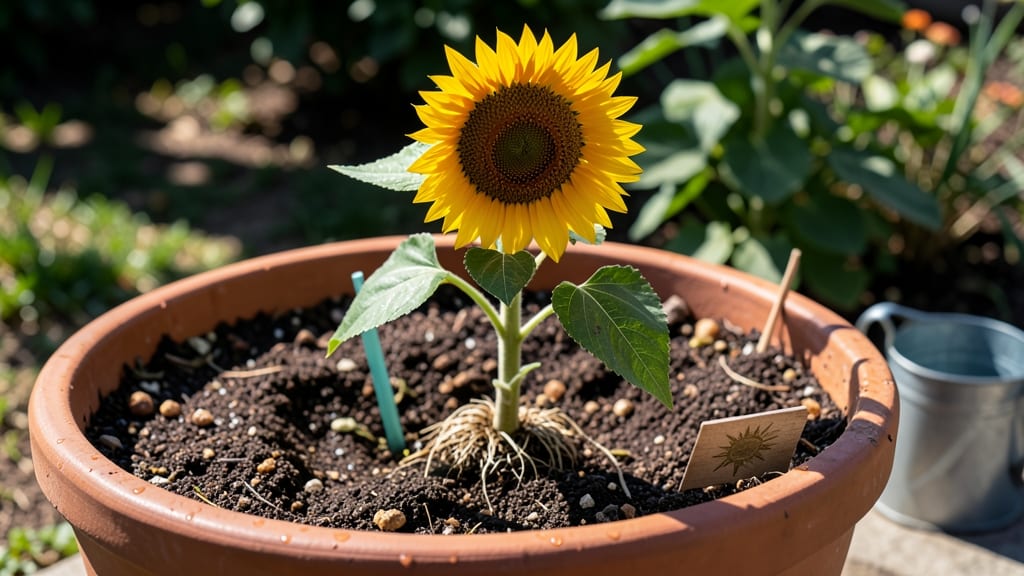
Sunflower soil requirements demand well-draining, loamy soil with a slightly acidic to neutral pH (6.0–7.5) and rich organic matter to support deep root growth and optimal nutrient uptake. Sandy loam or clay-loam blends work best, while heavy clay or waterlogged soil should be amended for success.
Sunflowers need the right soil mix to grow strong and tall, and that starts with proper drainage and nutrient balance. 🌱 The deep taproots of sunflowers require loose, airy soil that lets water flow through easily while holding enough moisture for consistent growth.
Most gardeners achieve this with a blend of sand, silt, and organic compost—think of it as giving your sunflowers both stability and breathing room.
Don't overlook the pH factor: sunflowers prefer a slightly acidic to neutral environment, which helps them absorb key nutrients like phosphorus and nitrogen efficiently. If your soil tests too alkaline, adding sulfur or peat moss can help adjust it naturally.
For heavy clay soils, mixing in coarse sand or perlite creates pockets of air that prevent root suffocation.
💡 In This Article
- How Sunflower Soil Composition Affects Growth and Yield
- Preparing and Amending Soil for Sunflower Planting
How sunflower soil composition affects growth and yield
Sunflowers develop roots that can extend 6-8 feet deep, which means their soil environment isn't just about surface nutrition—it's about creating a stable foundation that supports both root expansion and nutrient delivery.
Loamy soil, with its ideal balance of 40% sand, 40% silt, and 20% clay, provides the perfect compromise: sand prevents compaction while clay holds onto essential minerals like potassium and magnesium, which sunflowers need in abundance for stem strength and oil production.
The pH range of 6.0–7.5 isn't arbitrary—it directly impacts nutrient availability. At this range, phosphorus (critical for flowering) and nitrogen (for leaf growth) become most soluble in the soil solution.
For example, if your soil tests at pH 8.0, phosphorus becomes locked away as insoluble compounds, starving your plants even if you've added fertilizer.
The soil's slightly acidic to neutral nature also prevents toxic buildup of aluminum or manganese that can occur in more acidic soils (pH 5.5 or below).
Drainage isn't just about preventing waterlogging—it's about oxygen availability. Sunflower roots need 10-15% air space in the soil to function properly. Heavy clay soils, which can hold 50% water by volume, create anaerobic pockets where roots suffocate.
This is why amending with organic matter (like composted leaves or aged manure) creates microscopic channels that improve aeration while also boosting microbial activity—these soil microbes help break down organic material into forms sunflowers can absorb.
Consider this: sunflowers grown in amended loam soil can achieve 20-30% higher yields compared to those in unamended clay or sandy soils. The reason? Proper soil structure reduces root stress, allowing plants to allocate more energy to flower and seed development rather than struggling to establish themselves.
Even the plant's disease resistance improves—healthy roots mean fewer entry points for fungal pathogens that thrive in waterlogged conditions.
Texture also affects how sunflowers handle wind. The fibrous root system of sunflowers grown in loose, well-aerated soil can better anchor the plant, preventing the lodging (falling over) that's common in heavy soils.
This is particularly important for giant varieties like 'Russian Giant', which can reach 12-15 feet tall—proper soil support helps them maintain vertical growth rather than bending under their own weight.
What most gardeners overlook is how soil temperature plays into these requirements. Sunflower seeds germinate best when soil temperatures reach 55-60°F. In cooler climates, amending soil with compost not only improves structure but also raises soil temperature through microbial activity, creating an optimal environment for seedling emergence.
This is why professional growers often use black plastic mulch in early plantings—it warms the soil faster while also suppressing weeds.
For maximum yield, aim for a soil mix that holds 20-30% water by volume at field capacity while still allowing excess water to drain within 24 hours. This balance ensures roots have constant access to moisture without sitting in anaerobic conditions.
The result? Sunflowers that grow 20% taller and produce 15% more seeds compared to plants in suboptimal soil conditions. 🌻