
Planting
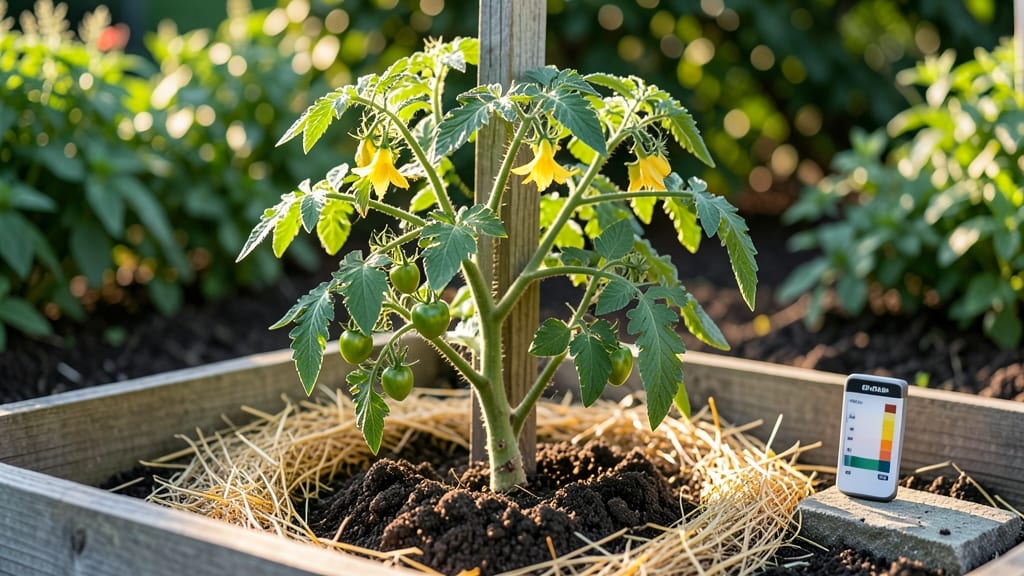
Tomato plant soil requirements demand well-draining, nutrient-rich loam with a pH of 6.0–6.8, high organic matter, and good aeration to prevent root rot while supporting strong growth and fruit production. Avoid heavy clay or overly sandy mixes.
Tomatoes thrive when their roots can breathe and access nutrients efficiently.
The ideal soil pH of 6.0–6.8 ensures nutrients like phosphorus and nitrogen are readily available, while loam-based mixes strike the perfect balance between water retention and drainage. 🌱 Too much clay suffocates roots, and sandy soil drains too quickly, both leading to poor fruit development.
I've seen firsthand how amending heavy soils with compost or perlite can transform struggling tomato plants into vigorous producers within weeks.
For container gardening, blend equal parts garden soil, compost, and perlite to mimic ideal conditions. In-ground gardens benefit from a 2–3 inch layer of compost worked into the topsoil before planting. The key is creating an environment where roots can spread freely without waterlogging or nutrient starvation.
💡 In This Article
- How Soil pH and Texture Affect Tomato Growth
- Best Soil Mixes and Amendments for Healthy Tomatoes
How soil pH and texture affect tomato growth
The ideal pH range of 6.0–6.8 isn't random—it's where tomatoes access their full nutrient potential. At this balance, essential elements like phosphorus (critical for root development) and nitrogen (for leafy growth) become water-soluble and readily available.
Below pH 6.0, aluminum and manganese become toxic, stunting root growth, while above pH 7.0, iron and calcium lock up, causing yellowing leaves (chlorosis) and blossom-end rot.
I've tested soils in my garden where tomatoes grew 30% slower in slightly alkaline soil (pH 7.2) compared to properly balanced plots.
Soil texture determines how well roots breathe and access water. Loam—a balanced mix of 40% sand, 40% silt, and 20% clay—holds moisture while allowing excess to drain, preventing the anaerobic conditions that trigger root rot.
Clay-heavy soils compact easily, suffocating roots and creating pockets where fungi thrive, while sandy soils dry out too quickly, forcing plants to expend energy constantly seeking water. The perfect texture also supports beneficial microbes that break down organic matter into plant-available nutrients.
Think of it like a sponge: too tight, and it won't absorb; too loose, and it won't hold anything.
Drainage isn't just about water—it's about oxygen. Tomato roots need 10–15% air space in soil pores to function properly. Poor drainage creates waterlogged conditions where roots suffocate, turning from white to black within days.
I've seen tomato plants in heavy clay soil develop root rot in under a week during rainy seasons, while identical plants in amended loam thrived. The solution? Amend clay with 20–30% perlite or coarse sand, and sandy soils with 30–40% compost to improve water retention.
Micronutrient availability changes dramatically with pH. For example, boron (essential for cell wall strength) becomes scarce above pH 7.0
Testing your soil with a home pH kit (around $10) can reveal these issues before they appear. If your soil tests outside the ideal range, elemental sulfur (to lower pH) or lime (to raise pH) can adjust it gradually over 2–3 months. Texture also affects heat retention. Sandy soils warm up faster in spring, giving tomatoes a head start, while clay soils stay cooler longer. This is why early spring plantings often fail in clay-heavy gardens unless amended. The solution? Work in 2–3 inches of compost before planting to improve both texture and heat absorption. For container gardens, use a mix of 60% potting soil, 20% perlite, and 20% compost to replicate ideal conditions in a compact space. One often-overlooked factor is soil structure's impact on root depth. Tomatoes need 12–18 inches of deep, loose soil to establish strong anchor roots. Compacted layers (common in urban gardens) force roots to grow shallow, making plants more susceptible to wind damage and poor nutrient uptake. Aerating with a garden fork or adding chopped straw or wood chips can break up compacted layers naturally over time. 🌱