
How To
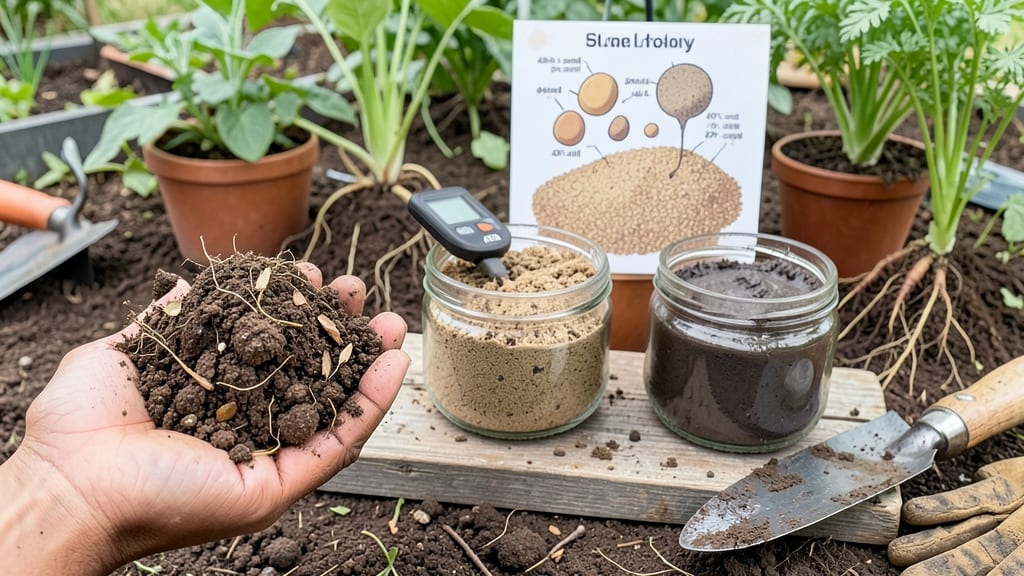
Loam soil means a balanced mix of sand, silt, and clay—typically 40% sand, 40% silt, and 20% clay—creating ideal drainage, aeration, and nutrient retention for healthy plant growth. Its crumbly texture and moisture-holding capacity make it the gold standard for gardening and agriculture.
Loam soil is often called the "perfect" soil because it strikes an ideal balance between the three main soil components: sand, silt, and clay.
This combination ensures roots get both oxygen and water efficiently, while nutrients stay accessible for plants. 🌱 Unlike heavy clay soil that drains poorly or sandy soil that dries out too quickly, loam's structure allows roots to spread easily while holding moisture just right.
Many gardeners work to achieve loam-like conditions because it supports a wider variety of plants with less effort.
What makes loam truly special is how its particle sizes work together. The sand provides structure, silt holds moisture, and clay retains nutrients—this trio creates a soil that's neither too dense nor too loose.
For example, tomatoes thrive in loam because they need consistent moisture but also good drainage, which this soil type delivers perfectly. If your garden soil feels too gritty or compacted, you can often improve it by adding organic matter like compost.
💡 In This Article
- How Loam Soil Forms and Its Ideal Particle Composition
- How to Test and Improve Your Soil for Loam-Like Conditions
How loam soil forms and its ideal particle composition
Loam soil achieves its perfect balance through a precise interplay of three particle types: sand, silt, and clay, each with distinct physical properties. Sand particles (0.05-2mm) create the soil's structural backbone, providing aeration and preventing compaction.
Silt (0.002-0.05mm) acts like a sponge, holding moisture and nutrients near plant roots, while clay (<0.002mm) binds these elements together, forming stable crumbs. This trio creates what scientists call "optimal porosity"—about 50% solid particles and 50% pore space filled with air and water.
The magic happens in the ratios: 40% sand gives the soil its loose, crumbly feel, 40% silt ensures moisture retention, and 20% clay supplies essential nutrients while preventing erosion. 🌱 Compare this to pure sand, which drains too quickly (like a sieve), or pure clay, which becomes waterlogged (like concrete).
Loam's structure allows roots to penetrate easily while maintaining a consistent moisture supply—ideal for vegetables like carrots that need both drainage and hydration.
This composition creates what's called "aggregate stability," where particles clump together into small, porous granules. These crumbs range from 0.25-10mm in diameter and contain tiny air pockets that support beneficial microbes.
For example, a loam soil's water infiltration rate is typically 0.5-2 inches per hour, compared to 0-0.1 inches for clay or 2-5 inches for sand. This moderate rate prevents both drought stress and root suffocation.
The clay component deserves special attention—it's negatively charged, which attracts and holds positively charged nutrients like potassium and calcium. This "cation exchange capacity" is what makes loam soils naturally fertile. 💫 Meanwhile, the sand's rough surface provides grip for roots to anchor, while silt's smooth particles help distribute water evenly.
Together, they create a soil that behaves like a well-tuned ecosystem, where plants can access exactly what they need when they need it.
Consider this real-world comparison: A sandy loam (60% sand) might be better for drought-resistant plants, while a silty loam (50% silt) excels for moisture-loving crops. The ideal loam's structure also means it warms up faster in spring—critical for early planting—while maintaining its fertility through temperature fluctuations.
This is why agricultural experts often recommend creating loam-like conditions in gardens, as it reduces the need for frequent watering or fertilization.
What's fascinating is how this balance affects soil life. Loam's stable structure supports 1-2 billion microbes per gram of soil, compared to 100 million in sandy soil or 500 million in clay. These microbes break down organic matter, releasing nutrients in forms plants can absorb.
The result? Healthier roots, stronger plants, and less work for gardeners. 🌿 This is why loam is often called the "perfect" soil—it works with nature rather than against it.