
How To
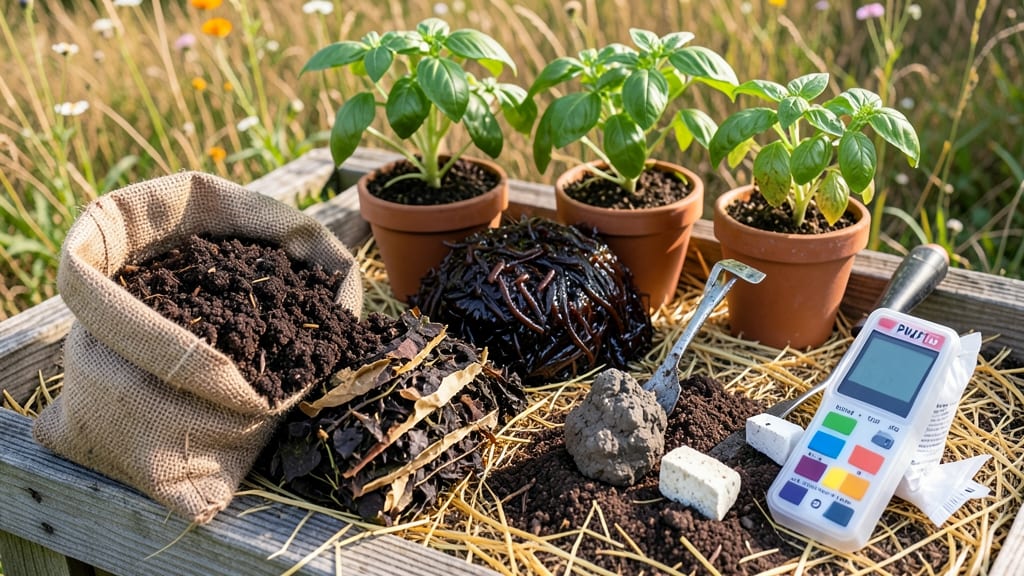
Soil amendment means adding organic or inorganic materials to improve soil structure, fertility, and nutrient availability for healthier plant growth and stronger root development.
Soil amendment is essentially giving your garden soil a nutrient boost and physical upgrade.
Think of it like adding vitamins to a meal—your plants can't thrive without the right balance of nutrients, and soil amendment ensures they get what they need. 🌱 Organic amendments like compost or manure improve water retention and encourage beneficial microbes, while inorganic options such as lime or sand adjust pH or drainage.
The key is choosing the right mix for your specific soil type and plants.
For example, clay-heavy soil benefits from sandy amendments to improve aeration, while sandy soil needs organic matter to hold moisture.
Most gardeners start with a 3-inch layer of compost mixed into the top 6-12 inches of soil, but the exact approach depends on your soil test results and what you're growing.
💡 In This Article
- How Soil Amendments Boost Plant Health
- Best Organic and Inorganic Soil Amendments for Gardens
How soil amendments boost plant health
Soil amendments work by fundamentally altering the physical and chemical properties of soil. Organic amendments like compost or worm castings introduce humus, a spongy material that holds 3-5 times its weight in water while still allowing air circulation.
This dual action prevents drought stress and root suffocation—critical for plants in heavy clay or sandy soils. The science gets even more interesting when you consider how organic matter feeds soil microbes: these tiny organisms break down nutrients into forms plants can absorb, like converting nitrogen into plant-available ammonium.
Inorganic amendments play a different but equally vital role. For example, lime (calcium carbonate) neutralizes acidic soils by raising pH, which is essential for nutrient uptake—especially for calcium-loving plants like tomatoes or peppers.
A soil pH of 6.0-7.0 is ideal for most vegetables, but without amendment, acidic soils (below 5.5) lock out essential nutrients like phosphorus. Similarly, sand or perlite physically break up compacted clay soils, improving drainage by 30-50%—preventing waterlogged roots that suffocate plants.
The key is matching the amendment to your soil's specific deficiencies, which is why a simple soil test (costing $15-25) reveals exactly what your garden needs.
What most gardeners overlook is how amendments create a feedback loop for plant health. When you add compost, the microbial activity generates heat (up to 140°F in active piles) that sterilizes pathogens while breaking down organic matter into nutrient-rich humus.
This process also releases carbon dioxide, which plants use for photosynthesis. The result? Stronger root systems that explore deeper for water and nutrients, leading to 20-30% larger yields in vegetables like carrots or potatoes compared to unamended soil. 🌱
Consider how different plants respond to amendments: blueberries need acidic soil (pH 4.5-5.5) and thrive with sulfur amendments, while alfalfa prefers alkaline soil (pH 7.0-8.5) and benefits from wood ash.
Even within the same plant family, needs vary—tomatoes grow best in slightly acidic soil (pH 6.0-6.8) with added potassium-rich amendments like greensand, while peppers tolerate a broader pH range but still need calcium (from crushed eggshells or gypsum) to prevent blossom-end rot.
Timing matters too. For spring planting, focus on organic amendments (like compost or aged manure) to build soil structure over the growing season. In contrast, inorganic amendments (like lime or sulfur) should be applied 3-6 months before planting to allow time for pH adjustments.
A common mistake is over-amending with nitrogen-rich materials (like fresh manure), which can burn plant roots—always mix amendments into the top 6-12 inches of soil rather than just top-dressing.
Here’s a real-world example: In a sandy soil garden, adding 1 part peat moss to 2 parts compost increases water retention by 40% while improving nutrient-holding capacity. The peat moss acts like a sponge, while the compost provides the microbial food source.
For clay-heavy soils, a blend of compost, perlite, and sand (in equal parts) can transform compacted earth into loose, crumbly soil within 2-3 months of regular tilling. The secret? Patience and consistency—soil amendment isn’t a one-time fix but an ongoing process that pays dividends in plant vitality.