
Plants
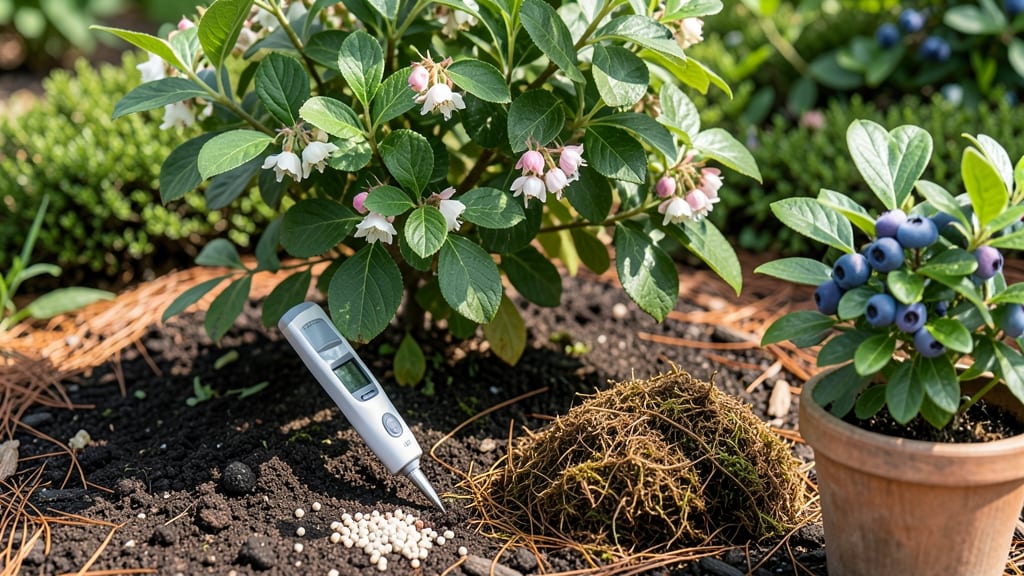
Blueberries need acidic soil with a pH between 4.5 and 5.5, combined with well-draining, organic-rich mixes like peat moss, pine bark, or composted leaves to replicate their natural wetland conditions and prevent root rot.
Blueberries evolved in acidic bogs, so their roots struggle to absorb essential nutrients like iron and phosphorus in alkaline soils. 🌱 The right soil blend isn't just about pH—it's about creating a sponge-like environment that holds moisture without suffocating roots.
I've found that adding a handful of sulfur annually helps maintain acidity, while a mix of 50% peat moss and 50% pine fines gives the perfect balance of drainage and organic matter for container gardens.
For in-ground plantings, work in a 3-inch layer of composted pine needles to gradually improve soil structure over time.
What's fascinating is how blueberries signal their needs—yellow leaves often mean the soil is too alkaline, while stunted growth suggests poor drainage. Regular testing with a simple pH meter (available for under $15) lets you adjust before problems appear.
Pro tip: If your soil tests above 6.0, you'll need to amend it aggressively with elemental sulfur or pine bark fines to bring it back into the ideal range.
💡 In This Article
- Why Acidic Soil Is Critical for Blueberry Growth
- DIY Blueberry Soil Mix Recipes for Containers and Gardens
Why acidic soil is critical for blueberry growth
Blueberries evolved in acidic wetlands where the low pH—typically between 4.5 and 5.5—enables their roots to absorb iron and phosphorus efficiently.
At this acidic level, iron remains soluble in the soil solution, allowing the plant to uptake this essential nutrient without competition from other elements. 🌱 In alkaline soils (pH above 6.0), iron binds to soil particles and becomes unavailable, causing chlorosis (yellowing leaves) even when the plant is well-watered.
This is why blueberries often show signs of nutrient deficiency in garden soils that haven't been properly amended.
The right soil blend mimics the natural bog environment by combining organic matter with proper drainage. Peat moss, for example, holds moisture while maintaining aeration—critical because blueberry roots need oxygen to thrive.
Pine bark fines (coarsely ground bark) improve drainage and gradually acidify the soil as they decompose, releasing organic acids that lower pH over time.
A mix of 50% peat moss and 50% pine fines creates the ideal texture: light enough to prevent compaction but rich enough to support microbial activity that breaks down organic material into plant-accessible nutrients.
What most gardeners overlook is how soil structure affects root health.
Blueberries develop shallow, fibrous root systems that spread horizontally—this makes them particularly sensitive to waterlogged conditions. 💧 The organic matter in the soil acts like a sponge, absorbing and releasing moisture gradually while preventing the roots from sitting in soggy, oxygen-deprived soil.
Without this balance, roots suffocate, leading to poor nutrient uptake and reduced berry production. In containers, this means using a soil mix that stays loose and well-aerated even after watering.
Here's what happens when soil conditions are off: if the pH drifts above 6.0, manganese and zinc become less available, stunting growth. Conversely, if the soil is too acidic (below 4.0), aluminum toxicity can occur, damaging root tips.
The sweet spot—4.5 to 5.5—is where blueberries can access all necessary nutrients while avoiding these extremes. Regular soil testing (every 6-12 months) lets you adjust with lime (to raise pH) or sulfur (to lower it) before problems appear.
One surprising detail is how blueberries signal their soil needs. Yellow leaves with green veins? That's classic iron deficiency from alkaline soil. Small, sparse berries?
Often a sign of poor drainage or compacted roots. 🍇 The plant's ability to thrive depends entirely on maintaining this delicate balance of acidity, organic matter, and drainage—something that's easier to achieve in containers where you control the soil mix completely.
For those using raised beds, incorporating 3-4 inches of composted pine needles annually helps maintain acidity naturally. These needles release organic acids as they break down, gradually lowering pH while adding valuable organic matter.
The key is consistency: blueberries don't tolerate sudden pH swings, so gradual amendments work best. Think of it like fine-tuning a recipe—small adjustments over time yield the best results.