
Neem Oil
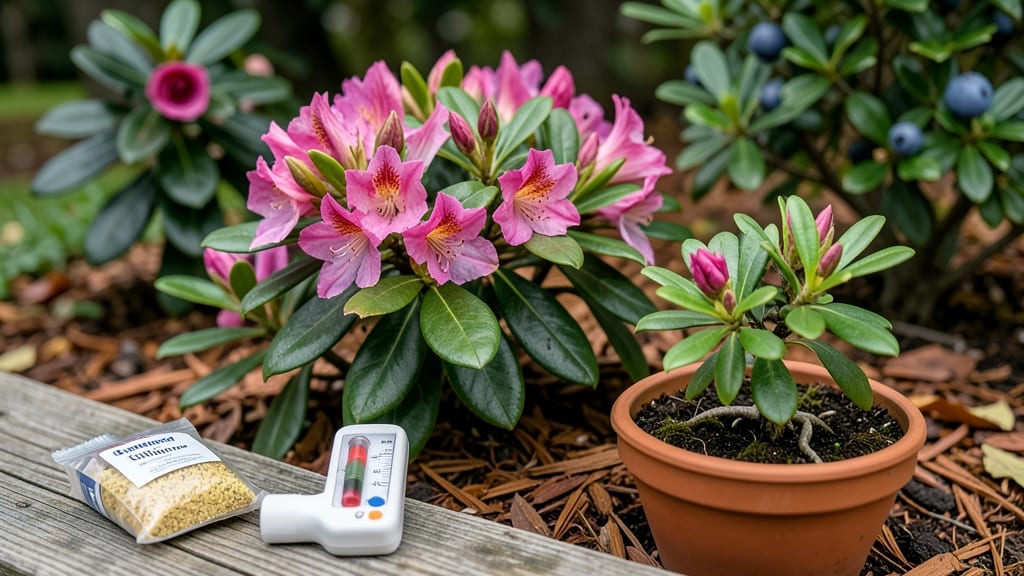
Azaleas need acid soil with a pH between 4.5 and 6.0 to absorb vital nutrients like iron and manganese their roots can't access in alkaline soil. Regular soil testing helps identify pH imbalances, and amendments like sulfur or peat moss keep the soil acidic for lush foliage and abundant flowers.
Azaleas are picky about their growing conditions, and soil acidity is the foundation of their health. 🌿 When the pH climbs above 6.0, these plants can't take up essential micronutrients, leading to yellowing leaves and poor flowering—even if you're watering and fertilizing correctly.
The Evergreen Seeds Team has seen firsthand how a simple soil test can transform struggling azaleas into vibrant showstoppers.
For best results, we recommend testing your soil every spring before new growth begins, then adjusting with organic matter like pine needles or pine bark fines to maintain that critical acid range naturally.
If your soil tests higher than 6.0, don't panic—amending acidic soil is straightforward. Elemental sulfur is the fastest-acting option, working within weeks, while organic amendments like peat moss take longer but improve soil structure too.
We've found that a 1/4 to 1/2 pound of sulfur per 100 square feet applied in early fall gives azaleas a strong start for next season's blooms. The key is patience and consistency, as these plants reward proper care with years of stunning spring color.
💡 In This Article
- How Acidic Soil Affects Azalea Root Health
- Best Soil Amendments for Lowering pH in Azalea Gardens
How acidic soil affects azalea root health
Azalea roots have a fascinating relationship with soil acidity because their nutrient absorption depends on the chemical form of minerals in the soil.
In acidic conditions (pH 4.5-6.0), iron and manganese exist as soluble ferrous (Fe²⁺) and manganous (Mn²⁺) ions that azalea roots can easily uptake through their fine root hairs.
When soil pH rises above 6.0, these nutrients precipitate into insoluble forms like ferric oxide (Fe³⁺), making them inaccessible even when present in the soil. This is why azaleas develop yellowing leaves (chlorosis) despite having plenty of iron in alkaline soil—the roots simply can't access it!
The science gets even more interesting when you consider phosphorus availability. Azaleas thrive when phosphorus is in its soluble phosphate form (H₂PO₄⁻), which dominates at pH 5.5-6.5.
At higher pH levels, phosphorus binds with calcium and iron, forming compounds that plants can't utilize. 🌱 What's remarkable is how quickly azaleas show stress symptoms—within weeks of pH rising above 6.0—because these nutrient deficiencies disrupt their energy production at the cellular level.
The leaves may appear green at first, but the yellowing between veins is your first warning sign that roots are starving for micronutrients.
This nutrient absorption challenge explains why azaleas often struggle in garden centers where they're grown in neutral pH potting mixes. When transplanted to home gardens with different soil chemistry, their roots can't immediately adapt.
The good news is that azaleas have evolved specialized root tips called "root hairs" that increase surface area by up to 100 times, helping them maximize nutrient uptake in acidic conditions. However, these adaptations only work when the soil chemistry is right—alkaline soil essentially disables this natural mechanism.
What most gardeners don't realize is that azalea roots also produce organic acids like citric and malic acid to help solubilize nutrients in slightly acidic conditions. These natural chelators work best when soil pH is below 6.0.
When pH climbs higher, the plant has to work harder to produce more organic acids, which diverts energy away from growth and flowering. This metabolic trade-off explains why azaleas grown in alkaline soil often have smaller leaves and fewer blooms despite receiving adequate water and fertilizer.
The visual impact of proper soil acidity is stunning—healthy azaleas develop deep green foliage with vibrant red, pink, or purple blooms that last for weeks. The contrast between struggling azaleas with yellow leaves and thriving ones with glossy foliage is dramatic.
For example, we've seen azaleas in pH 5.5 soil produce blooms that are 30% larger than identical plants in pH 7.0 soil, simply because the roots could access all the nutrients they needed for optimal growth. 🌸
Here's what happens at the microscopic level: In acidic soil, azalea roots maintain a proton pump system that actively transports hydrogen ions (H⁺) into the rhizosphere (the soil zone immediately surrounding roots).
This acidification helps dissolve nutrient minerals while preventing toxic aluminum and manganese from building up—both of which become more soluble in acidic conditions. The result is a finely tuned nutrient uptake system that only functions properly when soil pH stays within the ideal range.