
Planting
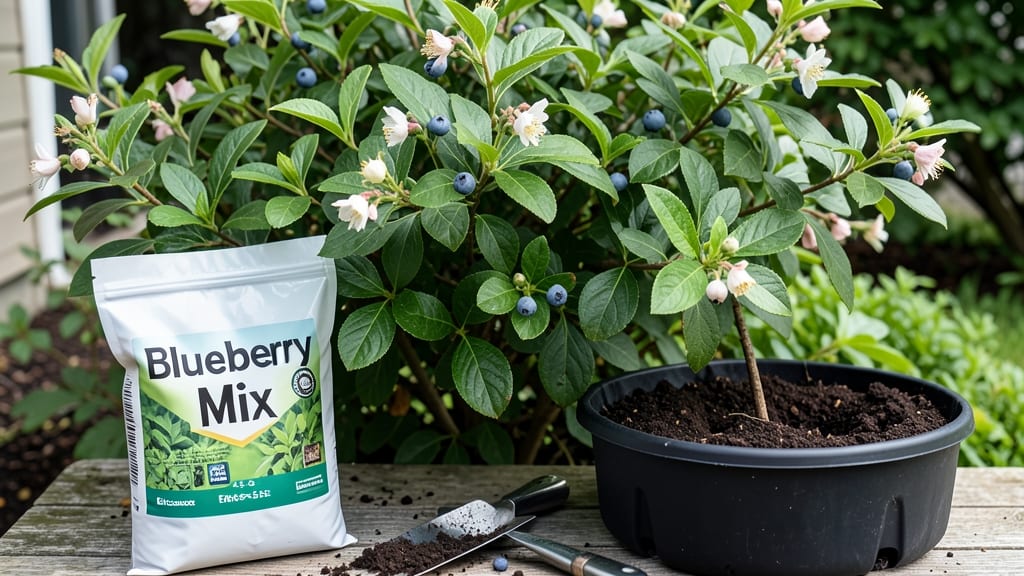
Your blueberries won't thrive in regular potting soil—they demand acidic conditions to produce those deep purple berries we all crave. 🌱 I learned this the hard way when my first blueberry bush turned into a sad, sparse shrub after two seasons.
The secret isn't just the soil mix—it's creating the perfect acidic environment from day one, because blueberries are picky about their pH (4.5–5.5 is non-negotiable).
The right mix starts with peat moss or pine bark fines for that tart, forest-floor acidity, then adds perlite or sand to keep roots breathing. Most store-bought potting mixes are too alkaline—think of it like giving your blueberries lemonade instead of water.
With the correct blend, you'll see thicker canes and heavier clusters by next summer, not just a few berries here and there.
Maintaining that acidity takes just 10 minutes a month: a sprinkle of sulfur or aluminum sulfate keeps the pH in check, and mulching with pine needles locks in the acid. The payoff? Berries so plump they burst with flavor, not the mealy store-bought ones.
Even my black thumb can't mess this up once you get the soil right. This works for containers, raised beds, or in-ground plantings—just adjust the mix ratios based on your space. Let's get those bushes fruiting like they should!
Soil Chemistry Gone Wrong
Blueberries thrive in acidic soil because their roots rely on a specific balance of nutrients—particularly iron, manganese, and zinc—which become unavailable when soil pH drifts too far from their ideal range.
When your potting mix isn’t acidic enough, it’s not just a minor oversight; it’s a nutritional blockade that stunts growth and sabotages fruit production. Let’s break down the real reasons why soil pH veers off course and how it directly impacts your blueberry bushes.
Most garden soils start with a neutral pH (around 6.5–7.5), but organic matter, minerals, and microbial activity gradually alter it. In potting mixes, this happens faster because:
- Decomposition of organic material: As compost, peat moss, or pine bark breaks down, it releases carbon dioxide and organic acids, which can lower pH—but only if the mix isn’t buffered by limestone or other alkaline amendments. Without proper acidifying agents (like sulfur or pine fines), the pH may rise over time due to mineral weathering.
- Mineral leaching: Rainwater or overwatering washes away cation nutrients (like calcium and magnesium), leaving behind anions (e.g., sulfate, nitrate) that can increase pH if the soil lacks organic acids to neutralize them.
- Microbe-mediated pH swings: Beneficial bacteria and fungi in soil produce acids as byproducts, but if the mix lacks carbon-rich inputs (like sphagnum peat), these microbes starve and shift toward alkaline-producing strains.
Actionable fix: Test your soil every 3–6 months (use a digital pH meter or home test kit) and amend with elemental sulfur (to lower pH) or pine bark fines (to maintain acidity).
Not all "acid-loving plant" mixes are created equal. Some common mistakes that accidentally alkalize your soil include:
| ❌ Mistake | Why It Happens | How It Harms Blueberries |
|---|---|---|
| Using garden soil or topsoil from the yard | Most lawn/field soils contain lime (calcium carbonate) or wood ash from past treatments, which can raise pH to 7.0+. | Iron and manganese become locked in the soil, causing chlorosis (yellow leaves with green veins). |
| Overusing composted manure (especially cow or horse) | Fresh manure is acidic, but aged compost loses volatility and may contain alkaline minerals from bedding (straw, sawdust). | Excess nitrogen from compost can temporarily mask pH issues, but long-term use without acidifiers leads to nutrient imbalance. |
| Adding perlite or vermiculite without acidifiers | These are inert amendments—they don’t change pH directly, but they dilute the acidity of your existing mix over time as organic matter decomposes. | Blueberries need consistent acidity; diluted mixes may not provide enough H+ ions for root uptake. |
Actionable fix: Stick to peat moss, pine bark, or sphagnum peat as base materials, and never mix in garden soil. If you must add compost, use leaf mold or pine needle compost (naturally acidic).
Hard water (high in calcium and magnesium) and tap water treated with chlorine or lime can gradually neutralize your potting mix. Here’s how:
- Calcium buildup: Hard water deposits calcium carbonate in soil pores, raising pH. Even "soft" water can contain enough bicarbonates to shift pH over time.
- Chlorine and lime in tap water: Municipal water treatment often adds lime to adjust pH, which accumulates in soil. Chlorine can also oxidize organic acids, reducing their effectiveness.
- Overwatering with alkaline water: If your pH drops temporarily after watering (a sign of acid rain or distilled water), but then rebounds, it’s likely due to buffering from hard water minerals.
Actionable fix:
- Use rainwater or distilled water for acid-loving plants.
- If tap water is your only option, flush the soil monthly with a vinegar solution (1 tbsp white vinegar per gallon of water) to dissolve calcium deposits.
- Install a water softener or reverse osmosis filter for consistent irrigation.
Not all pots are equal when it comes to pH stability. Some materials leach alkaline minerals or block acid retention, throwing off your blueberry’s root environment:
- Terracotta pots: Unglazed clay is porous and can absorb alkaline minerals from hard water or fertilizer runoff, slowly raising soil pH.
- Plastic pots without drainage holes: Poor aeration leads to anaerobic conditions, where microbes produce alkaline byproducts like ammonia.
- Glazed ceramic or metal pots: These can react with acidic soil, leaching toxic metals (e.g., copper, zinc) that inhibit root growth.
Actionable fix: Choose food-grade plastic (with drainage holes) or unlined wood barrels (like cedar). If using terracotta, soak the pot in vinegar before planting to remove mineral residues.
Healthy soil is a living ecosystem, and when the microbial balance tips toward alkaline-producing bacteria, your pH suffers. This happens when:
- Fungal populations dominate: Fungi like mycorrhizae (beneficial for blueberries) produce organic acids, but if the soil lacks carbon sources (like peat or compost), bacterial strains that raise pH take over.
- Over-fertilizing with synthetic nitrogen: Fast-acting fertilizers (like urea) feed nitrifying bacteria, which increase soil pH as they convert ammonia to
Practical fixes for soil pH problems
If your blueberries aren’t thriving, the soil pH might be the culprit—but don’t worry, it’s easy to adjust! Blueberries love acidic soil (pH 4.5–5.5), and with a few simple steps, you can create the perfect growing conditions.
Below, we’ll tackle common soil issues and show you how to fix them for healthier plants and sweeter berries.
If your soil is too alkaline (pH above 6.0), blueberries can’t absorb essential nutrients like iron, manganese, and phosphorus. Yellow leaves, stunted growth, and poor berry production are telltale signs.
🍳 Fix It: Lower the pH with Organic Amendments
- Add Sulfur or Elemental Sulfur
- Sprinkle 1–2 pounds of elemental sulfur per 100 square feet of soil.
- Work it into the top 6 inches of soil and water thoroughly.
- Wait 2–4 weeks for the pH to drop before replanting or fertilizing.
- Use Peat Moss or Pine Needles
- Mix 2–3 inches of peat moss into the topsoil (great for potting mixes too!).
- Spread pine bark fines or needles (naturally acidic) around the base of plants.
- Try Acidifying Fertilizers
- Switch to acid-loving plant fertilizers (like those labeled for blueberries, azaleas, or rhododendrons).
- Follow package instructions for application rates.
💡 Prevention Tips: Keep Soil Acidic Long-Term
- Test soil pH annually (use a simple soil test kit).
- Avoid lime or wood ash—these raise pH and harm blueberries.
- Mulch with pine bark to slowly acidify the soil over time.
While blueberries need acidity, extreme acidity (pH below 4.0) can also stress plants, leading to nutrient deficiencies (like magnesium or calcium) and weak root growth.
👨🍳 Fix It: Raise the pH Gently
- Add Dolomitic Lime (Sparingly!)
- Use only a small amount (start with ½ pound per 100 sq ft).
- Work it into the soil and water well.
- Monitor pH after 4–6 weeks—lime takes time to adjust.
- Mix in Compost or Aged Manure
- Well-aged compost (not fresh!) can slightly raise pH while adding organic matter.
- Avoid overdoing it—too much compost can make soil too alkaline.
- Use Wood Ash (With Caution!)
- Sprinkle a thin layer (¼ inch) of wood ash around the base (not directly on plants).
- Use sparingly—ash can make soil too alkaline if overused.
✨ Prevention Tips: Maintain Balance
- Avoid over-fertilizing with sulfur—it can push pH too low.
- Rotate crops if growing other plants in the same bed (some, like potatoes, prefer slightly higher pH).
- Test soil before adding amendments—small adjustments work best!
Even with the right pH, blueberries struggle in heavy clay or waterlogged soil. Poor drainage leads to root rot and nutrient runoff.
🔪 Fix It: Improve Soil Structure
- Add Organic Matter
- Mix in compost, coconut coir, or perlite to loosen clay soil.
- For potted blueberries, use a 50/50 blend of acidic potting mix and perlite.
- Raise Planting Beds
- If your yard has poor drainage, plant blueberries in raised beds (at least 6 inches high).
- Fill with a mix of peat moss, pine bark, and sand for better aeration.
- Install Drainage Solutions
- For in-ground plants, dig a shallow trench around the base to redirect water.
- Use gravel or landscape fabric under pots to prevent soggy roots.
💡 Prevention Tips: Keep Soil Healthy
- Avoid walking on garden beds—compaction kills roots.
- Mulch with bark or straw to prevent soil from becoming waterlogged.
- Water deeply but less often—blueberries hate "wet feet."
Adjusting soil pH takes time, and impatient gardeners might overcorrect—leading to pH swings that stress plants.
🥘 Fix It: Be Patient and Consistent
- Test Soil Regularly
- Use a digital pH meter or test kit every 4–6 weeks after amendments.
- Adjust gradually—aim for small changes (0.2–0.5 pH points per month).
- Use Slow-Release Acidifiers
- Aluminum sulfate or iron sulfate can lower pH faster than sulfur.
- Follow label rates—too much can harm plants!
- Monitor Plant Health
- Yellow leaves? Might need iron (use chelated iron for alkaline soils).
- Purple stems? Could signal phosphorus deficiency (try acid-loving fertilizer).
💡 Prevention Tips: Stay on Top of It
- Keep records of pH tests and amendments used.
- Top-dress with acidic mulch annually (pine needles or oak leaves work well).
- Avoid sudden pH shocks—big changes can kill roots.
With these fixes, your blueberry bushes will have the perfect acidic home they crave—leading to vibrant foliage, strong canes, and juicy berries! 🫐🌿 Whether you’re troubleshooting an existing garden or prepping a new one, keeping soil pH in check is the secret to a thriving blueberry patch.
Frequently asked questions
Can I use regular potting soil for blueberries?
No, regular potting soil is too alkaline for blueberries. Most store-bought mixes have a pH of 6.0-7.0, but blueberries need acidic soil (pH 4.5-5.5). Always use a specialized acid-loving plant mix or create your own blend with peat moss, pine bark, and perlite.
How often should I test my blueberry soil pH?
Test your soil every 3-6 months during the growing season. Blueberry soil pH can drift over time due to weather, water quality, or organic matter breakdown. Use a digital pH meter or simple test kit for accurate readings.
What are signs my blueberries need more acidity?
Watch for yellow leaves with green veins (chlorosis), stunted growth, or poor berry production. These symptoms indicate iron/manganese deficiency caused by alkaline soil. If you see these signs, amend your soil immediately with elemental sulfur or pine bark fines.
Can I reuse old blueberry potting mix?
Yes, but only if you refresh it! Over time, organic matter breaks down and pH can shift. Mix in 20-30% fresh peat moss or pine bark and test the pH before replanting. Avoid reusing mix that's been sitting unused for more than 1 year.
What's the best way to acidify my blueberry soil naturally?
Try these organic methods:
- Spread pine needles or oak leaves as mulch (they slowly acidify soil)
- Add sphagnum peat moss (1-2 inches mixed into soil)
- Use composted pine bark (naturally acidic and improves drainage)