
How To
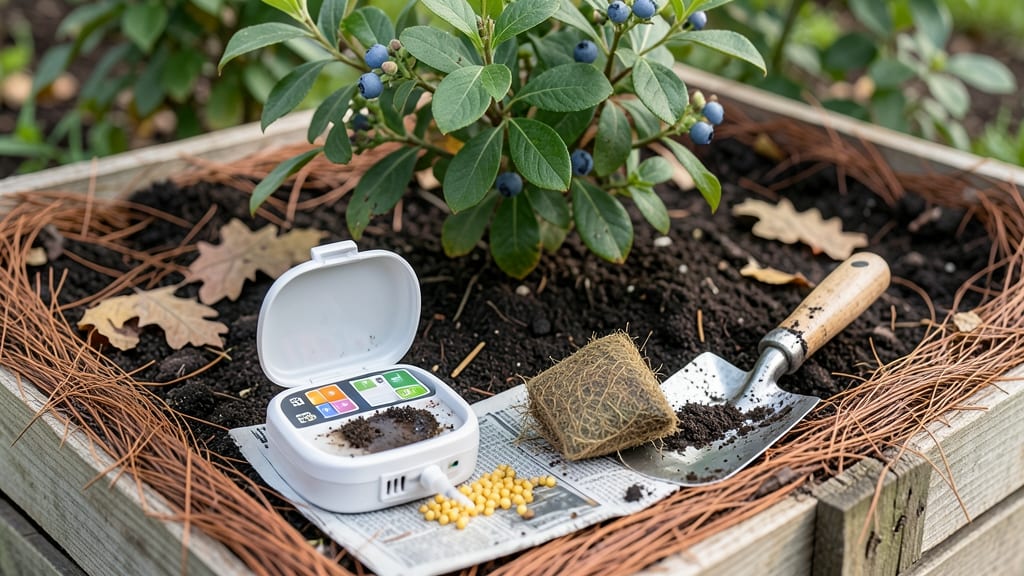
Blueberries need acidic soil with a pH between 4.5 and 5.5 to grow well, replicating their native wetland conditions. This acidity helps roots absorb essential minerals like iron and manganese, while higher pH levels lead to yellowing leaves and reduced fruit production. Regular soil testing and amendments with sulfur or peat moss help maintain the ideal balance.
Blueberries evolved in acidic wetlands, so their roots struggle when soil pH climbs above 5.5. 🌱 The lower pH unlocks micronutrients like iron and manganese that become locked in alkaline soils, causing those telltale yellow leaves (chlorosis) that signal trouble.
I've seen gardens where blueberry bushes thrived after adding elemental sulfur—just a sprinkle worked wonders over time. For new growers, start with a soil test kit from your local garden center; it's the fastest way to know exactly what your plants need.
Even if your soil tests perfect, don't skip annual checks—organic matter naturally raises pH over time. Peat moss and pine needles are great organic amendments that slowly acidify soil without harsh chemicals.
Pro tip: Mix coffee grounds into the soil too—they're a free, nitrogen-rich way to keep pH in check while feeding your plants. The key is patience; changing soil chemistry takes time, but the payoff is worth it when you see those perfect blueberries!
💡 In This Article
- Why Blueberry Soil Must Stay Acidic: Root and Nutrient Science
- Step-by-Step Guide to Lowering Soil pH for Blueberries
Why blueberry soil must stay acidic: root and nutrient science
The acidity of blueberry soil isn't just a preference—it's a biological necessity tied to how these plants evolved. 🌿 Blueberries originated in acidic bogs and wetlands where the natural pH ranged between 4.5 and 5.5, creating an environment where their roots could thrive.
This low pH environment is crucial because it directly affects the availability of essential micronutrients like iron and manganese, which become locked in the soil when pH rises above 6.0. Without proper acidity, blueberry roots can't access these nutrients, leading to deficiency symptoms.
One of the most visible signs of alkaline soil is chlorosis—the yellowing of leaves between veins—caused by iron deficiency.
At higher pH levels, iron binds tightly to soil particles and becomes unavailable to plant roots, even though the soil may contain plenty of it. 🔬 The same happens with manganese, another critical nutrient for blueberry growth.
Studies show that blueberries grown in soil with a pH above 6.5 can exhibit stunted growth and poor fruit development due to these locked-up nutrients. The plant's ability to absorb phosphorus also declines in alkaline conditions, further stressing the bush.
Another key factor is the role of mycorrhizal fungi, beneficial microorganisms that form symbiotic relationships with blueberry roots. These fungi thrive in acidic conditions and help the plant absorb water and nutrients more efficiently. 🍄 In alkaline soil, mycorrhizal activity decreases significantly, reducing the plant's overall health.
This fungal partnership is so important that some blueberry cultivars have evolved to depend on these relationships for optimal growth. The acidity also helps maintain the proper balance of other soil microorganisms that contribute to nutrient cycling.
Blueberries also have specialized root structures called fine feeder roots that maximize nutrient uptake in acidic environments. These roots grow densely in the top few inches of soil, where organic matter and microbial activity are highest.
When soil pH rises, these roots become less effective at absorbing nutrients, leading to visible stress symptoms. The plant's natural defense mechanisms kick in, but chronic nutrient deficiencies can weaken the bush over time, making it more susceptible to pests and diseases.
What's fascinating is how blueberries adapt to their environment. In their native bogs, they've developed mechanisms to tolerate waterlogged, acidic conditions. 🌊 This includes specialized root structures that can handle periodic flooding while still accessing nutrients.
When grown in gardens with neutral or alkaline soil, these adaptations don't work as effectively, which is why blueberries often struggle in such conditions. The plant's entire physiology is geared toward thriving in acidic environments, making soil pH one of the most critical factors in successful blueberry cultivation.
Understanding this scientific relationship helps explain why even slight pH deviations can have dramatic effects.
For example, a soil pH of 5.0 might seem close to the ideal range, but it's actually more acidic than what most blueberries prefer. 📉 This can lead to aluminum toxicity, where harmful levels of aluminum become soluble and damage root cells.
The delicate balance of soil chemistry is what makes blueberry growing both a science and an art—getting the pH just right is essential for unlocking the full potential of these delicious fruits.