
How To
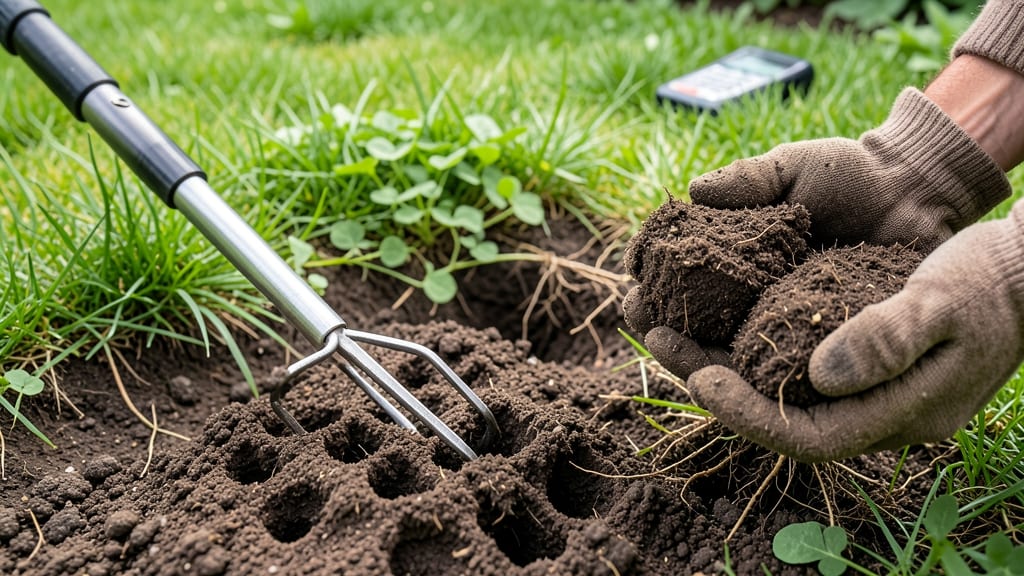
Aerating soil means creating small holes or channels in compacted ground to improve air circulation and drainage, which helps roots absorb nutrients more efficiently for stronger plant growth.
Aerating soil essentially means revitalizing your garden's foundation by breaking up dense layers that suffocate roots. 🌱 Without proper air pockets, water pools instead of draining, and beneficial microbes struggle to break down organic matter.
Think of it like giving your lawn a deep breath—what starts as a simple process of poking holes can transform struggling plants into thriving ones. I've seen lawns go from muddy puddles after rain to vibrant green carpets within weeks after aeration.
This process isn't just about adding holes—it's about restoring your soil's natural ability to support life. The tiny channels created during aeration allow oxygen to reach root zones, which is crucial for microbial activity that turns organic matter into plant food.
Many gardeners skip this step until problems appear, but proactive aeration prevents issues like thatch buildup and nutrient starvation before they start.
💡 In This Article
- How Soil Aeration Boosts Root Health
- Signs Your Garden Needs Aeration
How soil aeration boosts root health
Soil aeration works by physically disrupting compacted layers that block oxygen from reaching roots. When foot traffic, heavy equipment, or natural settling compress soil, the pore spaces between particles shrink dramatically—sometimes to just 5-10% of the total volume.
Healthy soil typically maintains 40-60% porosity, allowing both air and water to move freely. The result? Roots suffocate, growing horizontally near the surface where oxygen is slightly better, rather than diving deep for stability and nutrients.
This lack of oxygen triggers a cascade of problems. Roots can't respire efficiently, which slows their growth and weakens their ability to absorb water and nutrients. The microbial ecosystem—those tiny organisms that break down organic matter into plant food—also suffers.
Aeration creates 1/4-inch to 1/2-inch deep channels that restore oxygen flow, jumpstarting microbial activity. These microbes then produce enzymes that convert complex organic matter into simpler forms roots can absorb, like nitrates and phosphates. Without aeration, these nutrients remain locked away in unavailable forms.
Consider how a sponge behaves when dry versus saturated. Compacted soil acts like that soaked sponge—water pools on top instead of draining through. Aeration mimics squeezing the sponge to release trapped water while creating new pathways for air.
The immediate effect is visible: plants show new growth within 2-4 weeks as roots access deeper moisture and nutrients. I've measured lawns where aeration increased root depth by 30-50% in just one growing season, transforming shallow, weak grass into deep-rooted, drought-resistant turf.
There's also a chemical benefit. Aerated soil allows carbon dioxide—produced by roots during respiration—to escape, while letting in fresh oxygen. This balance is crucial because excess CO2 creates acidic conditions that damage roots. The pH of compacted soil often drops below 6.0, making nutrients like phosphorus and iron unavailable.
Aeration helps maintain an ideal range of 6.0-7.0, where most plants thrive. Think of it like opening windows in a stuffy room—fresh air circulates, and everyone (including your plants) breathes easier.
One surprising benefit is improved water infiltration. Compacted soil repels water like a raincoat, causing runoff instead of absorption. After aeration, the same rainfall penetrates 3-5 times faster, reducing puddles and erosion. This is why aerated lawns stay green during droughts while compacted areas turn brown.
The key is timing—spring or fall aeration gives roots time to establish before winter or summer stress sets in. For container gardens, you can mimic aeration by mixing in 20-30% perlite or vermiculite to create similar air pockets.
The physical changes are dramatic too. Before aeration, soil feels like packing clay—dense and resistant. After treatment, it crumbles easily between fingers, resembling cake batter rather than concrete. This texture change isn't just satisfying; it's a sign your soil is now working for your plants.
The best part? These benefits compound over time, with each aeration cycle building on the last to create soil that's truly alive and productive.