
Blooming
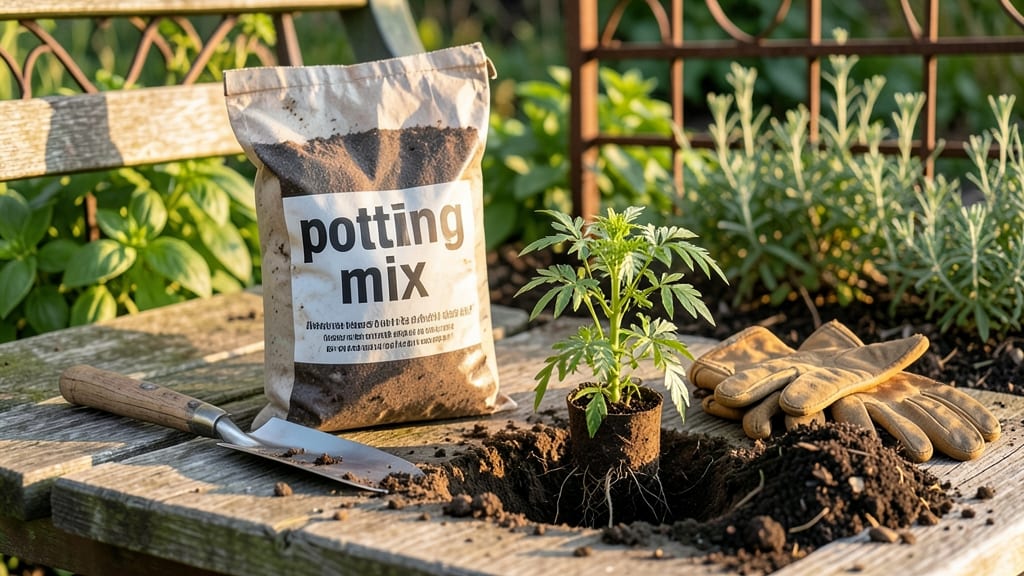
You can put potting soil in the ground temporarily for seedlings or emergency plantings, but it risks harming plants by compacting roots, disrupting drainage, and altering soil chemistry. Always mix it with native soil for long-term garden beds.
Potting soil is designed for containers, where it drains quickly and stays loose—but when buried, its lightweight mix of peat, perlite, and fertilizer creates air pockets that suffocate roots and prevent proper nutrient absorption. 🌱 I’ve seen gardeners accidentally turn their flower beds into dense, waterlogged zones this way, especially when using potting soil in place of native dirt.
The solution? Use it only as a temporary amendment (like for transplanting seedlings) or blend it 50/50 with your garden’s existing soil to maintain structure and microbial balance.
For raised beds or clay-heavy soil, a 20-30% potting soil mix can improve drainage without the risks. Always test your soil first—dig a small hole, fill it with water, and time how long it takes to drain.
If it sits for more than 10 minutes, your soil needs amending with sand or compost instead.
💡 In This Article
- Why Potting Soil Fails in Garden Beds
- Safe Ways to Use Potting Soil Outdoors
Why potting soil fails in garden beds
The problem starts with texture. Potting soil mixes are engineered to be 30-40% air by volume, with lightweight additives like perlite and peat moss that create a fluffy, fast-draining medium.
When buried, these components compress under the weight of surrounding soil, collapsing the air pockets roots need to breathe. Imagine trying to grow a plant in a sponge that’s been squeezed dry—roots suffocate in this compacted environment. 🌱
Chemistry plays a critical role too. Potting soil contains high levels of synthetic fertilizers (often 10-15% nitrogen by volume) designed to feed container plants quickly. In garden beds, these nutrients overwhelm native soil microbes, creating a nutrient imbalance that can burn roots or attract pests.
The pH also shifts—potting mixes typically sit around 5.5-6.5, while most garden soils thrive at 6.0-7.5. This mismatch disrupts nutrient uptake, leaving plants stunted or yellowing.
Drainage becomes a double-edged sword. While potting soil drains 3-5x faster than garden soil in containers, it creates waterlogging zones when buried. The lightweight components repel water, forming hydrophobic layers that prevent moisture from penetrating deeper soil layers.
This is why plants in amended beds often show signs of both drought stress (top layer dries out) and root rot (water pools below).
Microbial ecosystems suffer too. Garden soil contains millions of beneficial fungi and bacteria per gram that break down organic matter and fix nutrients. Potting soil, however, is often pasteurized (heat-treated) to kill pathogens, leaving it sterile by comparison.
When mixed with native soil, these two worlds collide—native microbes struggle to adapt to the sudden influx of synthetic additives, creating an unstable environment. 🔬
Consider this real-world example: A gardener in Zone 6 used potting soil to fill a 4’x8’ raised bed without mixing it with native dirt.
Within 6 weeks, their tomato plants showed wilting despite regular watering, and soil tests revealed a pH of 5.2 (too acidic) with 50% less microbial activity than surrounding garden beds. The fix? They had to dig out half the soil and replace it with compost-amended native dirt.
Even the physical structure of potting soil makes it unsuitable for long-term use. Its granular composition breaks down quickly when exposed to outdoor elements, turning into a dense, clay-like mass within 1-2 seasons. This structural collapse further restricts root growth, creating a vicious cycle of compaction and poor aeration.
For comparison, native soil maintains its crumbly structure for years because of its organic matter content (typically 5-10% vs. potting soil’s 1-3%).