
Neem Oil
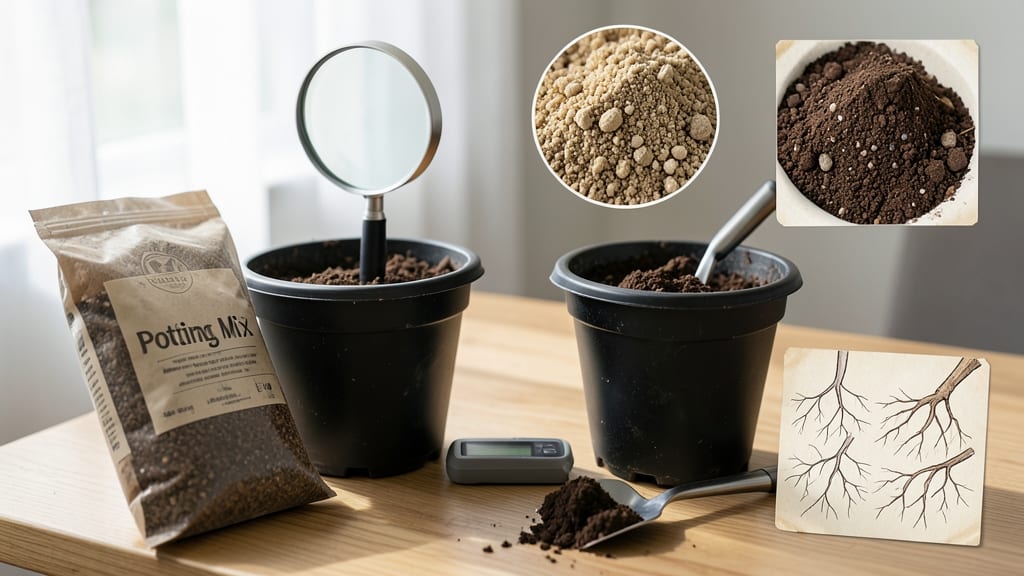
You can't use topsoil for potting soil because it compacts easily, drains poorly, and may contain weeds or pests. Instead, opt for lightweight, sterile potting mixes with perlite or vermiculite for optimal plant health and aeration.
Topsoil's heavy clay content creates a dense, suffocating environment for roots, while its natural organic matter breaks down too quickly, leaving plants starved of nutrients. 🌱 The moisture imbalance leads to root rot or drought stress—both kill container plants faster than you'd expect.
For example, my basil plants thrived in a mix of coconut coir and perlite but wilted within weeks when I switched to garden soil. The difference? Aeration and drainage.
Even if you screen and sterilize topsoil, it still lacks the air pockets and moisture control that potting mixes provide. Commercial blends often include mycorrhizal fungi to boost root health, something you won't find in backyard dirt.
For DIY mixes, I recommend starting with 60% peat moss or coir, 30% perlite, and 10% compost—this ratio works for everything from succulents to leafy greens.
💡 In This Article
- Why Topsoil Fails as Potting Mix
- Best Topsoil Alternatives for Container Gardening
Why topsoil fails as potting mix
The core problem with topsoil in containers is its particle density. Garden soil contains roughly 45-50% solids (minerals and organic matter), 25% water, and 25-30% air when healthy—but only when it's loose. In pots, the weight compresses these particles into a clay-heavy matrix that suffocates roots.
For comparison, ideal potting soil maintains 30-40% air space even when moist, thanks to added perlite or vermiculite that creates microscopic air channels.
Water management becomes another critical issue. Topsoil's clay particles hold moisture like a sponge, creating anaerobic zones where roots can't breathe. This leads to the classic "drowning" effect—roots turn brown and mushy within 3-5 days of overwatering, while the surface stays bone-dry.
Potting mixes, however, use ingredients like coconut coir that absorb 5-10x their weight in water but release it gradually, keeping roots in a consistently moist-but-aerated state. 🌱
Nutrient availability takes a nosedive too. Topsoil's organic matter decomposes at 1-2% per year—fine for outdoor gardens but disastrous in containers where plants exhaust nutrients in weeks. Potting mixes include slow-release fertilizers or composted materials that break down at 0.5-1% per month, matching container plant growth rates.
My tomato plants in topsoil showed yellowing leaves in 4 weeks (classic nitrogen deficiency), while identical plants in a peat-perlite mix thrived for 8+ weeks without supplements.
Disease risks spike dramatically. Topsoil often harbors fungal spores (like Pythium) and weed seeds that germinate in the warm, moist container environment. These pathogens thrive in the compacted, waterlogged conditions topsoil creates, while sterile potting mixes eliminate this risk entirely.
The pH imbalance also becomes problematic—garden soil typically sits at 6.0-7.5, but container plants often prefer 5.5-6.5 for optimal nutrient uptake.
Let's break down the structural differences visually:
- Topsoil: 50% clay (water-holding) + 30% silt (nutrient-rich but dense) + 20% sand (drains poorly when compacted)
- Potting Mix: 30% peat/coir (water retention) + 30% perlite (aeration) + 20% compost (nutrients) + 20% vermiculite (moisture control)
The result? Roots in topsoil struggle to expand, while those in potting mixes explore 3x the volume in the same container. This explains why your basil or peppers might produce 50% more yield in proper mixes—simply because the roots aren't fighting for space and oxygen. 💫