
Advice
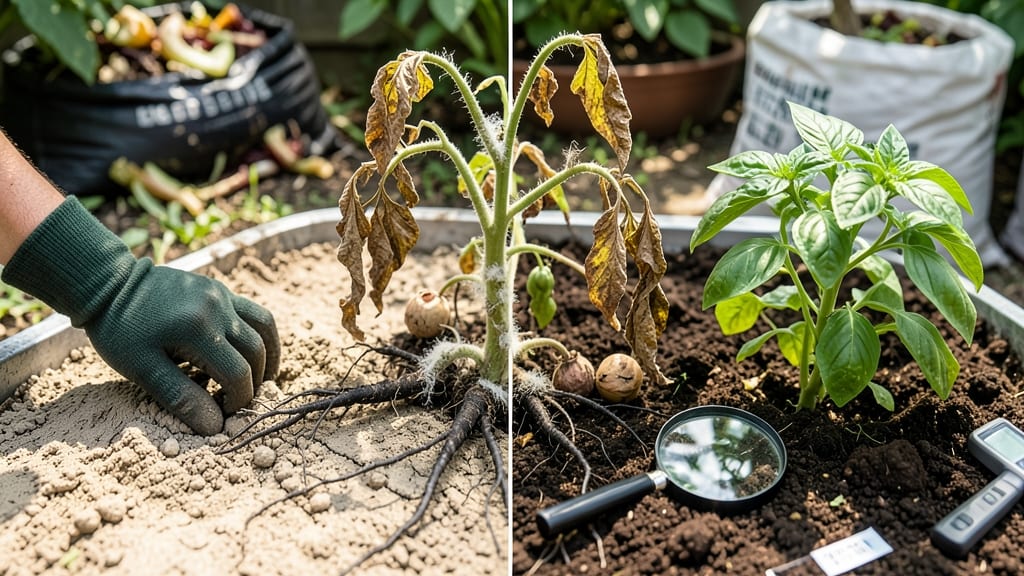
Yes, soil does go bad when it loses its organic matter, becomes overly compacted, or develops chemical imbalances that prevent plants from thriving.
Soil degradation happens gradually through natural processes like erosion, nutrient depletion, and microbial decline. When organic material breaks down faster than it's replenished, the soil loses its structure and ability to hold moisture. 🌱 Over time, this creates hardpan layers that suffocate roots and prevent proper drainage.
Even seemingly fertile soil can become toxic if pH levels swing too far from the ideal 6.0-7.0 range, which affects nutrient availability for plants.
What's interesting is how quickly these changes happen—sometimes in just a few years of poor management. For example, urban lawns often suffer from compaction due to foot traffic, while agricultural fields may lose vital nutrients through repeated harvesting.
The key to maintaining healthy soil lies in understanding these specific stressors and taking proactive steps to restore balance.
💡 In This Article
- How Soil Degrades Over Time and What Causes It
- Reviving Old Soil: Restoration Techniques for Gardeners
How soil degrades over time and what causes it
Soil degradation begins with the breakdown of organic matter—the dark, crumbly material that gives fertile soil its structure and nutrient-rich qualities. Over time, organic matter decomposes through microbial activity, but when decomposition outpaces replenishment (like from fallen leaves or compost), the soil loses its ability to retain moisture and nutrients.
This process accelerates in urban environments, where lawns and gardens often receive synthetic fertilizers that temporarily mask the underlying depletion without addressing the root cause.
The second major culprit is compaction, where repeated pressure from foot traffic, machinery, or heavy rainfall compresses soil particles together. This creates a hardpan layer that restricts root growth and water infiltration.
For example, a heavily walked-on garden path can develop compaction within just 1-2 years, while agricultural fields may show signs after 5-10 years of continuous tilling. The result?
Roots suffocate, drainage fails, and plants struggle to access water and oxygen, even if the soil appears dark and fertile at first glance.
Chemical imbalances further weaken soil health, particularly shifts in pH levels. Most plants thrive in soil with a pH between 6.0 and 7.0, but overuse of acidic fertilizers or alkaline amendments can push the pH outside this range.
For instance, pine trees acidify soil over time, while limestone-rich areas naturally raise pH. When pH drifts too far, essential nutrients like nitrogen, phosphorus, and potassium become locked away, making them unavailable to plants despite being present in the soil. 🌱 This is why some gardeners notice stunted growth even when they're adding fertilizer—it's not about quantity, but accessibility.
Microbial decline is another silent killer of soil quality. Healthy soil teems with billions of bacteria, fungi, and other microorganisms that break down organic matter and cycle nutrients. However, practices like excessive tilling, pesticide use, or even overwatering can disrupt these communities.
Studies show that conventional farming methods can reduce microbial diversity by up to 50% compared to organic or no-till systems. Without this microbial network, soil loses its natural ability to regenerate and becomes increasingly dependent on external inputs.
Erosion is the final piece of the puzzle, carrying away the topsoil layer where most nutrients and organic matter reside.
A single heavy rainstorm can wash away up to 10 tons of soil per acre on sloped land, while wind erosion in dry climates can strip away 20-30 tons annually if the soil isn't protected by vegetation.
This isn't just a slow process—it's a cumulative one, where each year of erosion makes recovery harder by removing the most fertile layer where plants establish roots.
What's fascinating is how these factors interact. For example, compacted soil erodes more easily because water can't penetrate, leading to surface runoff. Similarly, depleted organic matter reduces the soil's ability to buffer pH changes, making it more susceptible to chemical imbalances.
The key takeaway? Soil degradation is rarely caused by a single factor—it's usually a combination of neglect, overuse, and environmental stressors working together over time.