
Tools
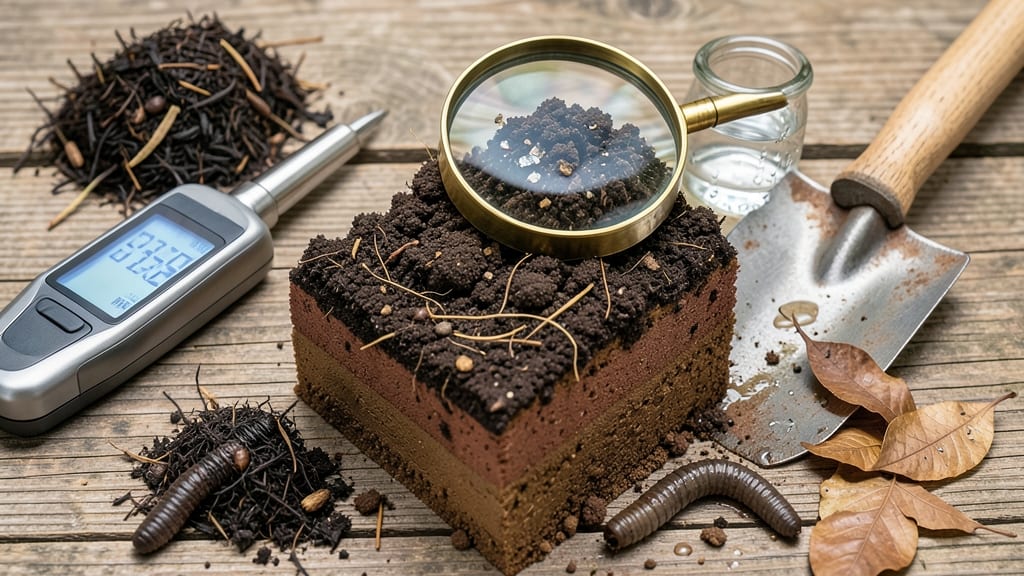
Understanding garden soil layers helps you assess plant growth potential, as these distinct horizons (O, A, B, C, R) develop through weathering and organic processes, each offering unique drainage and nutrient characteristics for healthier gardens.
These soil profiles form over centuries through decomposition, mineral breakdown, and leaching—processes accelerated by climate and plant life.
The topmost O horizon (organic matter) feeds roots, while the B layer (subsoil) stores minerals like iron and clay. 🌱 Testing your soil's depth and texture reveals whether it needs compost (for shallow topsoil) or sand (for compacted subsoil).
For example, clay-heavy B layers can restrict root growth unless amended properly.
Climate plays a surprising role: tropical soils develop faster due to high rainfall, while arid regions create thinner profiles. I always recommend digging a 12-inch pit to observe transitions—this helps determine if your garden needs layer-specific amendments.
The R layer (bedrock) is rarely reachable, but its proximity affects drainage and plant stress.
💡 In This Article
- How Soil Horizons Develop Naturally
- Identifying and Improving Your Garden’s Soil Profile
How soil horizons develop naturally
The topmost layer, called the O horizon, forms through organic decomposition where leaves, twigs, and plant matter break down into humus. This process, driven by microorganisms like bacteria and fungi, can take decades in temperate climates but accelerates in tropical regions where warmth and moisture speed up decay.
For example, a forest floor might accumulate 1-2 inches of organic material annually, while a desert soil may form only 0.1 inches over centuries due to arid conditions.
Beneath the O layer, the A horizon develops as minerals mix with decomposed organic matter, creating the familiar topsoil. Rainwater leaches nutrients downward while leaving behind finer particles like silt and clay. This layer typically measures 6-12 inches deep and contains the highest concentration of nutrients critical for plant roots.
The process relies heavily on biological activity—earthworms alone can mix 10-20 tons of soil per acre annually, accelerating horizon formation.
Deeper still, the B horizon accumulates minerals like iron and aluminum oxides through a process called illuviation, where dissolved materials precipitate out of moving water. This layer often feels denser due to clay accumulation and can develop at rates of 1-3 millimeters per year in humid climates.
In contrast, arid regions may show little B horizon development due to limited water movement, creating stark contrasts in soil profiles.
Climate dramatically influences these processes—tropical soils develop faster due to intense rainfall and microbial activity, while cold climates slow decomposition. For instance, a temperate forest might form 1 inch of topsoil per century, whereas a tropical rainforest could create 1 foot in the same time.
The C horizon (parent material) and R layer (bedrock) remain largely unchanged, serving as the foundation for all upper layers.
What most gardeners overlook is how vegetation type affects horizon development. Grasslands create thicker A horizons through root exudates, while forests produce more organic-rich O layers. Understanding these natural processes helps explain why some gardens thrive while others struggle—it's all about the soil's hidden history beneath your feet. 🌱
For example, a 10-year-old garden in a temperate zone might show a 4-inch A horizon with visible organic mixing, while a 100-year-old orchard could have a 12-inch A horizon with distinct subsoil characteristics. This geological timeline reveals why patience matters when improving soil health.