
Lawn
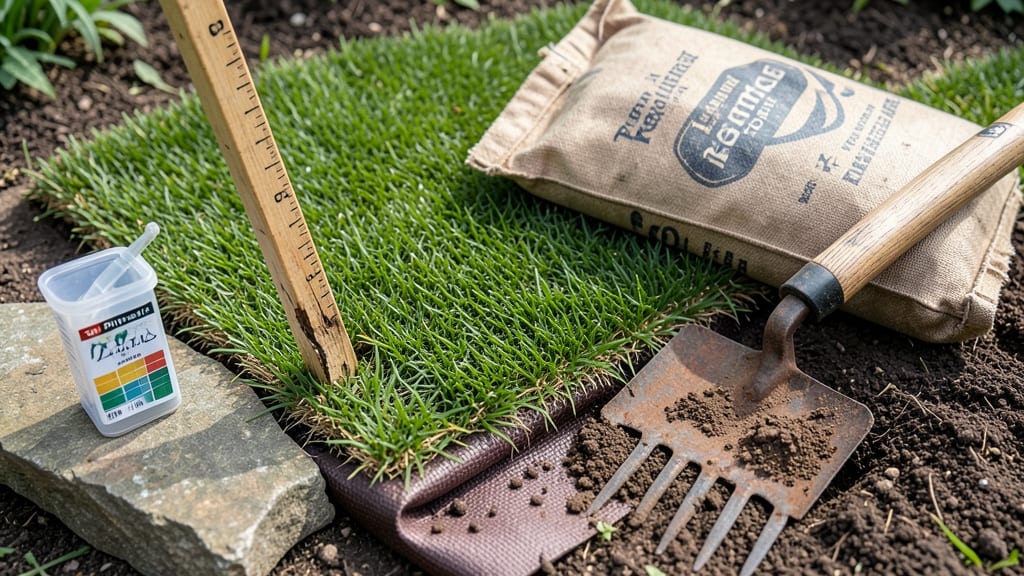
To spread the right amount of topsoil for sod, use 2 to 4 inches total, with 3 inches being ideal for most grass types in well-drained soil conditions to support proper root establishment and drainage.
Getting the topsoil depth right is crucial because it directly impacts how quickly your sod establishes roots and how well it survives drought or foot traffic. 🌱 A 3-inch layer provides the perfect balance—enough to prevent roots from hitting hardpan or rocks while still allowing good drainage.
If your soil is particularly dense or clay-heavy, you might need to go up to 4 inches to improve aeration.
I always recommend testing your existing soil first: if it's sandy, you can get away with 2 inches, but compacted or poor-quality soil will need that extra depth to create a healthy growing environment.
Another key factor is how you prepare the topsoil. Simply spreading it isn't enough—you'll want to blend it with your existing soil to create a consistent growing medium.
Adding a thin layer of compost (about ½ inch) mixed into the topsoil can work wonders for nutrient retention and microbial activity. The goal is to create a loose, crumbly texture that roots can easily penetrate without resistance.
💡 In This Article
- Why Topsoil Depth Matters for Sod Root Growth
- Step-by-Step Guide to Preparing Topsoil for Sod
Why topsoil depth matters for sod root growth
Root establishment is all about creating the right conditions for sod to thrive, and topsoil depth plays a critical role in this process. When you lay sod, the roots need immediate access to moisture, oxygen, and nutrients to anchor and spread.
A 3-inch layer of topsoil provides the perfect balance—deep enough to prevent roots from hitting compacted subsoil or rocks while still allowing water and air to penetrate freely.
Shallow layers (2 inches) risk exposing roots to extreme temperatures or drying out too quickly, while overly deep layers (> 4 inches) can trap excess moisture, leading to rot or fungal issues.
The science behind this involves how roots behave in different soil environments. Grass roots, particularly cool-season varieties like Kentucky bluegrass or tall fescue, grow most actively in the top 4-6 inches of soil. In this zone, microbial activity is highest, and organic matter decomposes more efficiently, releasing essential nutrients.
Warm-season grasses like Bermuda or Zoysia also benefit from this depth, though they may tolerate slightly shallower layers (2-3 inches) if the soil is already well-drained.
The key is ensuring the topsoil layer is loose and free of clumps, as compacted soil can restrict root growth by up to 50%.
Oxygen availability is another critical factor. Roots respire through tiny pores in the soil, and a 3-inch layer maintains optimal aeration for most grass types. Sandy soils, which drain quickly, might only need 2 inches of topsoil because they naturally allow air and water to move through easily.
In contrast, clay-heavy or compacted soils require the full 4-inch depth to break up the dense structure and improve porosity. Think of it like breathing room for your lawn—too little, and roots struggle; too much, and you risk waterlogging or uneven growth.
Nutrient absorption is directly tied to soil depth because roots must reach down to access water and minerals. A 3-inch layer ensures roots can explore enough volume to find what they need without overstretching.
For example, phosphorus and potassium, which are crucial for root development, are often concentrated in the topsoil. If your layer is too shallow, roots may not access these nutrients efficiently, leading to weak growth or poor drought resistance.
This is why amending the topsoil with compost or a balanced fertilizer is so effective—it boosts nutrient availability in that critical root zone.
Consider the texture and composition of your existing soil when deciding on depth. If your ground is rocky or has a hardpan layer (a dense, impermeable soil layer), you’ll need to increase the topsoil depth to 4 inches to provide a buffer.
For instance, in areas with heavy clay, adding extra topsoil can improve drainage and prevent water from pooling at the surface. On the other hand, if your soil is already loose and well-draining, like sandy loam, you can reduce the depth to 2-3 inches while still achieving strong root establishment.
The goal is to create a consistent, fertile environment where sod can thrive from day one.
One common mistake is assuming that more topsoil is always better. While depth is important, the quality of the topsoil matters just as much. A 2-inch layer of high-quality, well-amended topsoil will outperform a 4-inch layer of poor-quality soil.
Always screen the topsoil to remove debris and mix in organic matter to improve its structure. This ensures your sod gets the best possible start, regardless of the depth you choose.