
Light Requirements
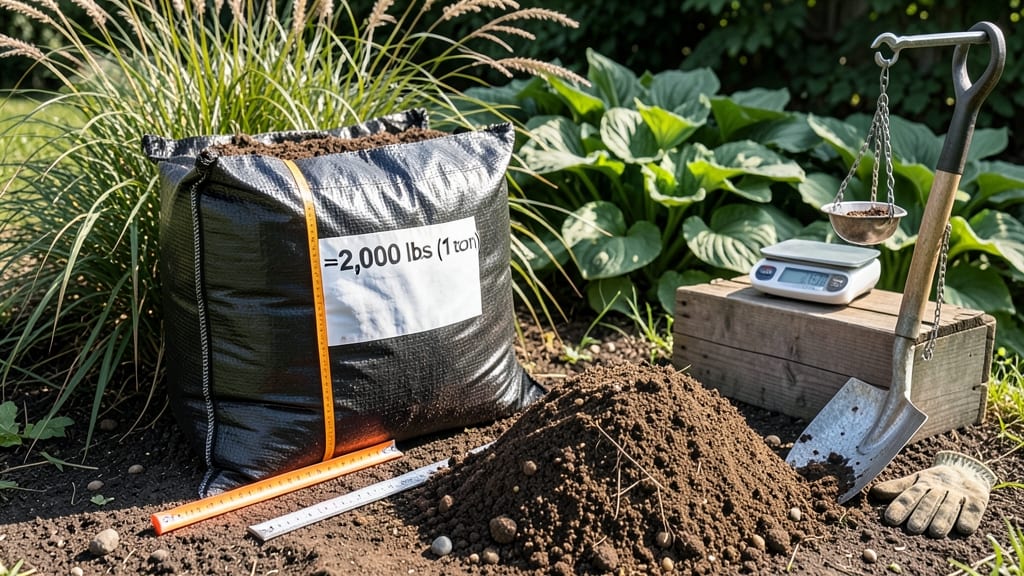
Determining how much 1 cubic yard of topsoil weighs reveals a range of 2,000 to 2,800 pounds, heavily influenced by moisture levels, organic composition, and soil texture—sandy mixes skew lighter while clay-rich or saturated soil can push beyond 2,800 pounds. Always confirm supplier specs before planning transport or projects.
Understanding this weight range helps avoid surprises during landscaping or gardening projects. 🌱 The moisture factor alone can swing weights by up to 500 pounds—dry topsoil might register at 2,000 lbs, while freshly watered soil could exceed 2,500 lbs. For precise calculations, I recommend testing a small sample: fill a 5-gallon bucket with your topsoil, weigh it, then multiply by 27 (the number of buckets in a cubic yard).
This hands-on approach beats relying on theoretical averages.
Different soil types behave uniquely: screened topsoil (common for gardens) typically falls between 2,200-2,500 lbs due to its balanced composition, while compost blends may reach 2,600 lbs thanks to higher organic matter.
Clay-heavy soils, often used for foundations, can hit 3,000+ lbs when saturated—a critical detail for heavy machinery operators. Always account for these variations when estimating delivery costs or equipment needs.
💡 In This Article
- Factors Affecting Topsoil Weight Variations
- Practical Weight Estimates for Common Topsoil Types
Factors affecting topsoil weight variations
Moisture content is the single biggest variable in topsoil weight, capable of shifting a cubic yard by 500 pounds or more. Dry topsoil weighs less because its pores are filled with air, while saturated soil absorbs water that replaces air and increases density.
For example, a 10% moisture increase can add 200-300 pounds to the total weight—this is why freshly tilled soil often feels deceptively heavy.
The science behind this lies in soil's porosity: sandy soils have larger pores that hold less water, while clay soils retain moisture like a sponge, dramatically increasing weight.
Particle density plays a crucial role too. Sandy topsoil, with its coarse texture, typically weighs 2,000-2,200 pounds per cubic yard because its particles pack loosely. In contrast, clay-heavy soils can exceed 2,800 pounds due to their fine, tightly packed structure.
Organic matter further complicates calculations—compost blends, which contain decomposed plant material, often weigh 2,400-2,600 pounds because organic particles absorb and retain more water than mineral soil. This variability explains why a supplier's "standard" topsoil might feel lighter or heavier than expected.
Compaction is another hidden factor. When soil is disturbed (like during delivery or spreading), its particles settle more tightly, increasing density and weight. For instance, freshly delivered topsoil might weigh 2,300 pounds, but after spreading and settling, it could reach 2,500 pounds in the same volume.
This is why professional landscapers recommend accounting for a 10-15% weight increase after installation. The compaction effect is most noticeable in clay soils, where water and foot traffic can add 300-500 pounds to the total weight over time.
Temperature also influences weight subtly. Cooler soils hold more moisture because water molecules move slower, increasing weight. In summer, topsoil may lose 5-10% of its moisture content, reducing weight by 100-200 pounds per cubic yard. This seasonal variation is why suppliers often adjust deliveries based on weather forecasts.
For precise projects, like constructing raised beds, I recommend testing soil moisture before ordering—simply pressing a handful: if water drips out, expect heavier weight than advertised.
Here’s a quick breakdown of how these factors interact:
- Moisture: Adds 200-500 lbs when saturated vs dry
- Particle Type: Clay (+600 lbs) vs Sand (+200 lbs)
- Organic Matter: Compost blends add 200-400 lbs vs mineral soil
- Compaction: Increases weight by 10-20% after installation
Understanding these interactions helps avoid costly miscalculations. For example, a 10x10-foot raised bed (3 cubic yards) filled with clay-heavy topsoil could weigh 8,400 pounds—nearly 4 tons—if saturated. Always factor in these variables when planning transport or structural support. 💫