
Light Requirements
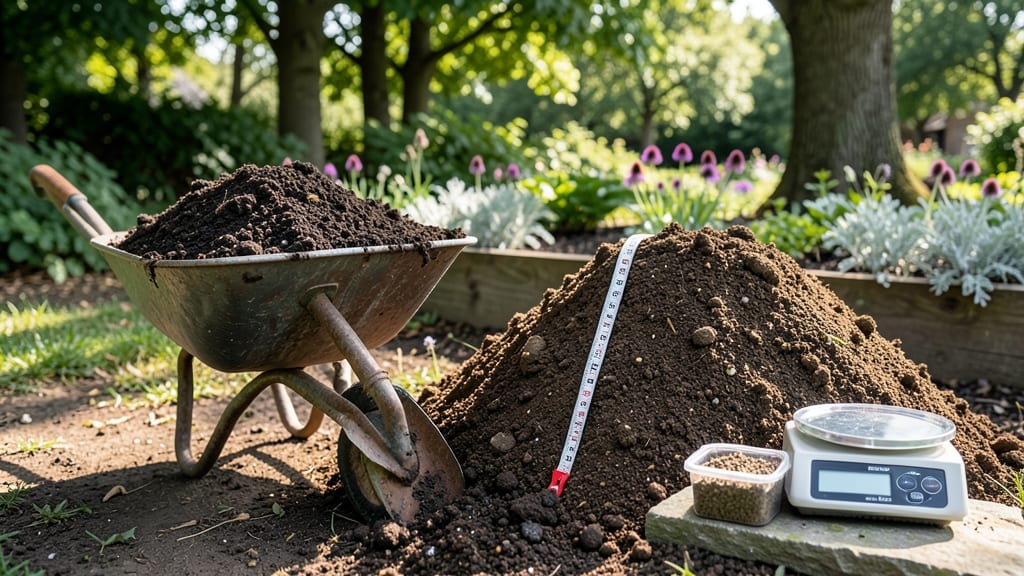
To determine how much topsoil weighs per yard, know that one cubic yard typically ranges from 2,000 to 2,800 pounds, varying by moisture levels, organic content, and soil type. Dry, loose topsoil usually sits around 2,200 pounds, while heavy clay or saturated soil can push past 3,000 pounds.
Understanding topsoil weight is key for landscaping projects, especially when planning deliveries or truck loads. 🔥 The numbers shift dramatically based on moisture—wet soil can weigh up to 50% more than dry soil, which is why contractors often specify "dry weight" in contracts.
For example, a 10-yard delivery of standard topsoil might weigh between 20 and 28 tons, but clay-heavy soil could exceed 30 tons. I always recommend checking with your supplier for exact specifications, as regional soil compositions vary widely.
This variation matters beyond just logistics—it affects how much you'll need for projects like garden beds or lawn topdressing. A cubic yard of sandy loam (common in many regions) will be lighter and easier to spread than dense clay soil.
If you're planning a large project, factor in a 10-15% buffer for weight variations to avoid running short on material.
💡 In This Article
- Factors Affecting Topsoil Weight Per Cubic Yard
- Calculating Topsoil Weight for Landscaping Projects
Factors affecting topsoil weight per cubic yard
Moisture content is the single biggest factor influencing topsoil weight. A cubic yard of completely dry topsoil might weigh around 2,000 pounds, but when saturated with water—like after heavy rain or irrigation—it can swell to 3,000 pounds or more.
This happens because water fills the tiny air pockets between soil particles, effectively doubling the weight. For example, clay soil holds water like a sponge, while sandy soil drains faster, keeping weights closer to the lower end of the spectrum. 🔥
The mineral composition of your soil plays a critical role too. Clay particles are flat and dense, packing tightly together to create heavier soil—sometimes exceeding 3,500 pounds per cubic yard when wet. In contrast, sandy soil has larger particles with more air space, typically weighing 1,800-2,400 pounds per yard.
Loam, the ideal garden soil mix (about 40% sand, 40% silt, and 20% clay), usually falls in the 2,200-2,600 pound range. Organic matter—like decomposed leaves or compost—adds bulk but keeps weight in check because it's lighter than minerals.
Compaction makes a surprising difference. Freshly tilled topsoil weighs less because it's loose and full of air pockets. But once it's been walked on, driven over, or settled naturally, it can gain 300-500 pounds per cubic yard in weight.
This is why construction sites often specify "loose" topsoil deliveries—they need material that hasn't been compacted yet. Even a slight compression from a wheelbarrow can increase weight by 10-15%, which adds up quickly in large projects. ✨
Regional soil types create dramatic variations. In the Pacific Northwest, volcanic soils often weigh less due to their porous nature, while Midwestern clay soils can push 3,200 pounds per yard when wet.
Even within states, mountain soils (with more organic debris) may weigh 20-30% less than valley soils (which accumulate heavier minerals). Always check local soil surveys if you're planning a large-scale project—the weight difference between regions can be as significant as the difference between soil types.
Don't overlook temperature effects either. Frozen soil can weigh 10-20% more than thawed soil because ice crystals expand the structure. This seasonal variation is why winter deliveries often require heavier equipment. Even humidity matters—soil in the southeastern U.S. typically weighs 5-10% more year-round due to higher atmospheric moisture.
For precise planning, many landscapers test soil moisture before ordering, aiming for 15-20% moisture content as their target for optimal weight and workability. 💫
Here's a quick comparison to visualize the differences:
- Sandy soil: 1,800-2,400 lbs/yd³ (lightest, drains quickly)
- Loam (ideal garden soil): 2,200-2,600 lbs/yd³ (balanced weight)
- Clay soil: 2,800-3,500 lbs/yd³ (heaviest when wet)
- Organic-rich soil: 1,500-2,200 lbs/yd³ (lighter but nutrient-dense)
The weight variations aren't just academic—they directly impact your project's feasibility. A truck designed for 20 tons might struggle with 10 cubic yards of clay soil but handle 12 yards of sandy loam** easily.
Always verify with your supplier which weight assumptions they use in their quotes—some list "dry weight," others "as-is" weight, and the difference can be substantial. 🌟