
Light Requirements
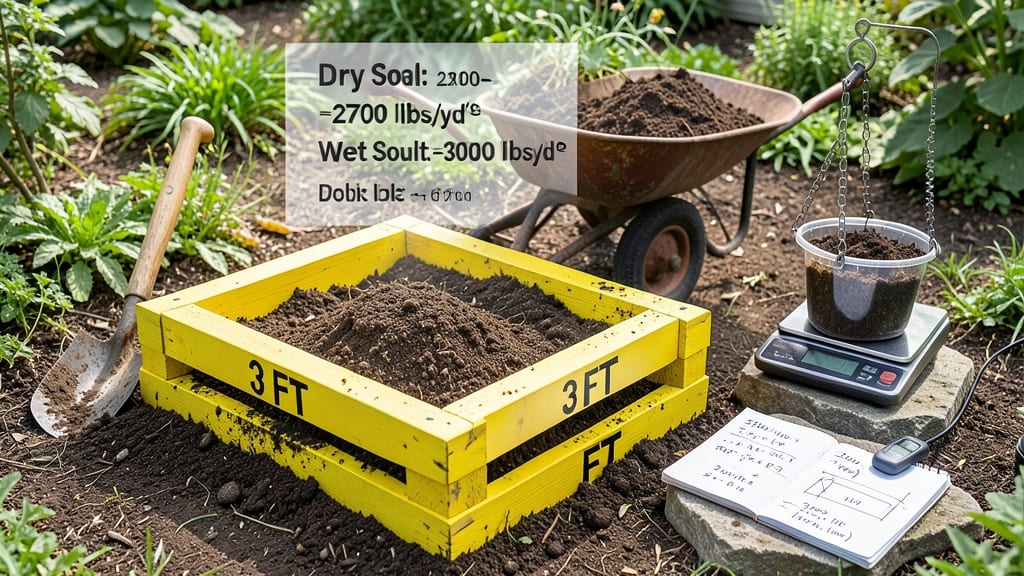
To determine how much 1 cubic yard of soil weighs, expect between 2,000 to 2,800 pounds—this range accounts for variations in moisture levels, soil composition, and compaction. Sandy soils typically weigh closer to 2,200 pounds, while dense clay soils can push past 2,600 pounds. Loam, the balanced gardening soil, generally sits around 2,400 pounds per cubic yard when dry.
Understanding soil weight isn't just about numbers—it directly impacts your gardening or landscaping projects. 🌱 For example, a raised garden bed filled with clay-heavy soil will require significantly more structural support than one with sandy soil, even if they occupy the same volume.
I always recommend testing moisture levels before estimating weight, as saturated soil can add hundreds of pounds to the total. This knowledge helps avoid overloading wheelbarrows or miscalculating material needs for large-scale projects.
What's interesting is how particle size plays a role: finer particles like silt and clay pack more tightly, increasing density and weight, while larger sand particles create air pockets that reduce overall mass.
This explains why loam—with its balanced mix of sand, silt, and clay—often becomes the gold standard for both weight stability and plant growth.
💡 In This Article
- Factors Affecting Soil Weight per Cubic Yard
- Practical Soil Weight Calculations for Gardening Projects
Factors affecting soil weight per cubic yard
Soil weight varies dramatically because it's not just dirt—it's a complex mix of minerals, organic matter, water, and air. The particle size distribution is the primary factor: sand (0.05-2mm) creates loose structures with air gaps, reducing density, while clay (<0.002mm) particles pack tightly, increasing weight.
For example, pure sand weighs about 100 pounds per cubic foot (2,700 lbs/yd³), but clay can reach 110 pounds per cubic foot (3,000 lbs/yd³) when saturated. This explains why clay soils feel heavier in your hands and why they're harder to move in wheelbarrows.
The moisture content adds another layer—water can account for 20-50% of soil weight in saturated conditions. Dry clay soil might weigh 2,400 lbs/yd³, but when fully saturated, it can jump to 2,800 lbs/yd³ or more.
I once calculated that a 10'x10' raised bed filled with clay soil increased by 400 lbs after a heavy rain. Organic matter also contributes: peat and compost add 50-100 lbs/yd³ compared to mineral soil, but they're lighter when dry.
This is why gardeners often mix in 20-30% compost—it maintains workability while keeping weight manageable.
Compaction plays a surprising role too. Foot traffic or machinery can reduce pore space by 30-50%, increasing density. For instance, a construction site might compact clay soil to 120 lbs/ft³ (3,300 lbs/yd³), while undisturbed garden soil stays around 90 lbs/ft³ (2,400 lbs/yd³).
This explains why tilling old garden beds before planting can make them easier to work with—you're essentially reducing the weight per cubic yard by loosening the structure. The key takeaway? Always account for both dry and saturated conditions when planning projects, especially in areas with heavy rainfall.
Here's a visual comparison to help understand the differences:
- Sandy soil: 2,200-2,400 lbs/yd³ (dry), 2,600 lbs/yd³ (saturated) – feels gritty, drains quickly
- Loam (ideal mix): 2,400-2,600 lbs/yd³ (dry), 2,800 lbs/yd³ (saturated) – balanced texture and weight
- Clay soil: 2,600-2,800 lbs/yd³ (dry), 3,000+ lbs/yd³ (saturated) – dense, sticky when wet
What most people overlook is how air content affects weight. Well-drained soils with 25-30% air porosity (like sandy loam) weigh significantly less than waterlogged soils with 5% air or less.
This is why aerating compacted lawns isn't just about roots—it's also about reducing the effective weight of the soil your plants have to push through. For gardeners, this means choosing soil mixes carefully based on your climate and plant needs.
For practical applications, remember this rule of thumb: Add 20% to your weight estimate if working with clay soil in wet conditions, and subtract 15% if using sandy soil in dry climates. These adjustments can mean the difference between a manageable wheelbarrow load and an impossible one. 💪