
Landscaping
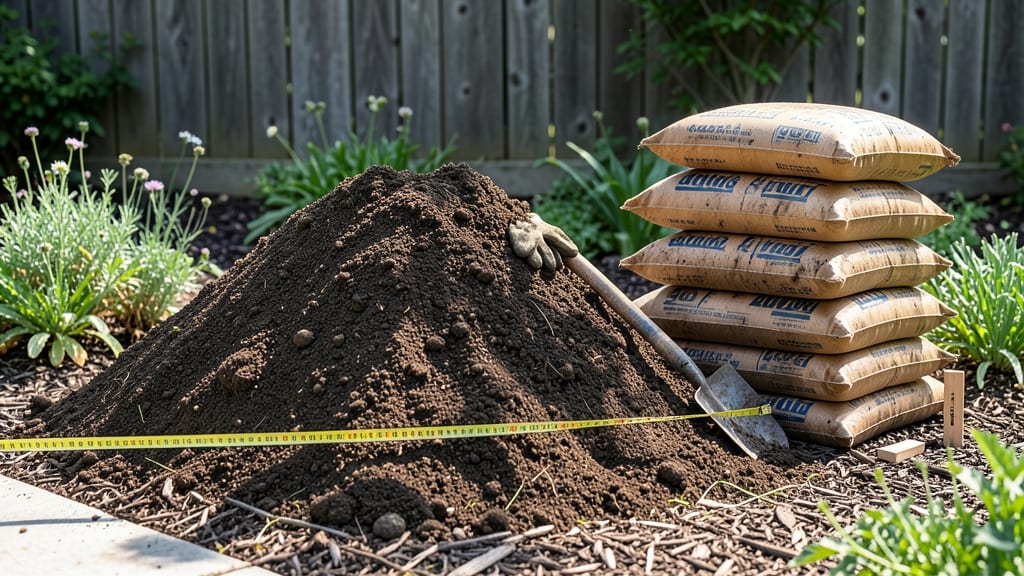
To determine how many bags make 1 cubic yard of soil, you'll need 27 standard 40-pound bags, or 18–20 bags if using 60-pound bags. Smaller 20-pound bags require 54–60 bags to match the same volume, depending on soil density and compaction.
Understanding these conversions helps avoid overbuying or running short for projects like raised garden beds or mulching. Soil density plays a huge role—looser, fluffier soil takes up more space, while packed soil reduces the total volume. 🌱 For example, a 40-pound bag of potting mix might yield slightly less cubic footage than the same weight of garden soil because of how tightly it's compressed.
Always check the product label for "cubic feet per bag" if you're working with specialty mixes.
When planning your project, consider the type of soil too. Topsoil and compost blends settle differently over time, so buying 10% more than your calculated total prevents mid-project shortages.
I've found that 60-pound bags strike the best balance for large projects—they're easier to carry than 20-pounders but don't require as many trips as 40-pound bags.
💡 In This Article
- Calculating Soil Bag Quantities by Cubic Yard
- Best Soil Bag Sizes for Garden Projects
Calculating soil bag quantities by cubic yard
The conversion from cubic yards to soil bags starts with understanding volume-to-weight ratios. A cubic yard equals 27 cubic feet, and most soil bags list their volume in cubic feet per bag.
For example, a 40-pound bag typically contains about 0.75 cubic feet of soil (27 ÷ 0.75 = 36 bags—but this is theoretical). In reality, soil compresses differently when bagged, so manufacturers adjust weights to standardize volume. 🌱
Soil density is the game-changer here. Loose, fluffy soil (like compost blends) may weigh 40 pounds per 0.9 cubic feet, while packed garden soil can reach 40 pounds per 0.6 cubic feet.
This means your 27 bags of 40-pound soil might actually yield 24–29 cubic feet depending on how tightly it's compressed. For 60-pound bags, the math shifts: they usually contain 1.2–1.5 cubic feet of soil, so 18–20 bags cover a cubic yard—but only if the soil is uniformly dense.
Bag weight isn't the only factor; moisture content also affects volume. Wet soil weighs more per cubic foot than dry soil, so a 40-pound bag of damp topsoil might only give you 0.6 cubic feet instead of the expected 0.75.
Always check the product label for "cubic feet per bag" when buying specialty mixes like potting soil or mulch blends, as these can vary widely. 💧
For practical calculations, use this rule of thumb:
- 20-pound bags: 54–60 bags per cubic yard (0.4–0.5 cubic feet per bag)
- 40-pound bags: 27–30 bags per cubic yard (0.7–0.9 cubic feet per bag)
- 60-pound bags: 18–20 bags per cubic yard (1.2–1.5 cubic feet per bag)
Pro tip: If you're filling a raised bed, overestimate by 10% to account for settling. For instance, a 4'x8'x12" deep bed needs 3.3 cubic feet of soil—but after settling, you might need 3.6 cubic feet. This extra buffer prevents mid-project scrambling for more bags. ✨
Advanced gardeners often pre-moisten soil before bagging to ensure consistent density. This technique reduces air pockets and guarantees that each bag delivers the labeled cubic footage.
For large projects, consider renting a dump truck (typically 10–12 cubic yards) if you need 100+ bags—it's more cost-effective than hauling individual bags.